


The Curtiss Hawk 81-A2 “Flying Tigers” (70094) is the first release in an entirely new Arma Hobby family covering the early Curtiss fighters: the Hawk 81, Tomahawk II and P-40B/C.
These aircraft fought from the opening stages of the war in the Far East, serving with the RAF, the Chinese Air Force, the American Volunteer Group, the Soviet Air Force and the USAAF. The family has been designed to reproduce the differences between the individual versions accurately, while retaining the ease of assembly and high level of detail associated with Arma Hobby kits.
The first release depicts the Hawk 81-A2, corresponding to the American P-40C. Of all the early Curtiss fighter variants, this was the version that played the most important historical role. Hawk 81-A2s served with the Royal Air Force, achieved worldwide fame with the American Volunteer Group “Flying Tigers”, and also fought on the Eastern Front in Soviet service. The kit can also be used to build a P-40B.
Aircraft from a British Order
The story of the Flying Tigers’ Hawks is more complex than it may first appear.
One hundred Hawk 81-A2 fighters were built by Curtiss to a British order as Tomahawk Mk IIBs. Before they could enter Royal Air Force service, however, they were allocated to the newly formed American Volunteer Group commanded by Claire Chennault. At the same time, the United States also permitted American airmen to join the service of the Republic of China. It was an unprecedented and politically daring undertaking, as the United States was still officially neutral.
The AVG formally served within the Air Force of the Republic of China, although its personnel were American volunteers. The Flying Tigers entered combat in December 1941 and flew their Hawk 81s until the middle of 1942.
The aircraft’s British origins left several distinctive features. The Hawk 81-A2s were finished in camouflage using DuPont paints, American-made equivalents of the RAF colours Dark Green, Dark Earth and Sky. They also retained a characteristic British pilot’s seat, different from the seat fitted to later American P-40s.
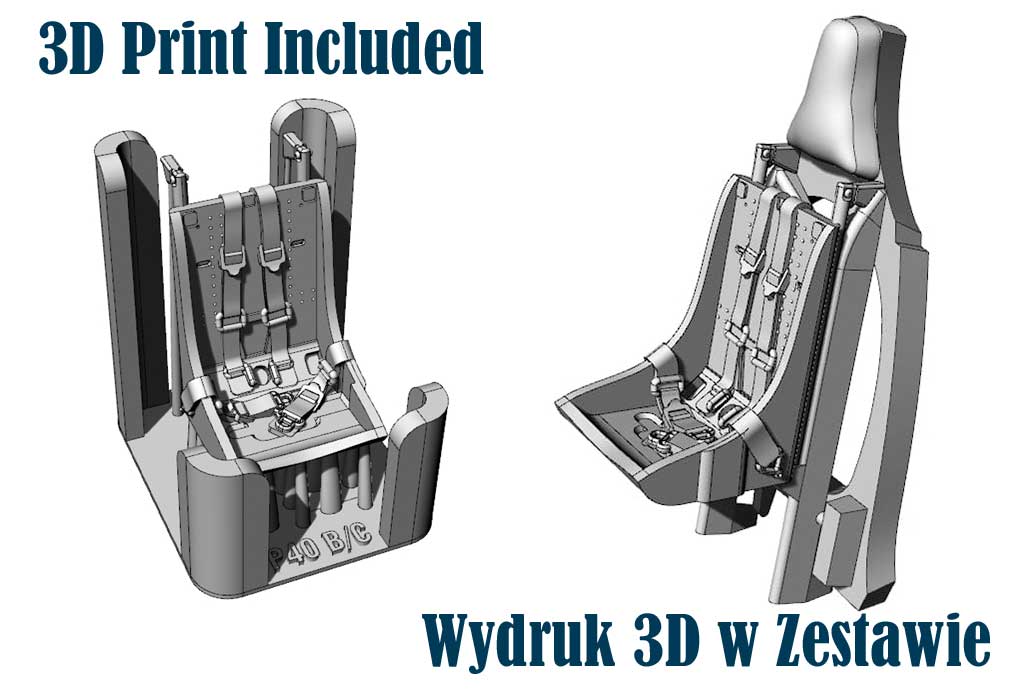
The kit includes a 3D-printed British pilot’s seat as a standard part in every box.
Three Flying Tigers Aircraft
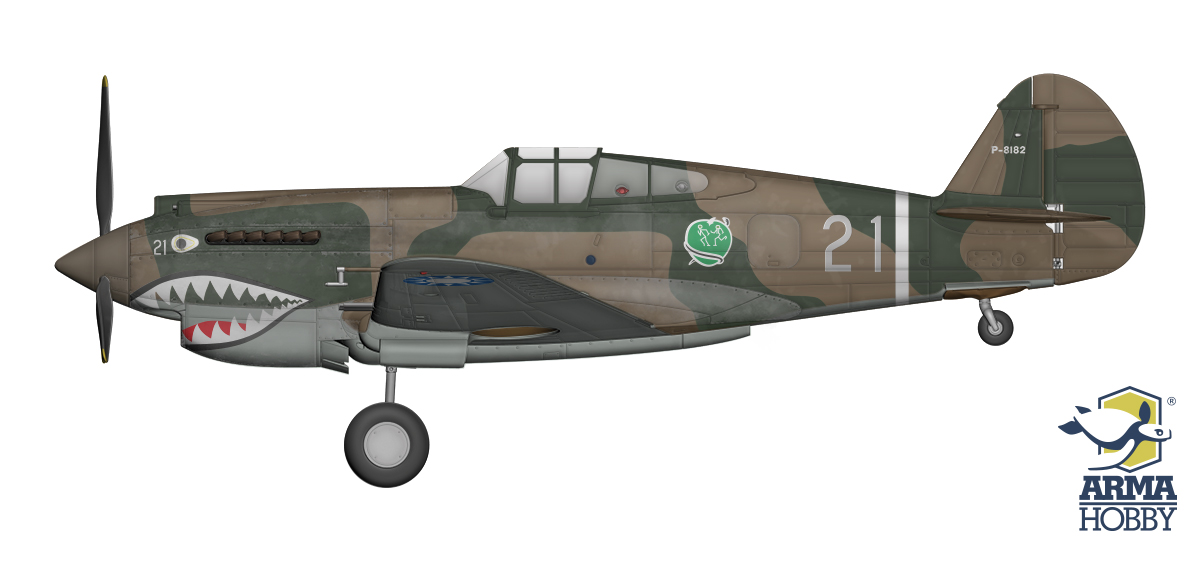
One of the strongest features of the kit is the new Cartograf decal sheet, prepared from the available historical documentation. In addition to a complete set of stencils, it reproduces numerous small differences between the individual aircraft, allowing each one to be modelled in accordance with period photographs.

Particularly noteworthy are the clearly faded Republic of China insignia on the upper wing surfaces, reproduced as they appear in photographs of the original aircraft. The shark mouths are not identical either. Rather than treating them as a single generic design, each one was recreated individually from photographs of the specific aircraft.
For Charles Older’s aircraft, we have even provided two versions of the shark mouth. Period photographs show that its appearance changed during the aircraft’s service, allowing the modeller to choose the version appropriate to a particular stage of its career.
The decal sheet provides markings for three exceptionally well-documented aircraft flown by some of the best-known pilots of the American Volunteer Group.

Charles H. Older
A pilot with the 3rd Pursuit Squadron, Hell’s Angels, Older was one of the most successful pilots of the Flying Tigers. He was credited with 18 aerial victories during his service with the AVG. After the war, he became a respected lawyer and later a judge of the California Superior Court.
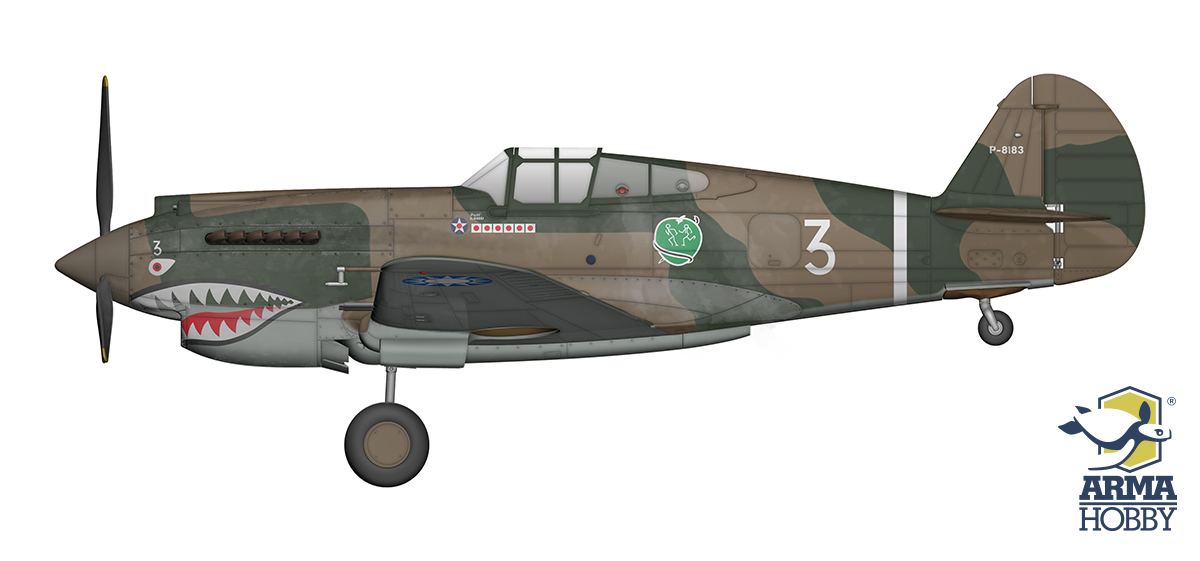
Greg “Pappy” Boyington
The future commander of the famous VMF-214 Black Sheep squadron and a recipient of the Medal of Honor began his combat career with the Flying Tigers. The marking option included in the kit represents his aircraft during his service with the 1st Pursuit Squadron, Adam & Eves, before he returned to the United States Marine Corps.
John R. “Dick” Rossi
Rossi was one of the most colourful figures associated with the Flying Tigers. One unusual detail on the side of his aircraft immediately attracts attention. Alongside the markings representing Japanese aircraft destroyed in combat is an American star. It is neither a mistake nor an aerial victory marking. It commemorates an extraordinary episode during the Burma campaign, when Rossi destroyed a damaged American transport aircraft on the ground to prevent it from falling into Japanese hands. It is one of those little-known Flying Tigers stories that reminds us how even a small marking on a decal sheet can have a remarkable story of its own.
The Beginning of a New Family
The Hawk 81-A2 is the first release in a new Arma Hobby family covering the Curtiss Hawk 81, Tomahawk II and P-40B/C. Further kits will introduce additional historically important variants of this legendary fighter.


Pre-orders Are Now Open
The Curtiss Hawk 81-A2 “Flying Tigers” (70094) is now available for pre-order.
Alongside the standard kit, we have prepared options with professionally printed 3D accessories and with Flying Tigers pilot figures developed in cooperation with White Stork Miniatures, one of Poland’s most highly regarded manufacturers of small-scale historical figures. A bundle combining both additions is also available.
The figures will also be available separately from White Stork Miniatures.
Shipping is scheduled to begin in the first half of August 2026.
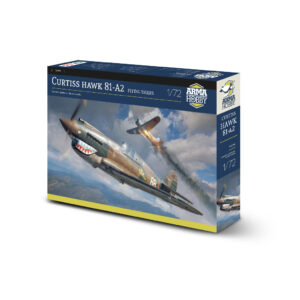
See the Curtiss Hawk 81-A2 “Flying Tigers” 1/72 kit in the Arma Hobby shop

Modeller happy enough to work in his hobby. Seems to be a quiet Aspie but you were warned. Enjoys talking about modelling, conspiracy theories, Grand Duchy of Lithuania and internet marketing. Co-founder of Arma Hobby. Builds and paints figurines, aeroplane and armour kits, mostly Polish subject and naval aviation.
This post is also available in:
 polski

Would you consider producing a downloadable camo pattern for us to cut our own masks for this aircraft?