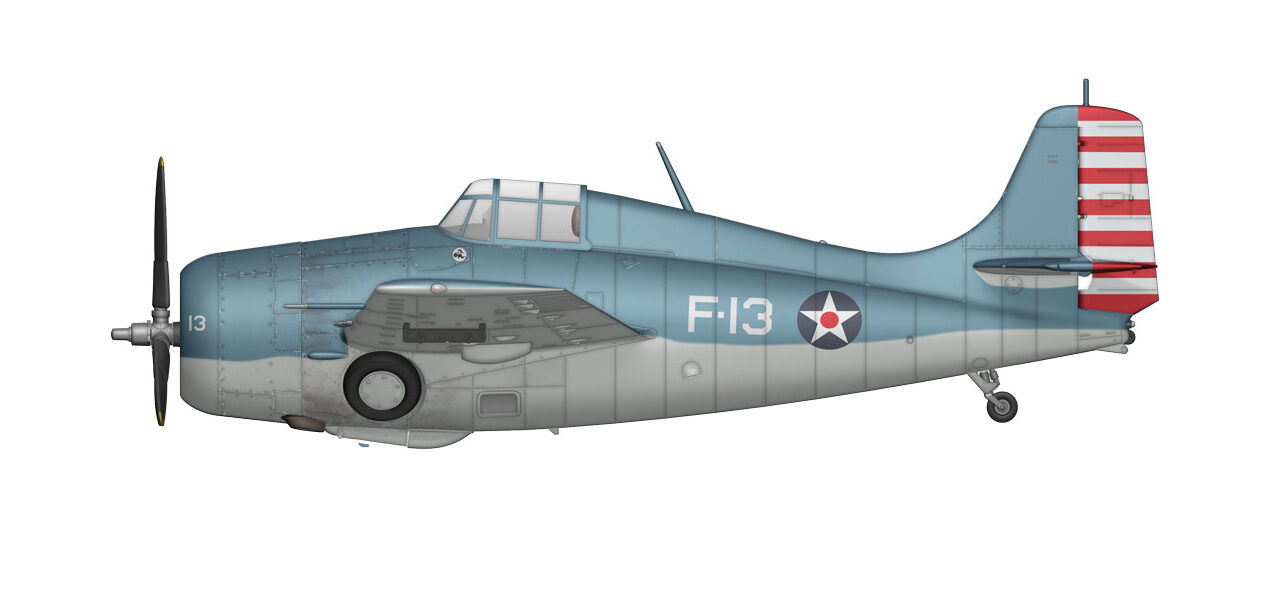
On 20 February 1942, near Rabaul, the first major clash took place between US Navy carrier aircraft and the air forces of the Imperial Japanese Navy. The Americans came out on top, and one of their pilots, Edward “Butch” O’Hare, became the first US Navy ace.
Table of Contents
- Before the Battle
- 20 February 1942 – a black day for the 4th Kokutai
- The decision to attack
- The clash with the second chutai
- Butch O’Hare versus the first chutai
- After the clash
- After the battle
- VF-3 aircraft and the model
- See also
- Ranks and terminology
- Bibliography
Before the Battle
After the surprise attack on Pearl Harbor on 7 December 1941, Japanese forces launched a wide-ranging offensive across the Pacific and Southeast Asia. Among their targets were British territories in the South Pacific, including New Britain and its important port of Rabaul.
It was the most important harbour in the New Guinea area, capable of receiving ships with a deep draught. This made it an excellent base for further offensive operations toward New Guinea, the Solomon Islands and even Fiji. Rabaul also had two airfields: Vunakanau and Lakunai.
Imperial Japanese Navy aircraft initially carried out reconnaissance flights over the town. After the capture of Wake Island, however, the Chitose and Yokohama air groups of the Fourth Fleet were directed against Rabaul. The first attack came on 4 January 1942, when 24 bombers from these units struck the air bases at Rabaul. Sixteen Mitsubishi G3M Nell bombers attacked during the day, while eight Kawanishi H6K Mavis flying boats from the Yokohama Kōkūtai attacked Vunakanau after dusk.
This marked the beginning of the “softening up” of the Australian defences before the invasion. In the following days, both units repeatedly attacked the port and airfields. On 20 January 1942, carrier aircraft from four Japanese carriers — Akagi, Kaga, Shōkaku and Zuikaku — struck the base, destroying most of the RAAF aircraft gathered for its defence. This attack was the prelude to the invasion, which began on the night of 23 January. After a short fight, Rabaul and its airfields fell into Japanese hands.
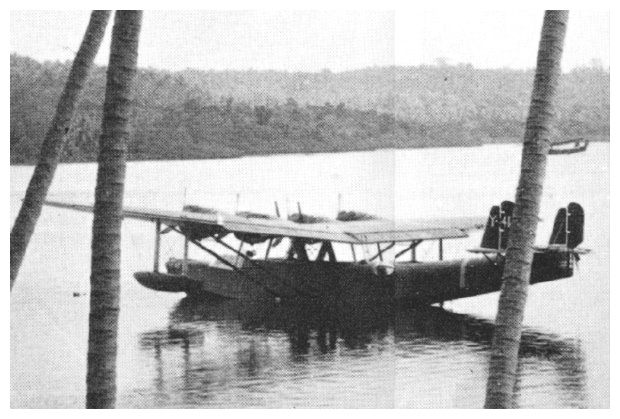
H6K Mavis flying boat of the Yokohama Kokutai, Solomon Islands area, 1942. Photo: Wikimedia Commons.
The Allied response was not long in coming. After the initial shock, the US Pacific Fleet soon began offensive operations. On 31 January 1942, Task Force 11 under VAdm W. Brown left Pearl Harbor and headed for the South Pacific, toward the Marshall Islands.
The force included the aircraft carrier USS Lexington, carrying Fighting Squadron VF-3 under Lt Cdr John “Jimmy” Thach. The squadron had originally belonged to the air group of USS Saratoga, but after that carrier was damaged by a Japanese submarine torpedo and sent for repairs, her air group was first moved ashore. When “Lady Lex” returned to Pearl Harbor, VF-3 replaced VF-2, which was sent to re-equip from Brewster Buffalo fighters to F4F Wildcats.
On 6 February, VAdm Brown learned that TF-11 would cooperate with the newly formed ANZAC forces in destroying Japanese forces moving toward the New Hebrides and islands lying near the lines of communication between Australia and Pearl Harbor. The task force moved to the waters around Fiji, where it remained until 16 February. It then set course for Rabaul, which VAdm Brown planned to attack from the northeast.
On the morning of 20 February, his ships were about 450 miles from the target. Brown planned to close Rabaul during the night and attack the port and airfields on the morning of 21 February. Fate, however, had other plans.
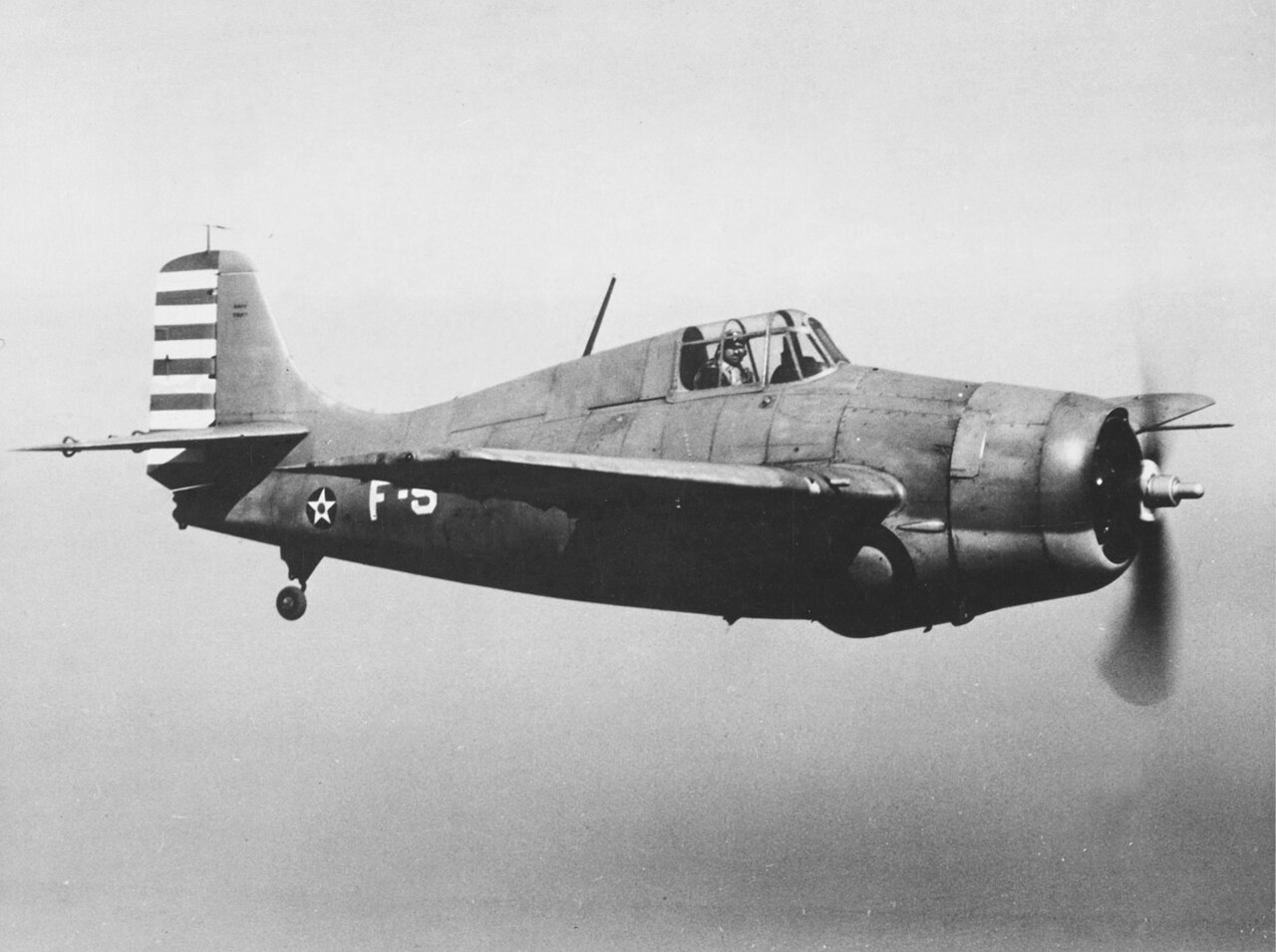
F4F-3 Wildcat, BuNo 3897/F-5, and not the aircraft flown on 20 February by Ens. Dale Peterson — that one, BuNo 4009/F-5, was lost on 14 March 1942 on the way to Hawaii. This is how the VF-3 aircraft looked as they went out to meet the 4th Kokutai. Photo: U.S. Navy.
20 February 1942 – a black day for the 4th Kokutai
At the same time as TF-11 was 450 miles from Rabaul, three Mavis flying boats took off from Simpson Harbour to locate the enemy ships. At 10:30, the crew of the aircraft commanded by Chū-i (Lt (jg)) Sakai Noboru sighted TF-11. Sakai reported to base that the enemy was 460 miles away.
The Japanese aircraft did not escape American attention. Lexington’s radar picked it up at a distance of 35 miles. Shortly afterwards, six F4F-3 Wildcat fighters took off from the carrier. After launch, the pilots split into three pairs. The first was led by Thach himself, flying aircraft F-1. The second pair was led by Lt Edward “Butch” O’Hare in F-15. The third was led by Lt (jg) Onia “Burt” Stanley in F-7.
After take-off, Thach’s section was directed by the Fighter Direction Officer (FDO), Lt Fred “Red” Gill, to intercept the target, while the other aircraft remained over the task force to protect it. Thach’s section intercepted the Japanese flying boat, which tried to evade them by hiding in the clouds. At one point, however, the American pilot spotted Sakai’s aircraft and attacked. Fire from four .50 cal machine guns set the Japanese machine ablaze. At 11:20 it struck the surface of the ocean, taking its entire crew with it. It was Fighting Three’s first victory of the war — but not its last that day.
Thirty minutes later, Lexington’s radar detected another target, this time north of the task force. It was another Mavis flying boat, commanded by Hisōchō (W/O) Hayashi Kiyoshi. Lt Stanley and his wingman, Ens. Leon Haynes in F-13, were sent to intercept it. The Americans caught the target and shot it down together. The Mavis fell into the ocean at 12:18.
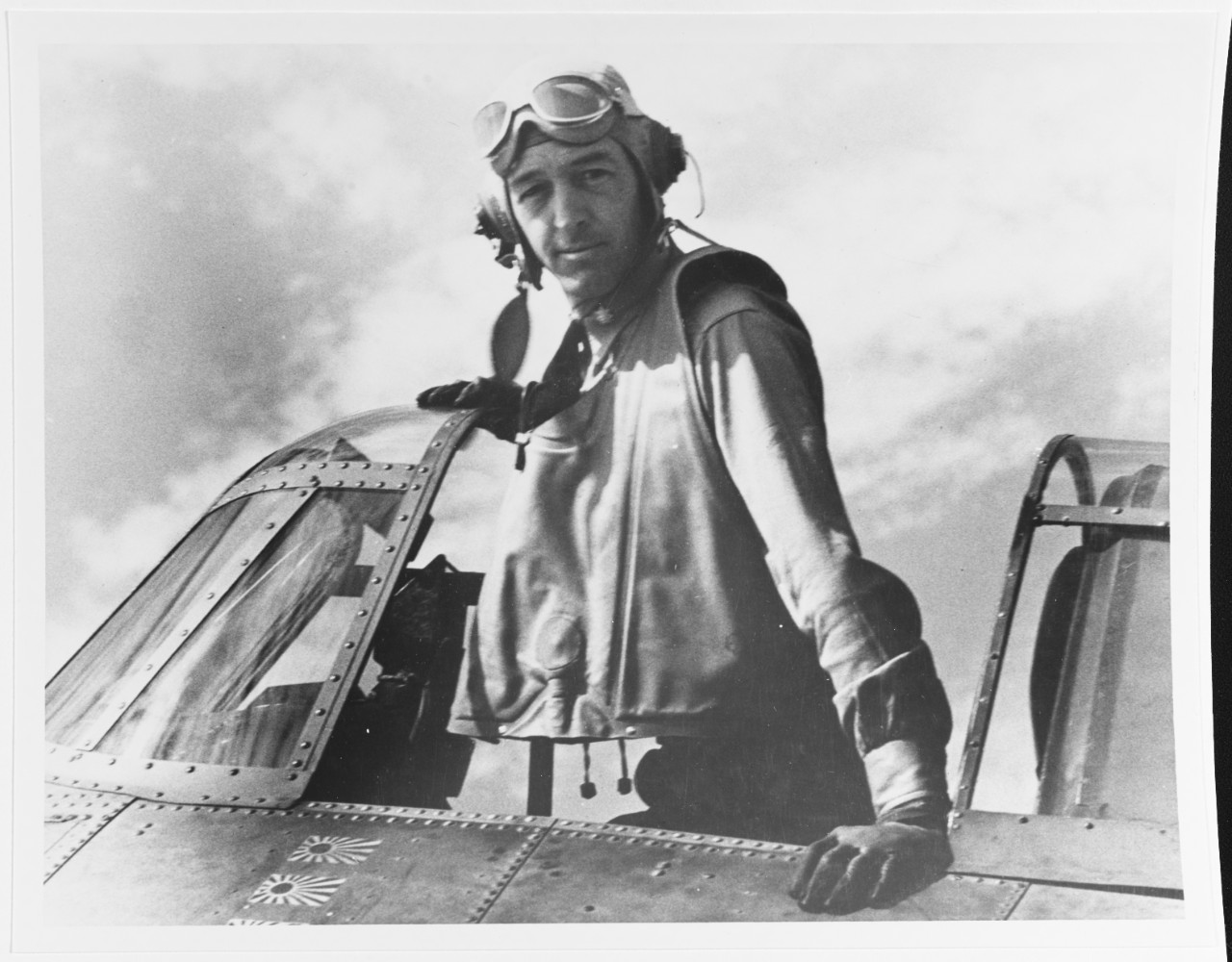
Lt Cdr John S. THACH in the cockpit of his Wildcat BuNo 3976/F-1, photographed in Hawaii in April 1942. Under the cockpit are the markings for three aerial victories scored on 20 February 1942. Photo: U.S. Navy.
The decision to attack
Meanwhile, at Rabaul, Shōshō (RAdm) Gotō Aritomo, commander of the 24th Air Flotilla, received Sakai’s report. At first he held back from sending aircraft against the American force, as he was waiting for further information. He also considered attacking the following day, taking into account the possibility of bringing in one more chutai from Truk.
As an experienced officer, however, he understood that delay would allow the Americans to attack Rabaul. At 13:10 he therefore ordered two chutai of the 4th Kokutai under his command to attack TF-11. The Japanese crews quickly assembled at Vunakanau, and at 14:20 the bombers began taking off.
Eighteen aircraft were assigned to the attack, nine per chutai, but one remained at base because of technical problems. In the end, 17 bombers set out toward the target, each carrying two 250 kg bombs. The Japanese formation was led by Hikōtaichō Shōsa Itō Katuzō, flying in aircraft F-348 together with the commander of the first chutai, Dai-i Seto Yōgorō. The second chutai was commanded by Dai-i Nakagawa Masayoshi.
Shortly after passing New Ireland, the formation encountered a squall, forcing Itō to split it up to avoid collisions in the difficult weather conditions.
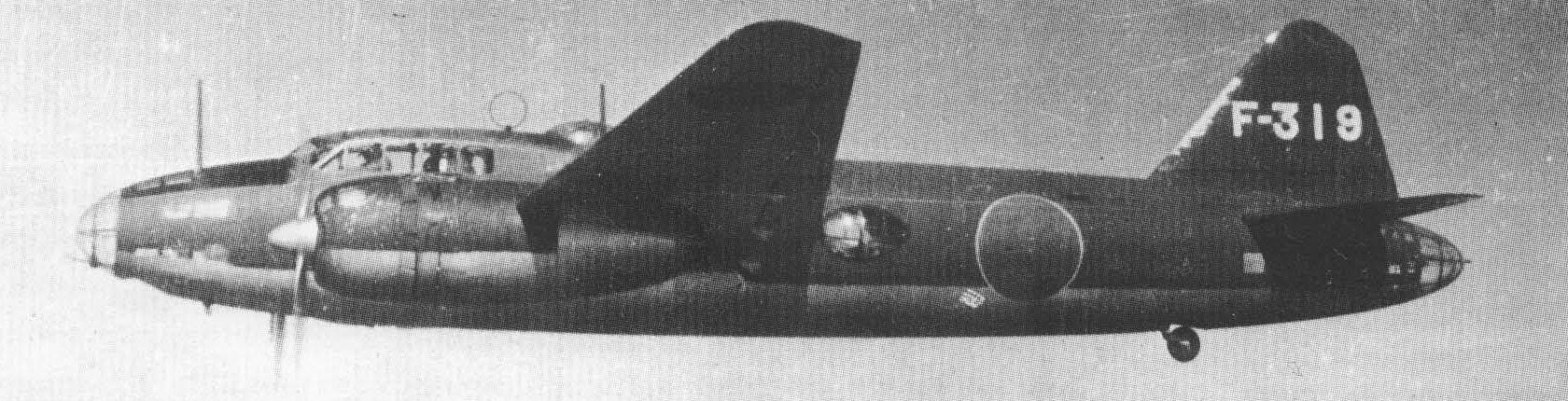
Mitsubishi G4M1 Betty torpedo bomber of the 4th Kokutai, summer 1942. Photo: Wikimedia Commons.
The clash with the second chutai
Meanwhile, VAdm Brown was forced to cancel the attack, assuming that the Japanese crews had managed to report the position and composition of the American force, eliminating the element of surprise. Just after 16:00, Lexington’s radar detected a contact at a range of 75 miles. Soon afterwards the contact disappeared from the radar screens, only to reappear 25 minutes later, now 25 miles closer. It was clear that an enemy formation would soon attack.
The greatest limitation of the radars of the time was that they could not determine the size of the formation or its exact altitude. Assuming the worst, orders were given to increase speed to 30 knots, and the ships went to general quarters. At that moment a six-aircraft “division” led by Lt Noel Gayler was already over TF-11, having taken off shortly after the approaching enemy had been detected. His section was immediately directed toward the threat.
The formation detected by radar was the second chutai under Nakagawa. At 16:35 he sent a report that he had sighted the American force and was preparing to attack.
Four minutes later, Noel Gayler and Ens. Dale Peterson, flying Wildcat F-5, attacked the Japanese bombers, hitting several of them. One Rikkō caught fire and dropped out of formation. Soon the rest of Gayler’s formation joined the fight, and shortly afterwards two more Bettys were shot down. A little later the aircraft approached the American ships, which put up a wall of fire.
Moments later, Gayler and Peterson damaged Nakagawa’s aircraft, which fell out of formation, and shortly afterwards American fighters eliminated a fifth Betty. The remaining Japanese aircraft, despite the loss of their commander, who was supposed to give the order to release bombs, attacked the ships, but their bombs missed. Soon after the attack, another bomber was shot down.
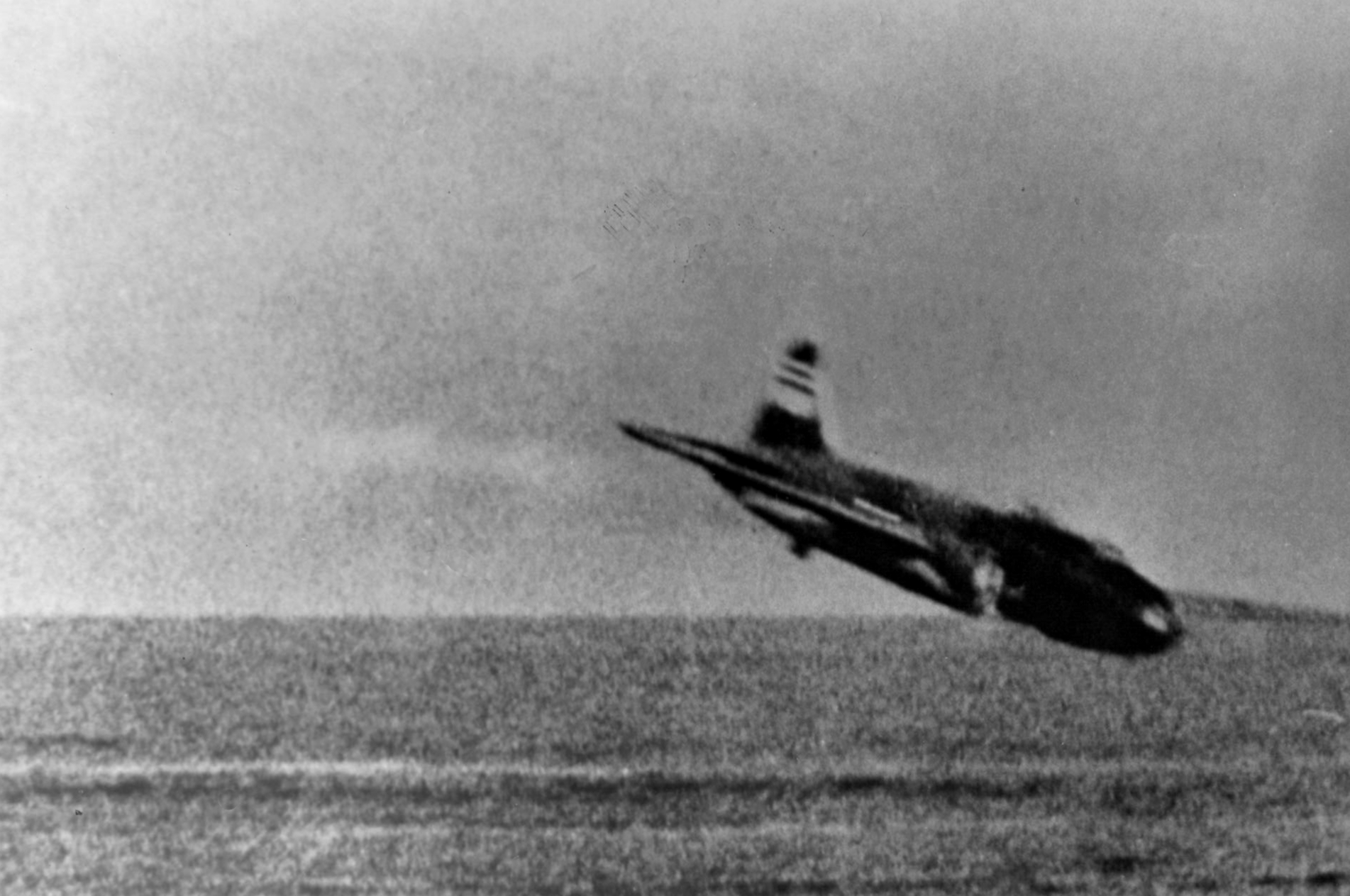
The G4M1 Betty of second chutai commander Nakagawa Masayoshi, damaged by Gayler and Peterson, moments before crashing. Photo: U.S. Navy via Wikimedia Commons.
Just before the Japanese released their bombs, Cpt Sherman ordered all fuelled aircraft to launch. The first to take off were Wildcats flown by Thach (F-13), Sellstrom (F-2), O’Hare (F-15) and Dufilho (F-4). Immediately after launch, the Thach–Sellstrom pair headed after the fleeing bombers, with more Wildcats joining the pursuit.
One of them, flown by Lt (jg) Howard Johnson in F-11, was hit by Japanese gunners. The fire wounded the American pilot in the legs and damaged his aircraft’s engine. Johnson bailed out and was picked up from the ocean by an American destroyer.
Soon afterwards another Wildcat, F-9 flown by Ens. Wilson, was hit by a Japanese gunner. Cannon fire tore away the canopy and the Wildcat fell into the sea five miles from USS Lexington. The pilot was killed.
The Japanese crew did not enjoy their success for long, as Wilson was avenged by Thach. His fire caused an explosion that tore off the Betty’s wing. The Japanese bomber fell burning into the sea. Meanwhile, Nakagawa’s crew regained control of their aircraft and turned back toward the target. They managed to close to within two miles before being spotted. Anti-aircraft fire put up a barrage that finally brought the Betty down very close to Lexington. The Japanese bomber hit the waves in the carrier’s wake.
In the end, the entire chutai was destroyed. The last bomber, about 80 miles from the American ships, was shot down by the crew of a patrolling SBD-2 Dauntless from VS-2: Lt Edward Allen and radioman-gunner first class Bruce Rountree.
Butch O’Hare versus the first chutai
Shortly after Nakagawa’s chutai had been destroyed, Lovelace’s section had to land because it was low on fuel. Seven other fighters were west of the American force. Only one pair remained above the task force: Butch O’Hare in F-15 and Lt (jg) Marion Dufilho in F-4.
At 16:56, a lookout on the destroyer USS Patterson spotted another enemy formation approaching. It was the first chutai, commanded by Shōsa Itō. By the time he found the American force, the second chutai no longer existed. Because of this delay, his formation encountered only two American fighters in the air, which were directed against the new enemy when it was 10 miles from the ships.
The Japanese bombers began to descend and increase speed in order to attack. “Butch” O’Hare and Dufilho headed toward them, but it turned out that Dufilho’s guns had jammed. This was a fairly common problem in the F4F-3 when the aircraft performed hard manoeuvres under high G-load. O’Hare was therefore left as the only pilot able to face the enemy.
At the same time, the FDO ordered the pilots who had taken part in destroying the second chutai to return over the force immediately. Despite the approaching enemy, Lexington herself turned into the wind to recover Lovelace’s section, which was running short of fuel.
Seeing this manoeuvre, Itō ordered a turn to attack the American carrier from astern. At 17:05, “Butch” O’Hare, with Dufilho on his wing, went in against the enemy.
His first victim was the Betty commanded by Nihiso Baba Tohikaru, which he shot down. He then damaged the Betty commanded by Ippiso Mori Bina, whose crew was forced to jettison its bombs in order to stay in the air. His next target was the bomber of Nihiso Kogiku Ryōsuke, which dropped out of formation with its right engine on fire. After the fire was extinguished, the Betty managed to rejoin the rest of the formation. The next target was the bomber commanded by Ippiso Maeda Kōji. This aircraft was also damaged and left the formation. Its crew managed to put out the fire, but the machine fell behind.
By then the Japanese aircraft were within range of the American ships’ anti-aircraft guns, which opened a furious fire without regard to the possibility of hitting their own fighters. As a result, O’Hare’s aircraft was hit twice by fragments as he went in for his third attack on the Japanese bombers.
His fire brought down the bombers of Dai-i Mitani Akira, which fell burning into the sea, and the aircraft of the attack leader Itō. The American pilot’s fire tore the bomber’s engine loose, after which the aircraft entered a spin. O’Hare used the rest of his ammunition in another attack on Maeda’s aircraft, which nevertheless survived the encounter and returned to Vunakanau.
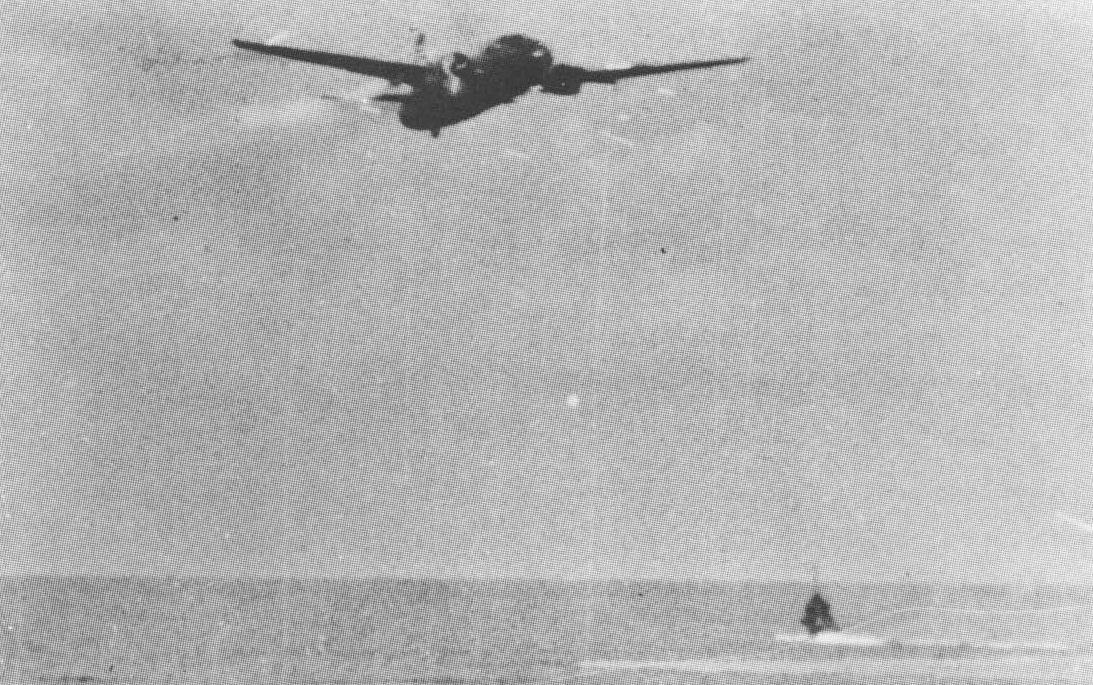
G4M1 Betty of first chutai commander Katuzō Itō, hit by O’Hare, with its engine torn off shortly before crashing about 1,400 m from the aircraft carrier USS Lexington. Photo: U.S. Navy via Wikimedia Commons.
The American pilot single-handedly put five enemy aircraft out of action: three shot down and two damaged. As a result, only three bombers carried out an attack on Lexington, which made a sharp turn after recovering Lovelace’s aircraft. Thanks to this, the six bombs dropped missed the target, although one fell close enough for fragments to shower the carrier’s deck.
After dropping their bombs, the Japanese aircraft, now half a tonne lighter, accelerated to get away from the enemy as quickly as possible. Eight miles from TF-11, however, Doc Sellstrom shot one of them down. Another, commanded by Ikkuso Ono Kosuke and damaged by anti-aircraft fire, became the target of returning Wildcats, whose fire killed or wounded several crew members.
Meanwhile, the bomber of Ippiso Mori, earlier damaged by O’Hare, was attacked by an SBD-2 Dauntless flown by Lt Allen. Using the greater speed of his dive bomber, Allen positioned his aircraft below the Japanese machine, allowing his gunner to fire at the enemy with his Brownings. Despite further damage, the Japanese aircraft continued toward base, and Lt Allen turned back to Lexington.
This was not the last act of the battle. It turned out that the pilot of the formation leader’s Betty had managed to regain control of his aircraft. Seeing the condition of the machine, Itō decided to carry out taiatari — a suicide attack on the target. The crew jettisoned the bombs to maintain altitude. Sherman turned the ship away, presenting its stern to the enemy. The Japanese bomber, however, did not alter course enough to hit the ship. Perhaps anti-aircraft fire had killed the pilots, or perhaps the damage was so severe that the aircraft was difficult to control. Whatever the reason, the Rikkō passed parallel to Lexington and crashed into the sea less than a mile from the carrier.
Once the danger had passed, all the Wildcats returned to the carrier’s deck.
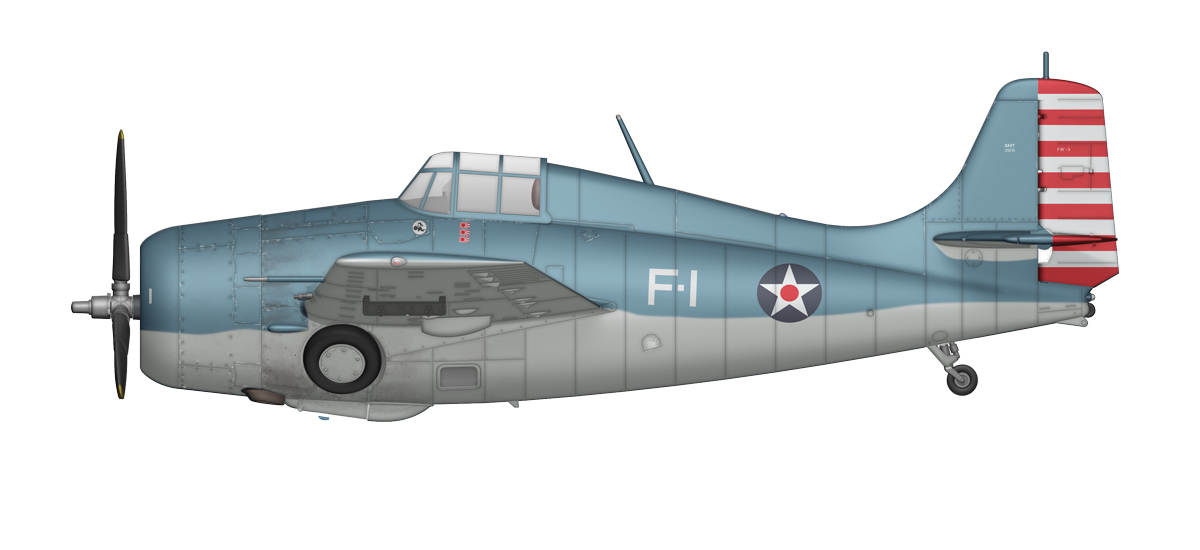
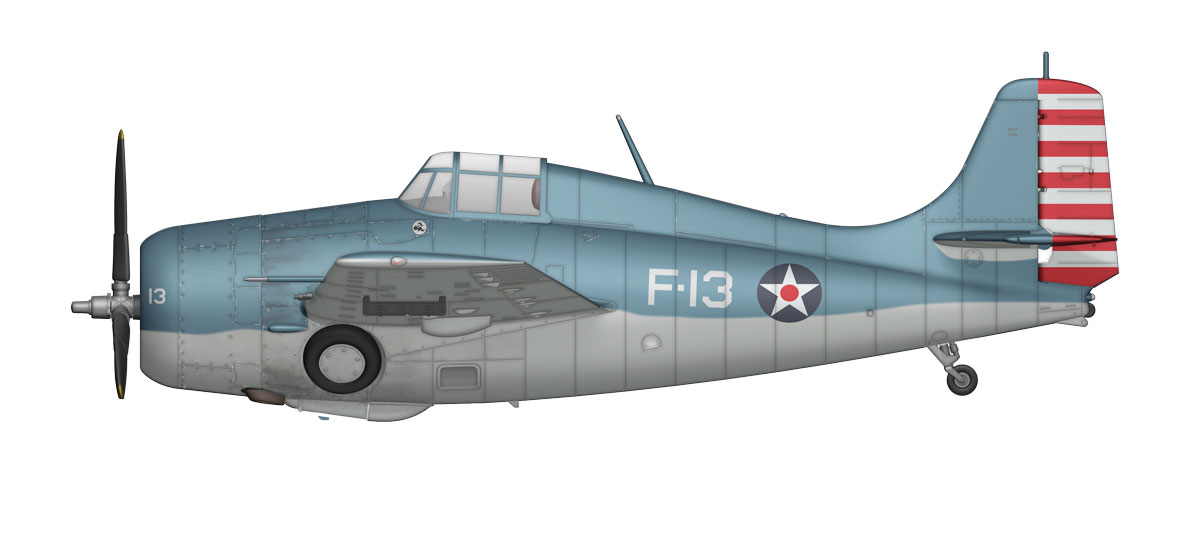
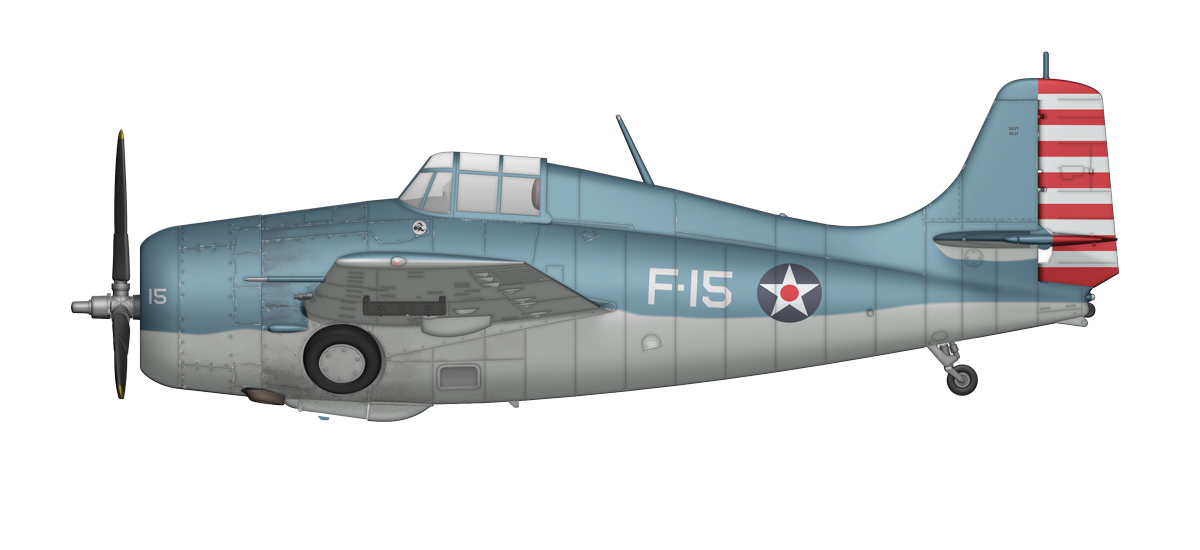
Three Wildcats before the 20 February action. F-1 and F-13, on which Thach flew combat sorties in sequence, and F-15, assigned to O’Hare. None of them carries victory markings. More about these aircraft can be found in the section VF-3 aircraft and the model.
After the clash
Meanwhile, in Rabaul, Shōshō Gotō Aritomo received a report from the first chutai stating that the attack had ended at 17:30 and that one ship had been sunk. The report also noted, however, that the American defence had been very effective. In the end, four Betty bombers survived the attack, but only two machines — those commanded by Maeda and Kogiku — reached Vunakanau.
The bomber commanded by Ono ditched at about 19:25 near Nuguria Atoll, 175 miles from Rabaul. Ono and two other crew members made it ashore, where the local people offered them coconuts and food in exchange for cigarettes. The next day, E13A1 Jake floatplanes dropped food and a message that help was on the way. The rest of the day was spent recovering and cremating their fallen comrades. The following day a boat reached the island and took them back to Rabaul.
The last Japanese bomber ditched at 20:10 in Simpson Harbour. The survivors quickly escaped from the sinking aircraft. They did not know, however, where they were. Eventually they were rescued by a passing vessel.
Shortly after the battle, based on the accounts of Japanese airmen, Japanese newspapers published articles claiming that one aircraft carrier and one cruiser had been sunk, while omitting their own losses.
The destruction of the Japanese bombers did not end the list of Japanese air losses. In the afternoon, two more Mavis flying boats were sent out to maintain contact with TF-11, but one disappeared without trace. It most likely fell victim to a storm front near New Ireland. A similar fate befell one E13A1 floatplane. The Japanese command sent four such aircraft to shadow the American force. One of them transmitted a report at 20:00 that it was ending its shadowing mission and returning to base, but it never arrived. It too most likely fell victim to bad weather near New Ireland.
After the battle
Despite such heavy losses, the Japanese did not give up. Just before midnight, four Mavis flying boats took off from Simpson Harbour, each armed with two torpedoes. They did not find the target, because immediately after the battle Brown changed course to the east and began moving away from Rabaul.
Although the main objective of the mission — the attack on Rabaul — was not carried out, the US Navy had shown that it was a force to be reckoned with.
It also became clear that Japanese Mitsubishi G4M Betty bombers were highly vulnerable to the .50 cal Browning machine-gun fire carried by the Wildcats. The lack of self-sealing fuel tanks meant that a short burst could set the aircraft on fire, while the lack of armour led to heavy casualties among crews — even when the aircraft managed to return to base.
It should also be noted that the Japanese bombers flew the mission armed with 250 kg bombs instead of torpedoes. This was because at the time of the battle there were no torpedoes at Rabaul and Vunakanau of the type used by the G4M bombers. The torpedoes carried by the Mavises on the night mission against TF-11 were not compatible with the Mitsubishi bombers.
Japanese losses might have been lower had the formation flown with fighter escort. At the time, however, Rabaul was defended mainly by A5M Claude fighters, which lacked the necessary range, while the A6M fighters that had reached the Japanese base shortly before the action were not yet ready for combat.
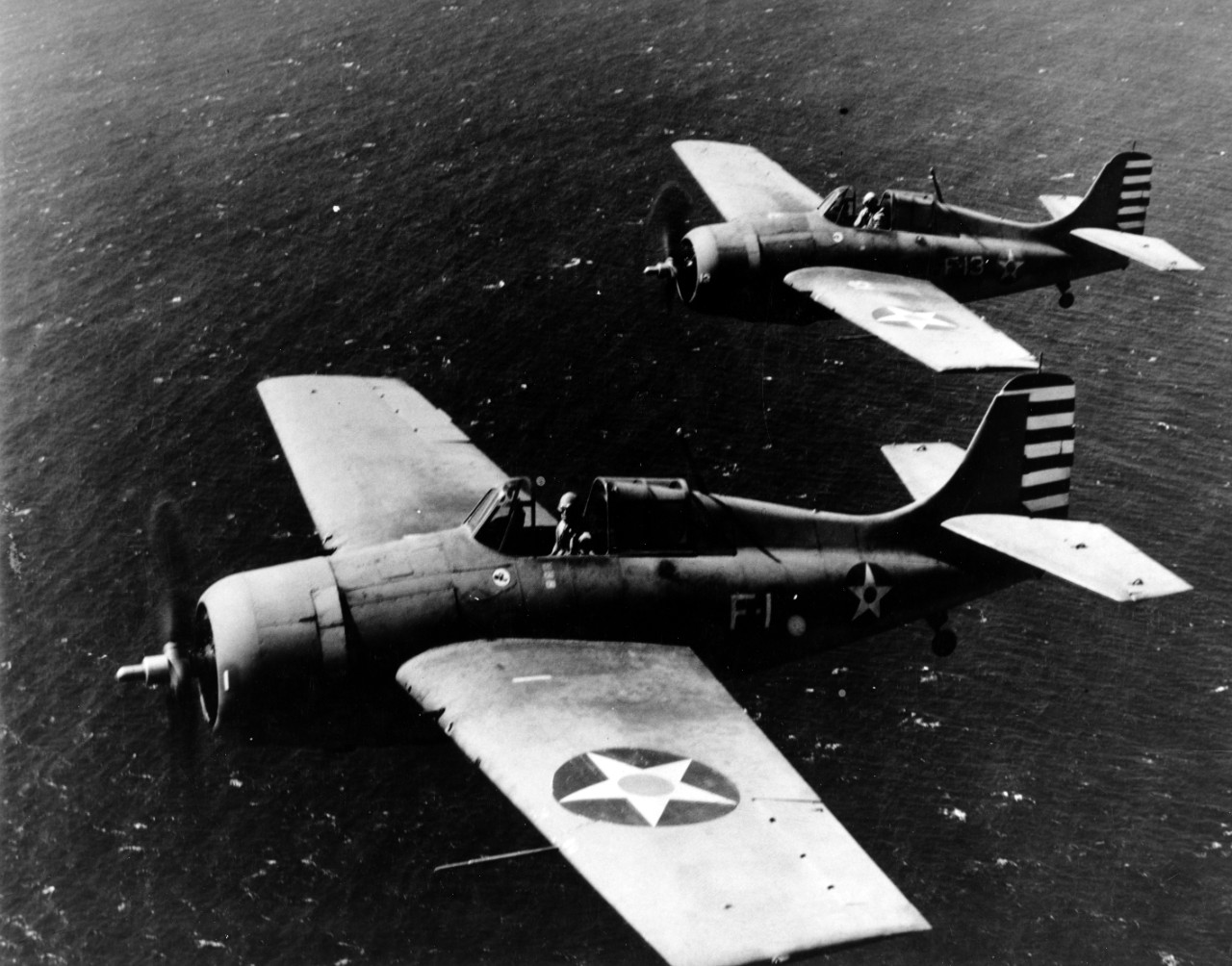
Photo session in Hawaii, 10 April 1942. Cdr Thach is flying Wildcat F-1, while Lt O’Hare is in F-13. The aircraft carry victory markings, discussed in more detail below. Photo: U.S. Navy.
VF-3 aircraft and the model
How should the aircraft of the victors of this battle be modelled? From a modeller’s point of view, the matter is not as simple as it may seem.
In the US Navy, every aircraft had an assigned pilot, but in practice this did not mean that he flew that particular machine on a given combat sortie. Under carrier operating conditions, aircraft availability was decisive — the machines assigned for take-off were those closest to the flight deck and ready for use at that moment. Pulling a particular aircraft “from the back of the hangar” was often simply impossible.
That is why the well-known photographs taken in Hawaii on 10 April 1942 do not show exactly the same aircraft on which the pilots flew during the action of 20 February.
This is clearest at the critical moment of the battle. When the last four Wildcats got airborne, they were assigned ad hoc:
- John S. Thach – F-13
- Edward R. Sellstrom – F-2
- Edward “Butch” O’Hare – F-15
- Marion W. Dufilho – F-4
The greatest victor of the day, O’Hare, therefore did not fly his assigned aircraft, F-3 — it is not known who flew it that day — but F-15 (BuNo 4031).
Thach flew two aircraft — first F-1, and later F-13 (BuNo 3986). Interestingly, the photographs from 10 April show:
- Thach in F-1 with markings for his three own victories,
- O’Hare in F-13 with markings for Gayler’s three victories.
This further complicates any simple identification of “who flew what”.
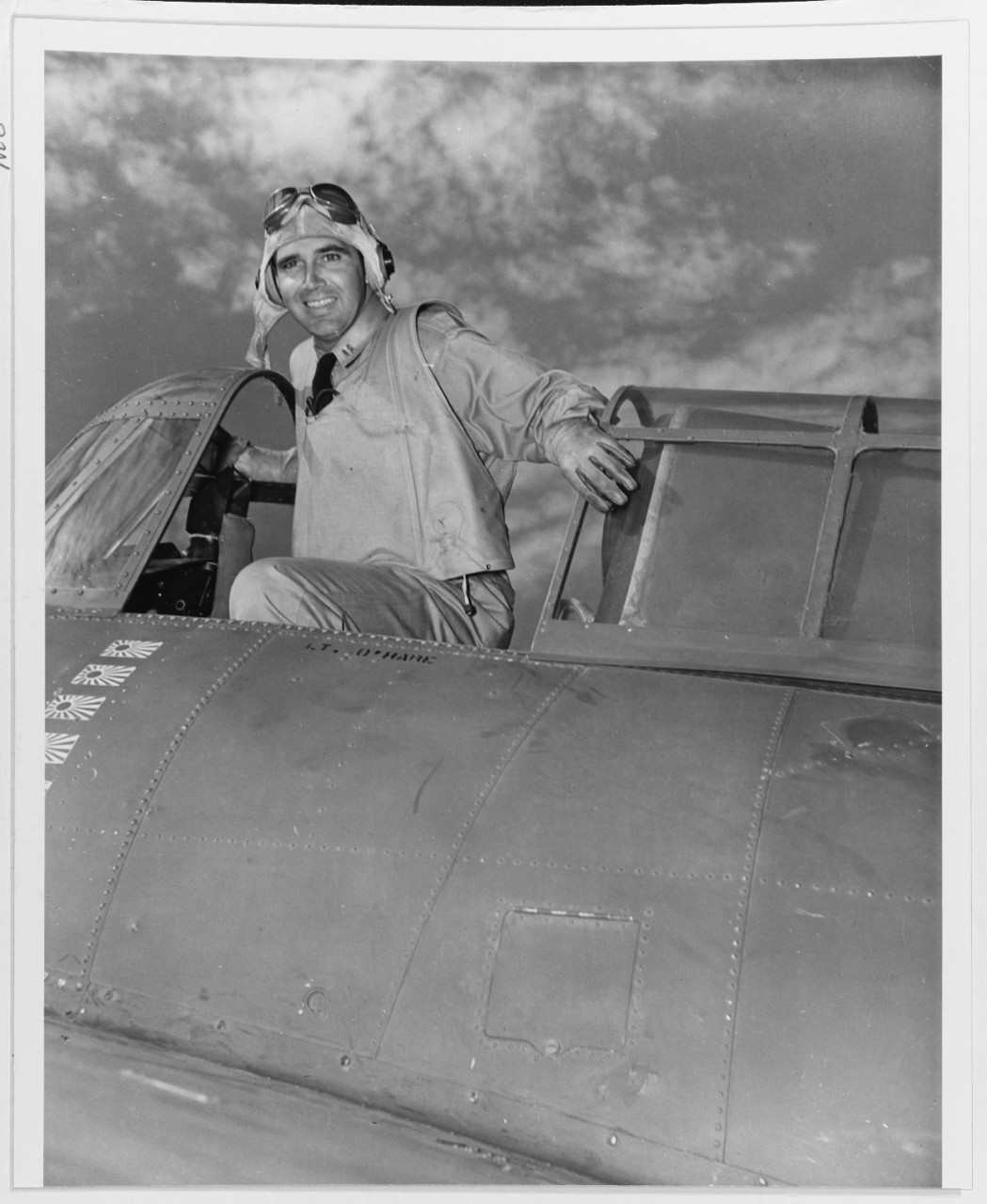
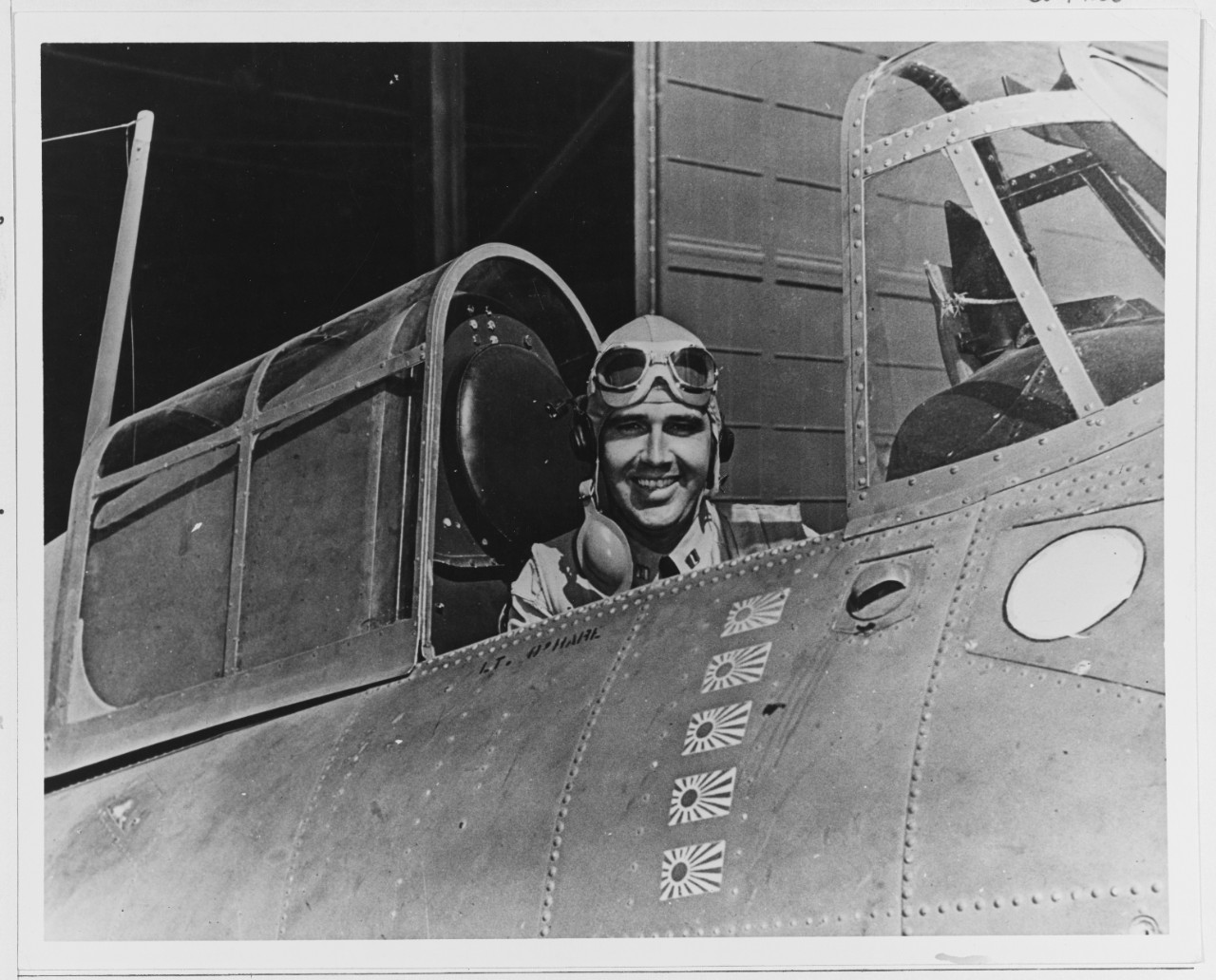
Two photos of Lt Edward H. O’HARE in his Wildcat side number F-3 with markings for five aerial victories, Hawaii, April 1942. The squadron emblem was obscured by the censor. Photo: U.S. Navy.
VF-3 – aircraft and combat use, 20 February 1942
Compiled by Wojciech Bułhak
The table below is an attempt to present the source data as faithfully as possible — who flew which aircraft, and in what configuration, during the battle.
| Aircraft no. | BuNo | Assigned pilot | Combat, 20 February 1942 | Victories / result |
|---|---|---|---|---|
| F-1 | 3976 | Lt Cdr John S. THACH | Lt Cdr John S. THACH | 1 H6K shared |
| Lt Noel A. M. GAYLER | 1 G4M1, 2 G4M1 shared | |||
| F-2 | Ens Edward R. Jr. SELLSTROM | Ens Edward R. Jr. SELLSTROM | 1 H6K shared | |
| F-3 | Lt Edward H. O’HARE | n/a | n/a | |
| F-4 | Lt (jg) Marion W. DUFILHO | Lt (jg) Marion W. DUFILHO | none (guns jammed) | |
| F-5 | 4009 | Lt (jg) Onia B. Jr. STANLEY | Ens Dale W. PETERSON | 1 G4M1, 1 G4M1 shared |
| F-6 | Ens Leon W. HAYNES | n/a | n/a | |
| F-7 | 4021 | Lt Cdr Donald A. LOVELACE | Lt (jg) Onia B. Jr. STANLEY | 1 H6K shared |
| F-8 | Ens Richard M. ROWELL | n/a | n/a | |
| F-9 | 3995 | Lt Albert O. Jr. VORSE | Ens John W. WILSON | none (killed in action) |
| F-10 | Lt (jg) Robert J. MORGAN | Lt (jg) Robert J. MORGAN | n/a | |
| F-11 | Lt (jg) Howard L. JOHNSON | Lt (jg) Howard L. JOHNSON | none (wounded in action) | |
| F-12 | Ens John H. LACKEY | n/a | n/a | |
| F-13 | 3986 | Lt Noel A. M. GAYLER | Ens Leon W. HAYNES | 1 H6K shared |
| Lt Cdr John S. THACH | 1 G4M1, 1 G4M1 shared | |||
| F-14 | Ens Dale W. PETERSON | n/a | n/a | |
| F-15 | 4031 | Lt (jg) Rolla S. LEMMON | Lt Edward H. O’HARE | 5 G4M1 |
| F-16 | Lt (jg) Howard F. CLARK | n/a | n/a | |
| F-17 | Ens Willard E. EDER | n/a | n/a | |
| F-18 | Ens John W. WILSON | n/a | n/a |
Victories without aircraft number data
It is not possible to assign a specific aircraft at the moment of the victory.
| Aircraft | Pilot | Victories / result |
|---|---|---|
| Unknown aircraft | Lt (jg) Howard F. CLARK | 1 G4M1 shared |
| Unknown aircraft | Ens Willard E. EDER | 1 G4M1 shared |
| Unknown aircraft | Ens John H. LACKEY | 1 G4M1 shared |
| Unknown aircraft | Lt (jg) Rolla S. LEMMON | 1 G4M1, 1 G4M1 shared |
| Unknown aircraft | Lt Cdr Donald A. LOVELACE | 1 G4M1 shared |
| Unknown aircraft | Lt (jg) Robert J. MORGAN | 1 G4M1 shared |
| Unknown aircraft | Ens Richard M. ROWELL | 2 G4M1 shared |
| Unknown aircraft | Lt Albert O. Jr. VORSE | 1 G4M1 shared |
How this translates into the model
For the modeller, this means one thing: there is no single “only correct” option — but there are several correct options.
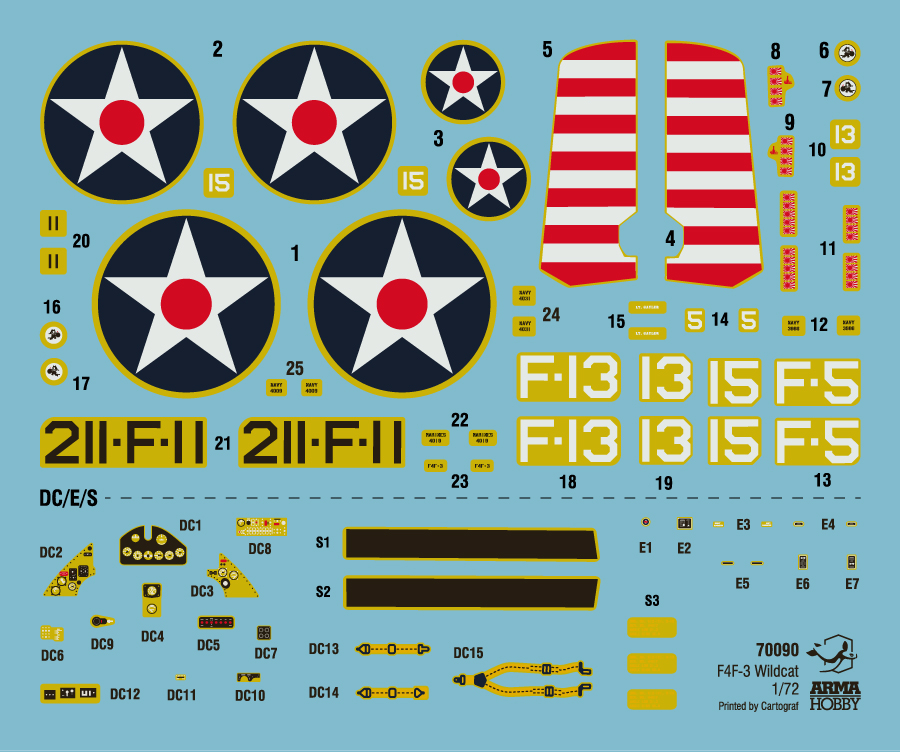
In the 70090 F4F-3 Wildcat kit, we have taken this specificity into account:
- F-13 (BuNo 3986, decal number “12”) – Gayler / Thach,
- F-15 (BuNo 4031, decal number “24”) – Edward O’Hare (5 victories),
- F-5 (BuNo 4009, decal number “25”) – Peterson (1 × G4M1 shared),
- the option to build the “O’Hare in F-13” variant, in line with the photographs from 10 April,
- the option to assemble markings corresponding to Thach’s F-1.
The kit also includes spare victory markings, which can be matched to the chosen variant according to an interpretation based on the sources.

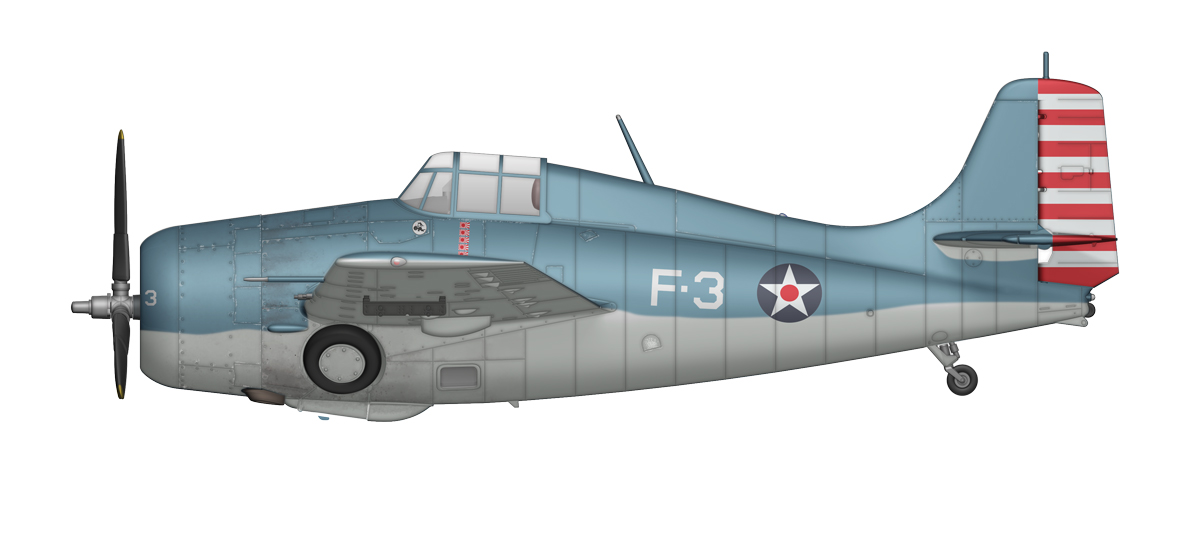
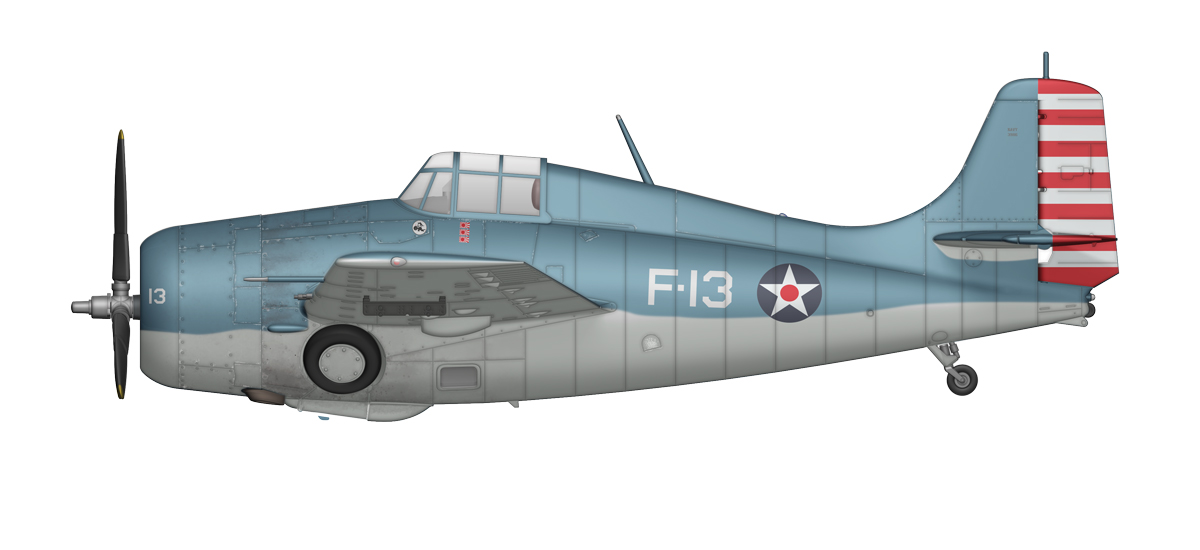
VF-3 aircraft in April 1942: from top, BuNo 3976/F-1 Thach’s personal aeroplane with three victories; next is F-3 of O’Hare with five; and then BuNo 3986/F-13 of Gayler with three victories — the aircraft in which O’Hare flew during the photo session.
See also
- See the Grumman F4F-3 Wildcat model kit in the Arma Hobby shop
Ranks and terminology
Ranks
| Japan | US Navy | |
|---|---|---|
| Shōshō | Rear Admiral | |
| Shōsa | Commander | |
| Dai-i | Lieutenant | |
| Chū-i | Lieutenant (jg) | |
| Ippiso | Chief Petty Officer | |
| Nihiso | Petty Officer |
Other terms
| Term | Meaning |
|---|---|
| Chūtai | squadron, usually about 9 aircraft |
| Hikōtaichō | air leader / flying personnel commander |
| Rikkō | short for Rikujō Kōgeki-ki, land-based attack bomber |
| Reisen | short for Rei-shiki Kanjō Sentōki, A6M Zero fighter |
| FDO | Fighter Direction Officer |
| CAP | Combat Air Patrol |
| TF | Task Force |
| VF | Fighter Squadron, US Navy |
| VS | Scouting Squadron, US Navy |
| RAAF | Royal Australian Air Force |
Bibliography
- John B. Lundstrom, The First Team. Pacific Naval Air Combat from Pearl Harbor to Midway, Naval Institute Press, Annapolis, Maryland.
- Michael Claringbould, Peter Ingram, South Pacific Air War Volume 1. The Fall of Rabaul. December 1941–March 1942, Avonmore Books, Kent Town, Australia.
- Steve Ewing, John B. Lundstrom, Fateful Rendezvous. The Life of Butch O’Hare, Naval Institute Press, Maryland.

An enthusiast of air war during the Battle of Britain, over North Africa and Italy, over South East Asia and France in 1940. In free time builds models in 1/72 scale, and from time to time in 1/48 scale.

Modeller happy enough to work in his hobby. Seems to be a quiet Aspie but you were warned. Enjoys talking about modelling, conspiracy theories, Grand Duchy of Lithuania and internet marketing. Co-founder of Arma Hobby. Builds and paints figurines, aeroplane and armour kits, mostly Polish subject and naval aviation.
This post is also available in:
 polski