“`html
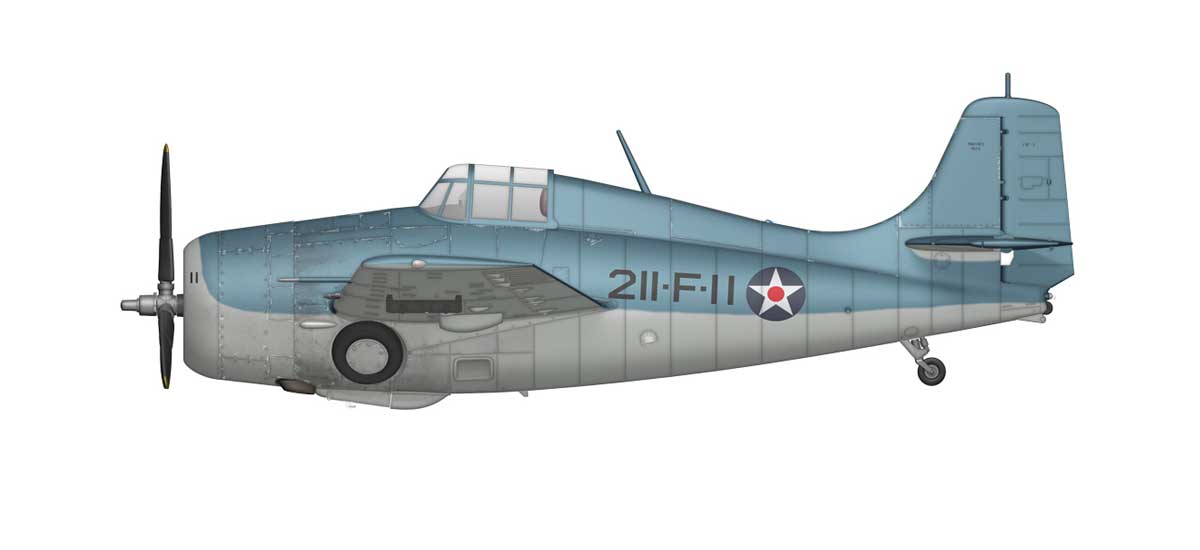
The history of the defense of the Wake Atoll islands is really only a tiny fragment of the enormous events of this conflict. But it was there that one of the first legends of the USMC was born. In Craig Symonds’ comprehensive overview of naval warfare, World War II at Sea, it takes up only three-quarters of a page. Yet the battle for this tiny island in the middle of the ocean brings together many threads, including the story of the hero who became the pretext for writing this article — Henry T. “Hammerin’ Hank” Elrod, the heroic F4F-3 Wildcat pilot.
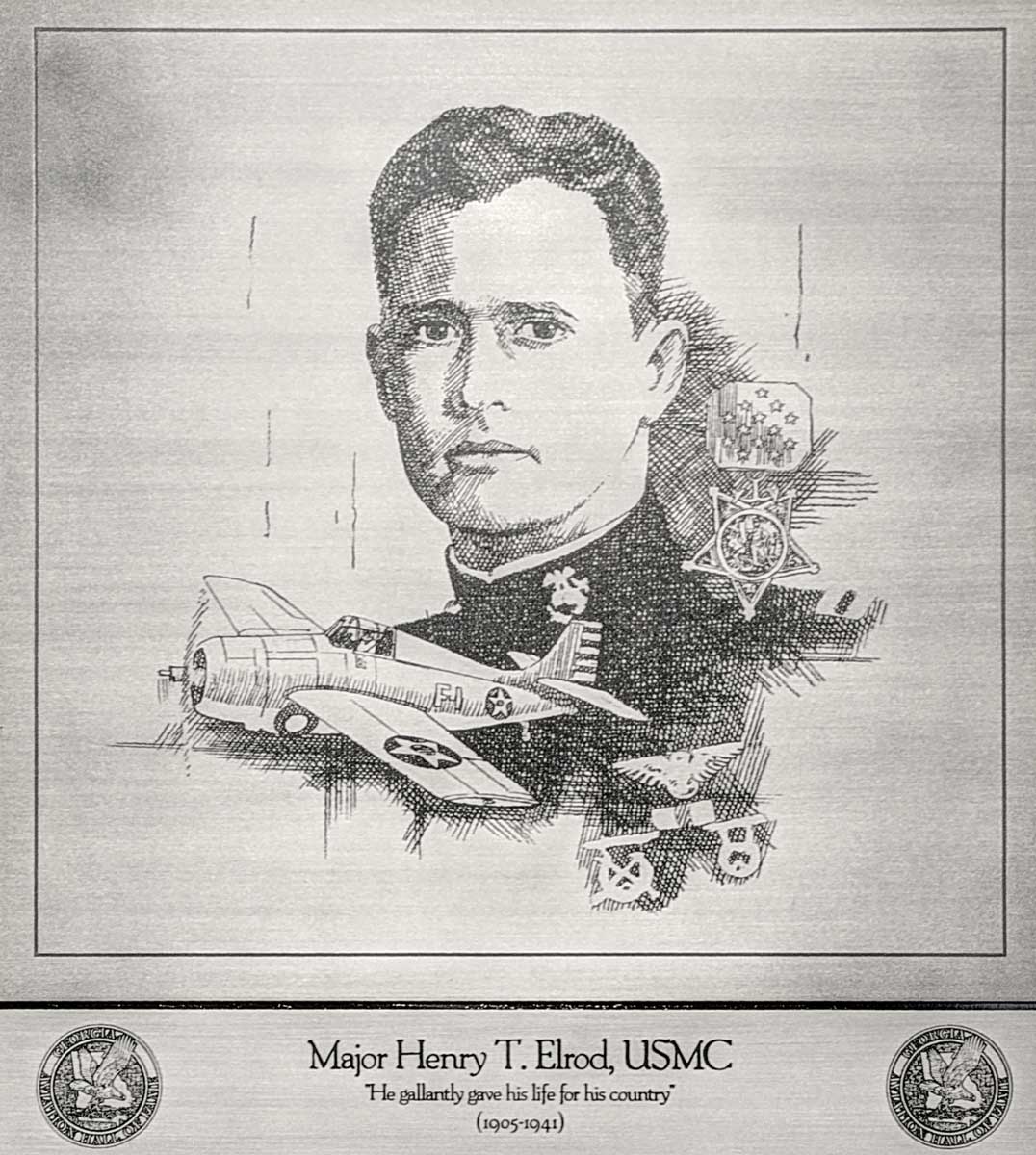
Illustration: Wikimedia Commons.
The events of this battle also became permanently embedded in pop culture. Christopher Walken’s memorable monologue in Pulp Fiction about the gold watch contains this fragment about Butch’s grandfather (played by Bruce Willis).
Dane was a Marine and he was killed, along with the other Marines at the battle of Wake Island. Your granddad was facing death, he knew it. None of those boys had any illusions about ever leaving that island alive.
In the film, Butch’s grandfather entrusted the gold watch to a USAAF airman so that, in the face of certain death, the family heirloom could return to his relatives back in the United States.
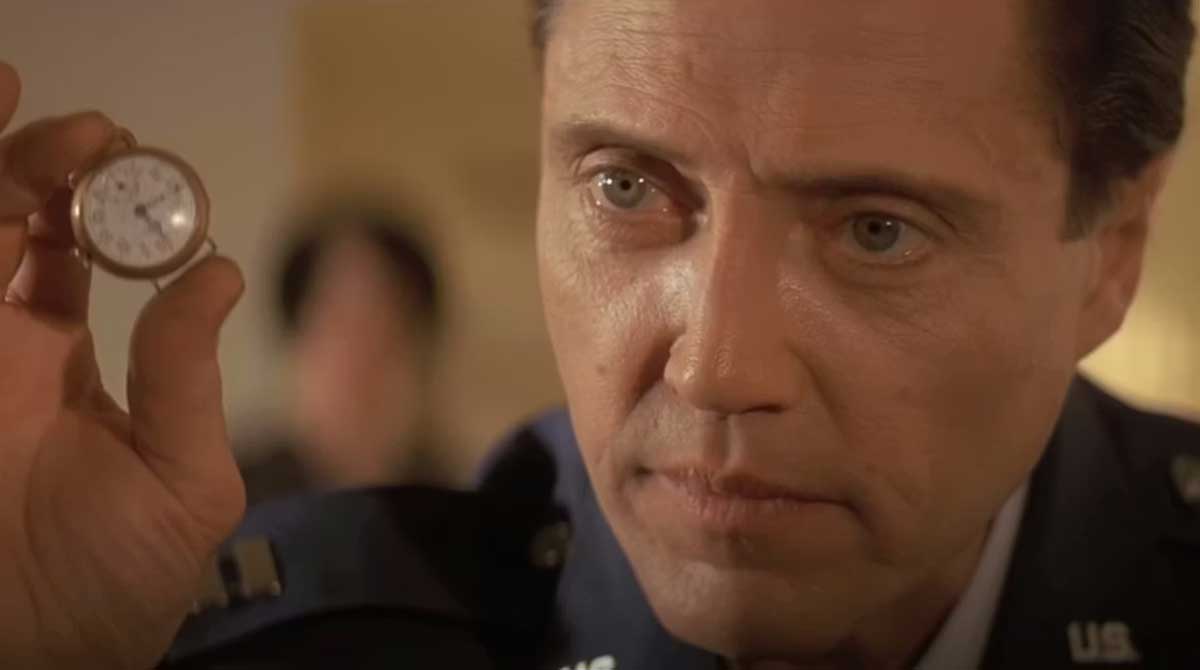
Scene from “Pulp Fiction”.
In reality, the screenwriters should probably have chosen someone from the crew of a civilian Boeing Clipper or the last US Navy PBY that departed the island shortly before its fall.
Wake – an atoll in the middle of the ocean
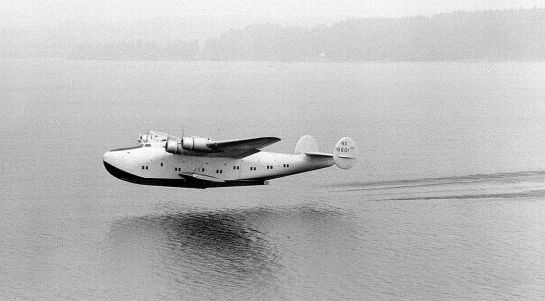 The aforementioned Boeing Clipper (photo beside, Wikimedia Commons) serves as a good way to begin our story. Wake Island is actually a coral atoll made up of three islands surrounding a lagoon. Discovered by the Spanish in 1568, it was only occasionally visited by humans, among them the British captain Samuel Wake, from whom the atoll eventually took its name. In 1899, the United States annexed it as its territory. The island would likely have remained bypassed by human activity had PAN AM not opened its Pacific route. Suddenly, the small island became a perfect stopover point, located halfway between Hawaii and the Philippines. Its lagoon became an airfield for the enormous Boeing 314 Clipper flying boats and the smaller Martin M-130s, while a hotel for passengers was built on the island.
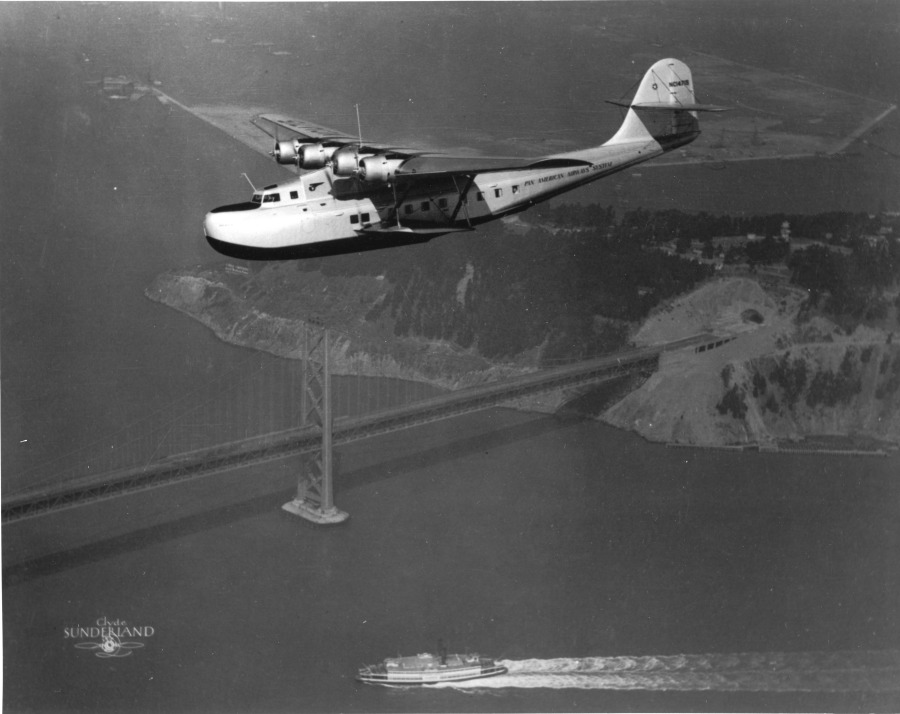
Martin M-130 over San Francisco Bay. Photo: Wikipedia.
Preparations for war came too late
As tensions between Japan and the United States increased, the island began to be militarized. Construction of a military base started in January 1941. The garrison consisted of 449 Marines, 68 US Navy personnel, and around 1,200 civilians responsible for building the infrastructure. In November, VMF-211 was embarked aboard USS Enterprise along with its 12 aircraft. On December 3, the planes launched from CV-6 and flew the final leg on their own. At the time, the island still had no protected aircraft revetments. Preparations for the war that erupted on December 7, 1941, had begun too late.
The small Wake garrison was fully aware of how weak its forces were in the face of the approaching threat. The defenders were equipped only with light weapons. On the island there were six 5-inch guns (coastal defense guns removed from the battleship USS Texas) and twelve 3-inch guns.
The inability to properly shelter the aircraft led the commanders to conclude that the safest place for the planes was in the air. A standing patrol of four aircraft gave at least some chance that part of the squadron would survive a bombing attack.
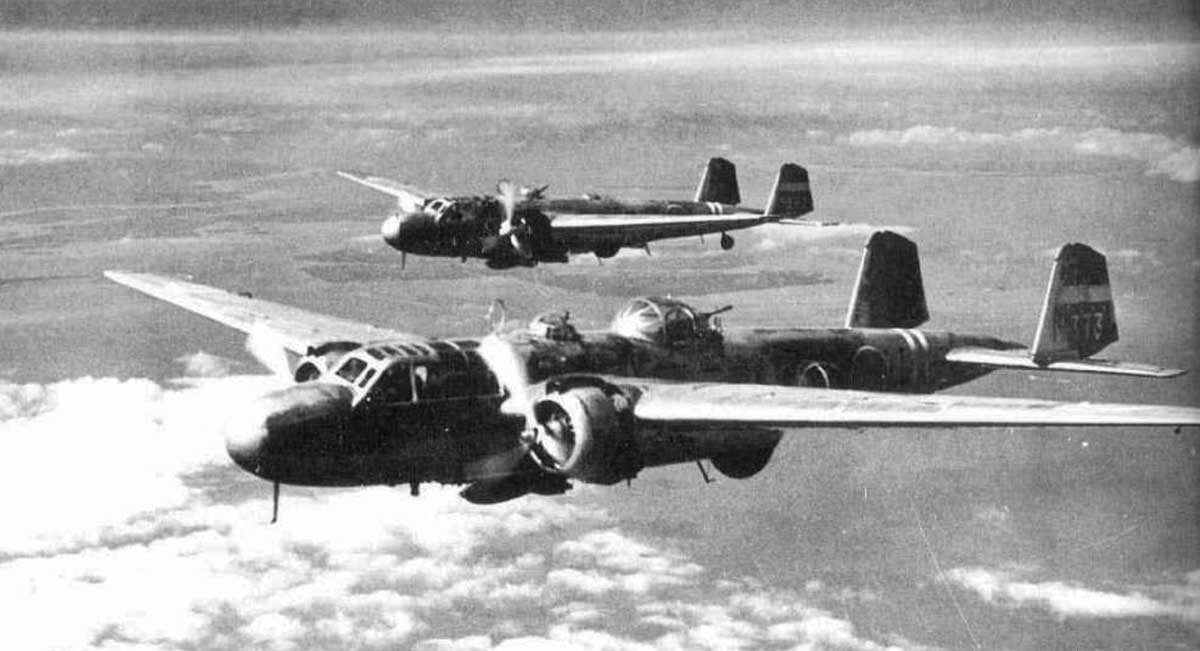
Mitsubishi G3M “Nell” bombers. Photo: Wikimedia Commons.
December 7, 1941
A few hours after the news of the outbreak of war arrived, the first attack by G3M Nell bombers began.
All aircraft on the ground were destroyed (8 total). Out of 55 VMF-211 personnel, 23 were killed and 11 wounded. In addition, 9 PAN AM employees were killed in the raid and many buildings on the island were damaged. A lightly damaged civilian aircraft was quickly repaired and sent back to Hawaii carrying 40 civilians.
Over the following days, the island was bombed repeatedly by Japanese bombers from the Marshall Islands. During these raids, Henry T. Elrod appears in the story for the first time. Flying one of the four surviving Wildcats, he single-handedly attacked a bomber formation from above and claimed two enemy aircraft shot down. Japanese records for that day confirm the loss of one bomber and the return of another heavily damaged machine, validating the achievement of the lone F4F-3.
The first landing attempt – December 11
The Japanese launched their first attempt to land on the island on December 11. Their force consisted of several cruisers and destroyers, while two old destroyers converted into troop transports served as the landing ships. The Americans expected an attack, as radio communications had been disrupted during the night. At dawn, the defenders were ready both on land and in the air. Enemy ships approached the island and began shelling it from short range, which actually reduced the effectiveness of their fire — the shells traveled too flat and often landed beyond the islands, in the lagoon. The Americans held their fire for a long time, waiting for the enemy to come closer. They knew that at short range their guns would stand a chance of striking back effectively. And that is exactly what happened. Once the defenders’ artillery opened fire, Japanese ships were hit accurately. In the third salvo, Battery L struck the destroyer Hayate, which exploded and sank within two minutes, just 3 kilometers from the island’s shore.
Probably the hit detonated either the aft torpedo launcher or the depth charge magazine. Other Japanese ships were also struck, and American gun crews claimed they had even hit the flagship cruiser Yubari. Once American shells began straddling the Japanese formation, the enemy ships laid smoke and started withdrawing. The stubborn defense discouraged the Japanese landing force from attempting an assault.
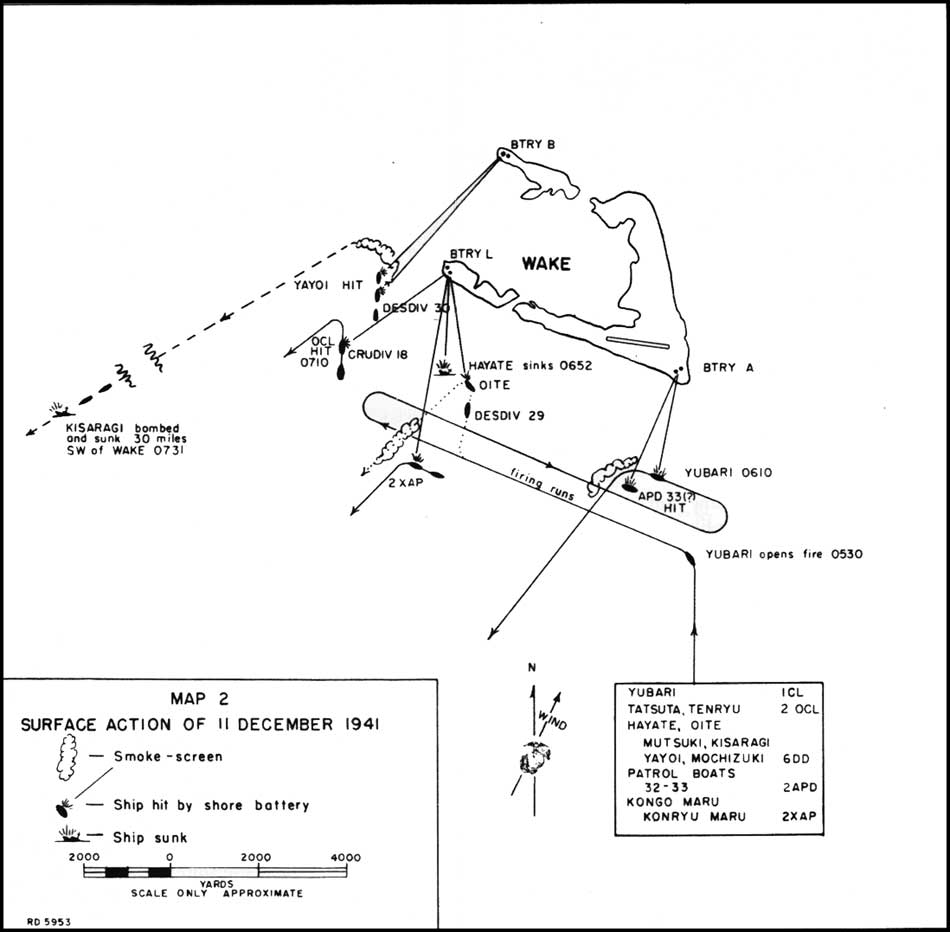
Map of the fighting around Wake Island on December 11, 1941.
Wildcats over Wake
At this point, the Wildcats entered the battle. All four operational aircraft took off in the morning, even before the bombardment began. Interestingly, the F4F-3 had provisions under the wings for bomb racks — earlier Grumman fighters had this capability as well (F2F, F3F, etc.). Although they could carry only two 100-pound bombs, one under each wing, in this case those small bombs proved effective.
In addition to dropping bombs, the aircraft strafed the withdrawing ships with their .50 caliber machine guns. Altogether, the four aircraft dropped 20 bombs, one of which scored a direct hit on the destroyer Kisaragi. The pilot responsible for the hit was the already mentioned Henry T. Elrod. Unfortunately, the determined attacks by the American pilots were met with heavy anti-aircraft fire. The fighting left the USMC with two more damaged F4F-3s.
Only a pair of aircraft remained to defend the island. Yet just two hours after the Japanese withdrawal, the remaining Wildcats intercepted another bomber raid and shot down two Nells. That day, the defense of Wake ended in complete success. The Wildcat proved itself a true fighter-bomber, and the heroism of both the pilots and the soldiers on the island was unquestionable. Seeing how such a small force managed to repel the attack, it becomes clear how important aviation would become in the future Pacific War.
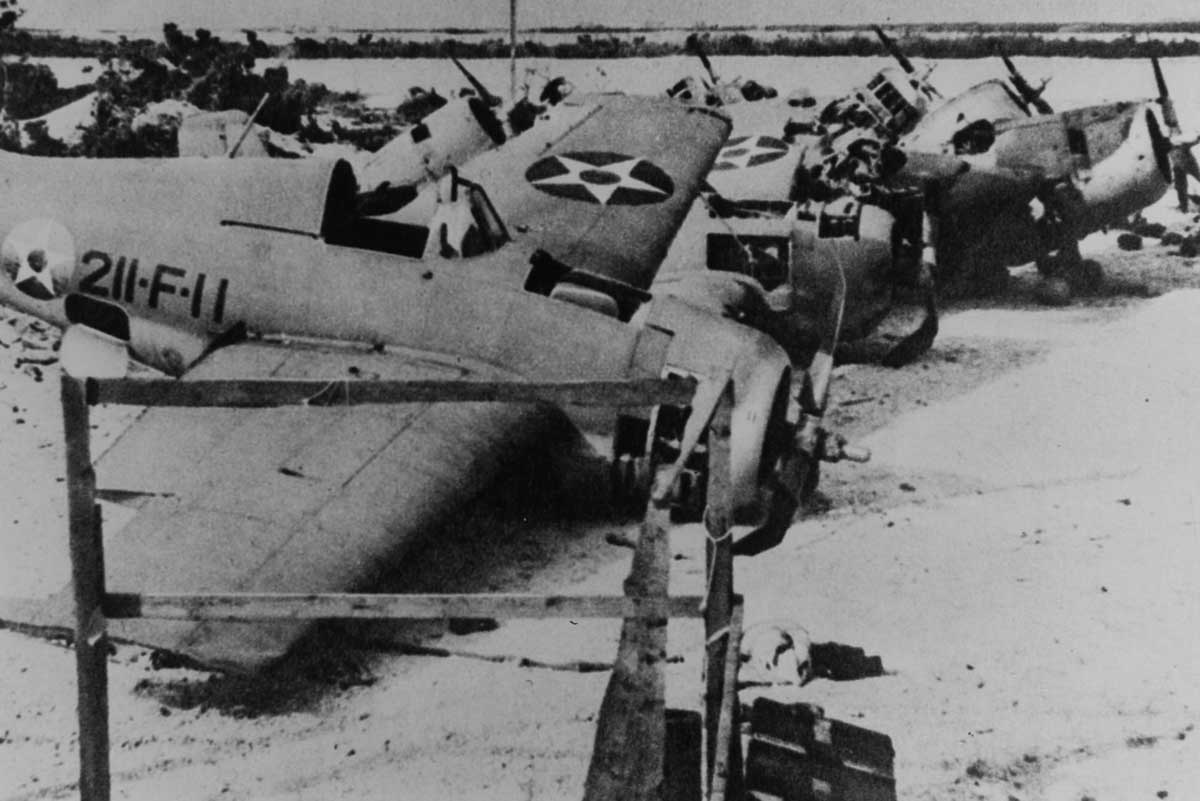
Destroyed F4F-3 Wildcats of VMF-211. In the foreground is BuNo 4019/211-F-1, flown by Capt. Elrod. Photo: US Navy 80-G-179006.
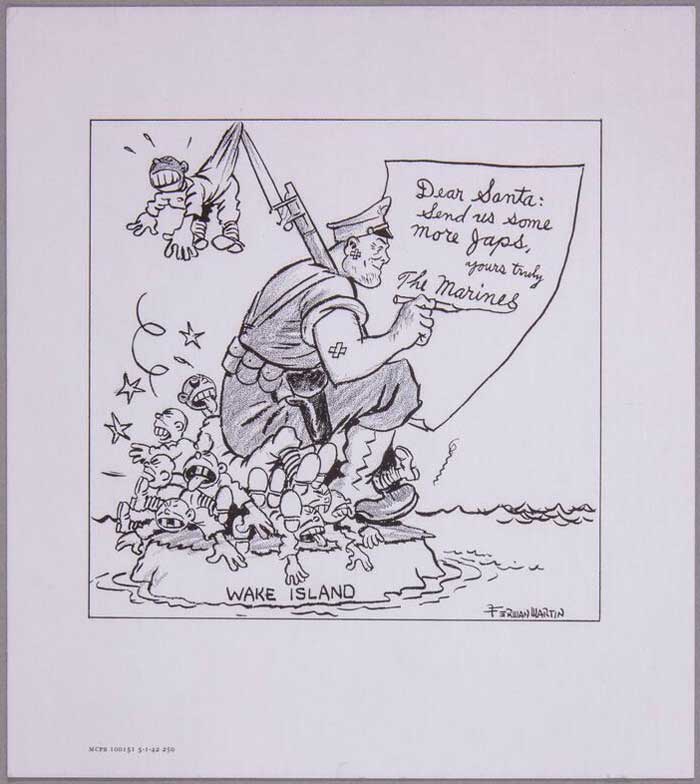
“Send more JAPS” and hope for relief
After the first clash, the situation on Wake remained grim. Unfortunately, there was no chance of major reinforcement — the main US Navy base in the Pacific was still recovering from the December 7 attack. Resources available to support the island were alarmingly scarce. The garrison reported success in defending the island and requested supplies and reinforcements. However, someone misinterpreted part of the message, and news spread that the defenders were asking for more Japanese. The slogan “Send more JAPS” immediately became famous across the United States. It was meant to demonstrate the unbreakable spirit and determination of the Marines on the distant island. One example was a poster showing a muscular Marine writing a letter to Santa Claus before Christmas with exactly that request.
The defense of the island was compared to the defense of the Alamo, which for the defenders themselves was probably more of a bad omen. They were expected to become heroes — but with little chance of victory or survival.
The US Navy command did not want to abandon the defenders without support. Preparations began to embark a second detachment of VMF-211 aboard USS Lexington. Ammunition and supplies were to be delivered by USS Tangier. The mission was extremely dangerous given the fact that Kido Butai was roaming the Pacific. The American fleet first needed to recover and protect its precious aircraft carriers. Logistically, the plan was simple: the carrier, transport ship, and tanker would sail toward the island; at a distance of 200 miles from Wake, VMF-211 would transfer onto the island and together with the carrier provide air cover for the transport ship unloading supplies and evacuating wounded personnel and civilians. Such a force would probably have been able to defend itself against bomber attacks from the Marshall Islands. However, the appearance of two Japanese aircraft carriers in the area completely destroyed US Navy plans for relieving Wake.
The last Catalina flights
The only physical connection with the island came through flights by PBY Catalina flying boats. They were unable to transport significant supplies or evacuate civilians. Henry T. Elrod used this route to send his final, hopeful letter to his wife in the United States.
An interesting detail is that the last pilot to visit the island in a PBY was Ensign Jewell Harmon (“Jack”) Reid — the same pilot who later discovered the Japanese carriers at the opening of the Battle of Midway. It must have been on one of these flights that the fictional gold watch from Pulp Fiction would have been transported.
The fall of Wake
The final outcome of the battle for Wake was, in many ways, inevitable. Aircraft from Soryu and Hiryu finally eliminated the remaining resistance of the USMC pilots on December 22. Both remaining Wildcats were lost while fighting against a strike of 39 carrier-based aircraft. Just before dawn on December 23, the second Japanese assault on the island began.
I will not describe the fighting and surrender of the island in detail. What is worth emphasizing is that the VMF-211 pilots and ground crews took an active part in the defense. Henry T. Elrod, Thompson submachine gun at his side, fought heroically against the Japanese landing forces and was killed in the battle. For his actions during the defense of the island he was awarded the Medal of Honor, the highest American military decoration. His tall figure with a submachine gun at his hip was reportedly remembered not only in American accounts, but also in recollections from the attacking Japanese troops.
https://armahobbynews.pl/en/blog/2026/05/05/destruction-of-the-4th-kokutai-f4f-3-wildcat-70090/
Despite the considerable success of the defense, lack of ammunition, broken communications, and no realistic prospect of victory forced the defenders to surrender the island later that same day. The last message transmitted by the defenders read:
“ENEMY ON ISLAND, SITUATION IN DOUBT”
It is worth summarizing the losses on both sides:
The United States lost 49 Marines, 3 US Navy personnel, and 70 civilians, as well as 12 aircraft.
Japan lost 144 soldiers, 140 troops from their naval infantry, two destroyers with 325 sailors, and a total of 28 land-based aircraft.
The fate of Wake’s defenders after the surrender
Yet this was not the end of the story for the people involved. Around 1,600 individuals were taken prisoner, two-thirds of them civilians. Most were transported to POW camps in China. A smaller group remained on the island as forced laborers building fortifications. The fate of both groups was tragic — they died from disease and were tortured and murdered by the Japanese.
Toward the very end of the war, the Japanese garrison surrendered, claiming that the prisoners on the island had been killed in bombing raids. The truth was very different. In October 1943 they had all been executed and buried in a mass grave. The massacre was retaliation for a US Navy raid carried out the previous day by aircraft from the new Lexington (CV-16). One prisoner managed to escape and carved into a rock the number of murdered prisoners and the date. He was later captured and killed as well.
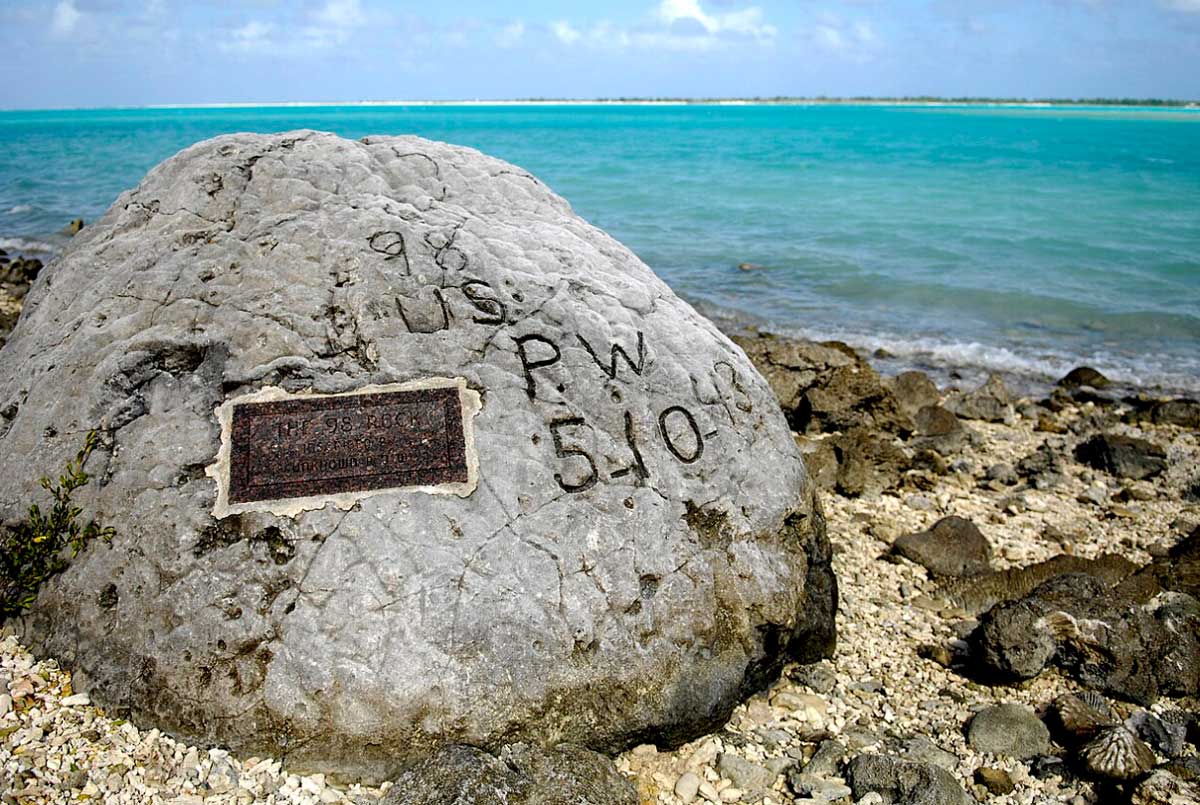
Memorial stone commemorating the murdered prisoners of Wake Island. Photo: Google Maps.
Wake in film and memory
As early as 1942, Hollywood took up the story of Wake’s defense. A film was produced and released later that same year, eventually receiving four Academy Award nominations.
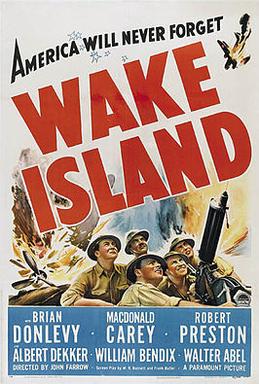
I highly recommend this production to anyone interested in USMC aviation. Much like the famous 1941 film Dive Bomber, it contains footage of authentic F4F-3 Wildcats, although the paint schemes are only loosely inspired by those used during the battle.
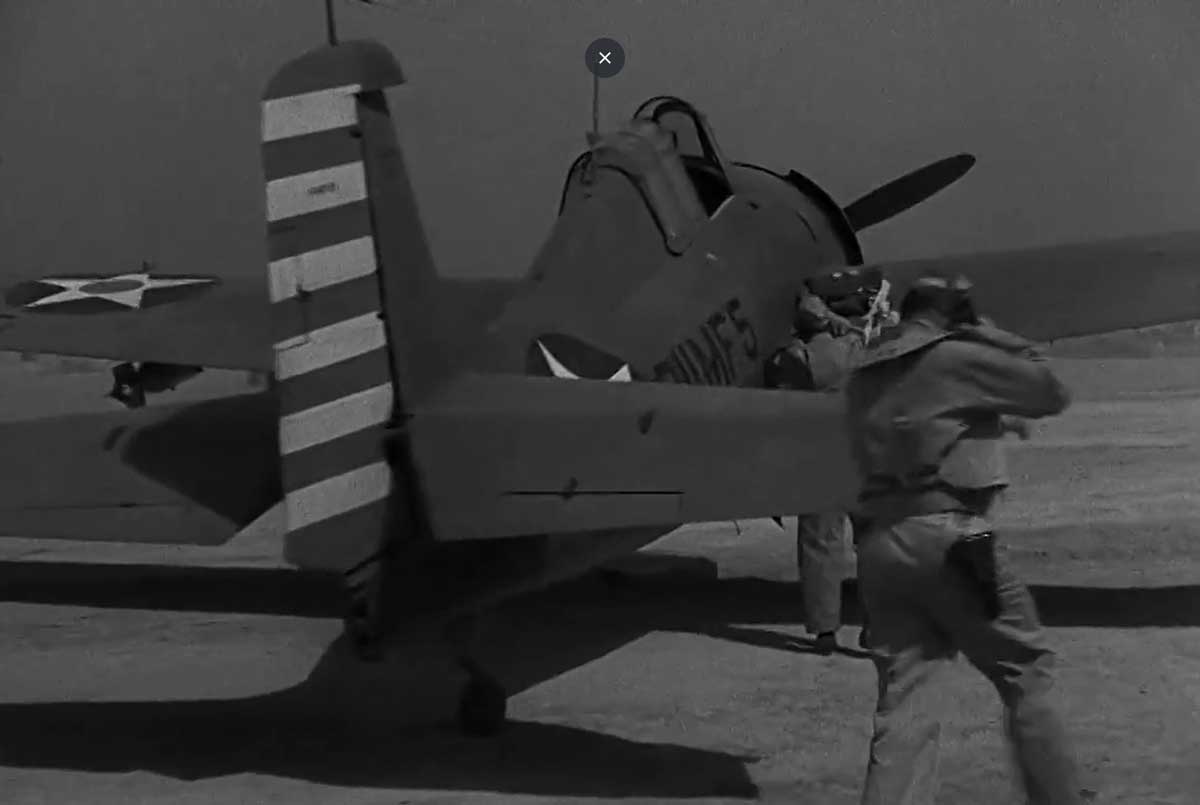
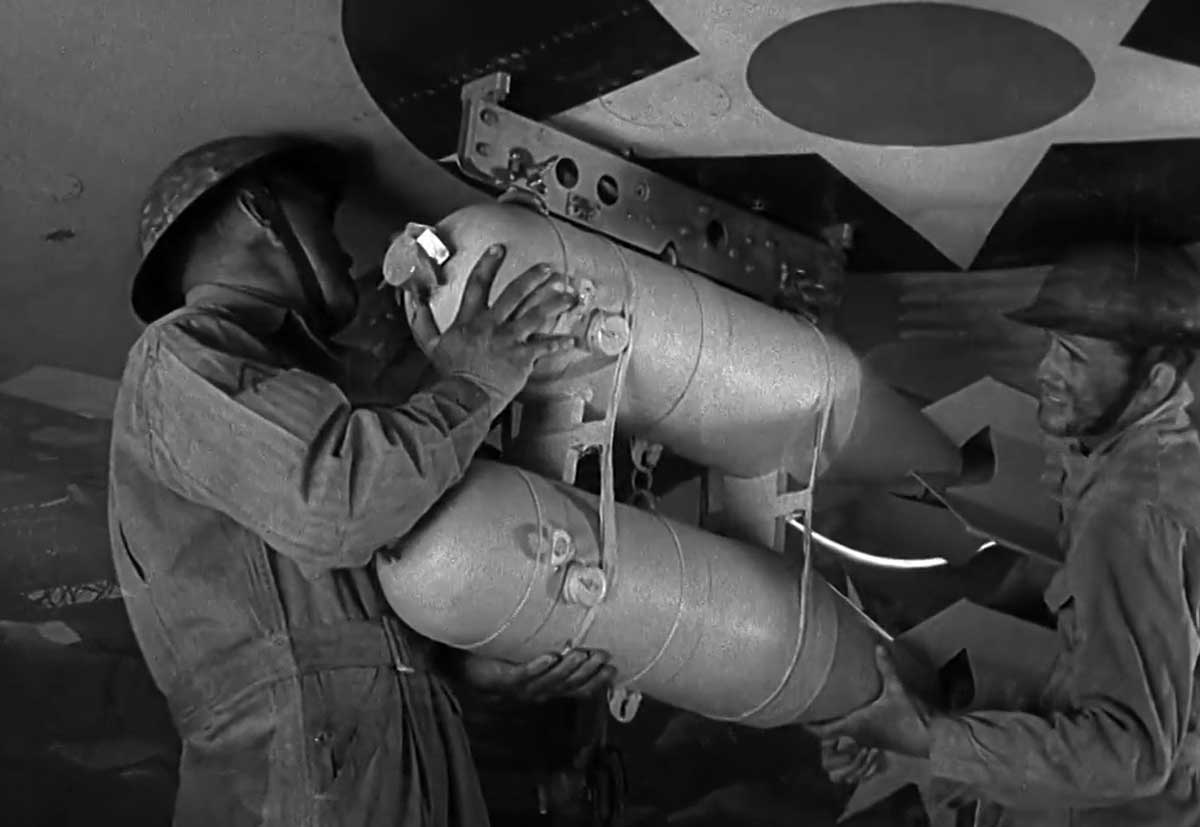
Only the bombs carried under Elrod’s aircraft were somewhat exaggerated by the filmmakers.
After the war, PAN AM resumed operations on the island and continued them until the 1970s, when the arrival of large passenger aircraft eliminated the need for Pacific stopovers. American forces still use the island as a military base to this day. A memorial commemorating the island’s defenders stands there today.
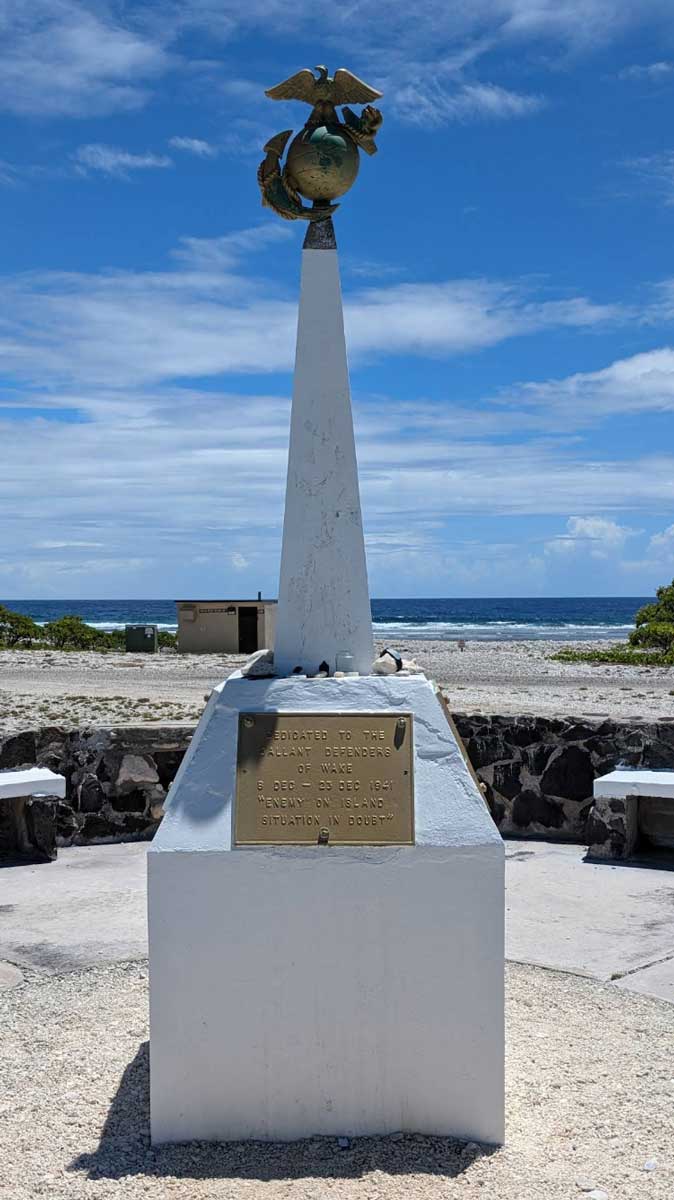
Memorial to the defenders of Wake Island. Photo: Google Maps.
Sources
- https://www.youtube.com/watch?v=KQhNs08fMWo&t=3962s
- https://en.wikipedia.org/wiki/Battle_of_Wake_Island
- https://www.usni.org/magazines/naval-history-magazine/2020/december/wakes-valiant-aviators
See also
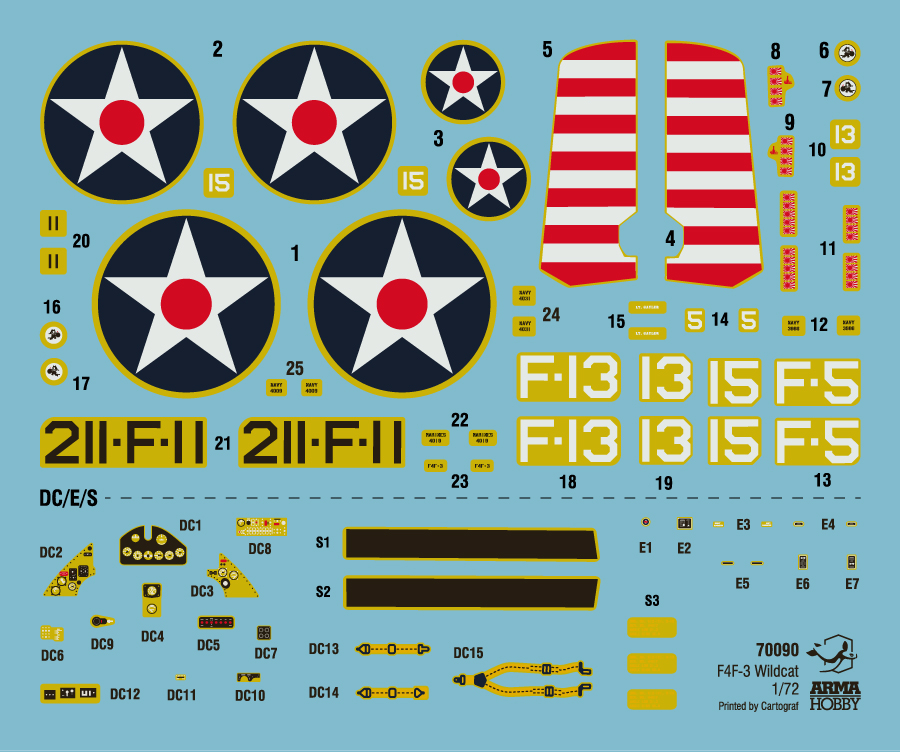
- See the Grumman F4F-3 Wildcat model kit in the Arma Hobby store
70090 F4F-3 Wildcat – trzy samoloty, które stanęły przeciw potędze Japonii
Wanted to be Philanthropist, statesman and patron of the arts. Temporarily focused on developing scale model production in Poland. Co-founder of Arma Hobby. Designer of kits: TS-11 Iskra, PZL P.7a, Fokker E.V, PZL P.11c, Hawker Hurricane, Yak-1b, Wildcat, P-51B/C/D Mustang and 1/48 Hurricane.
This post is also available in:
 polski