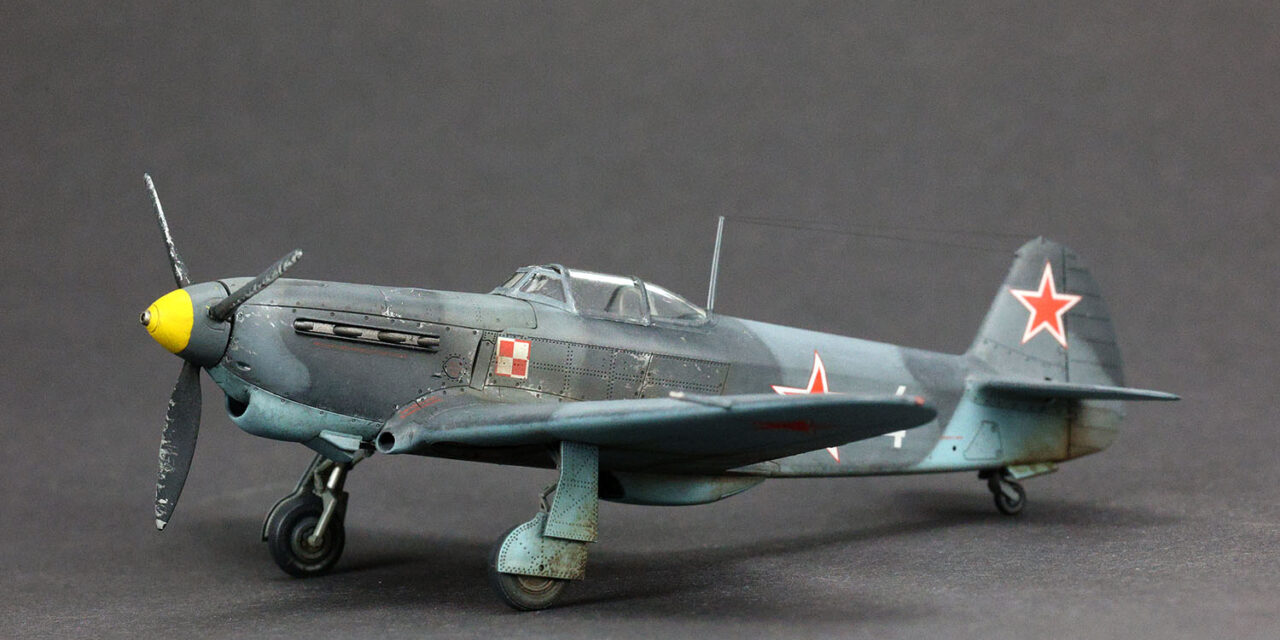
I don’t know if you get this too, but some models just seem to ask to be built your own way from the very beginning. For me, one of those aircraft had long been the Yak-1b in the colours of the 1st Polish Fighter Regiment “Warszawa”, and more specifically the famous “4” flown by Edward Chromy.
This is an aircraft with a very specific story behind it. On 23 August 1944, during the regiment’s first combat mission over the Warka–Magnuszew bridgehead, Lt. Edward Chromy flew this very machine. So this is not just “a nice Polish scheme” — there is a real story and a very specific wartime moment behind that number.
For me, that always matters. If I know what I am building and where the aircraft fits in history, the whole model somehow feels different.
An older Yak, but still a very satisfying build
I built this one from an earlier boxing of our Yak-1b, the one with the older clear sprue and essentially a closed-canopy option. And honestly: it still builds really well.
This is the kind of kit where nothing gets in your way. You do not have to rescue anything, you do not need workarounds, you just sit down and build. And suddenly, instead of fighting the plastic, you are simply enjoying the process.
I have a lot of affection for this kit because it came at a moment when we felt we were starting to play in a different league. Today I would probably approach a few things differently, but it is still a model that is simply fun to build.
That is also why I am really happy that we are bringing this scheme back in the new release — this time with Cartograf decals.

Painting – simple on the surface, but all about restraint
I painted it using the Hataka Hobby HTK-AS20 Late WW2 Soviet Air Force Paint Set. My airbrush of choice here was the Mr. Procon Boy (GSI Creos). I like it because at low pressure it gives very precise control over the paint flow. And on a model like this, that really matters, because the whole finish depends on subtlety.
The goal here was not to create “an effect” for its own sake, but to avoid overdoing it. The camouflage itself is quite restrained, so it is very easy to kill the whole look with too much contrast or overly heavy weathering.
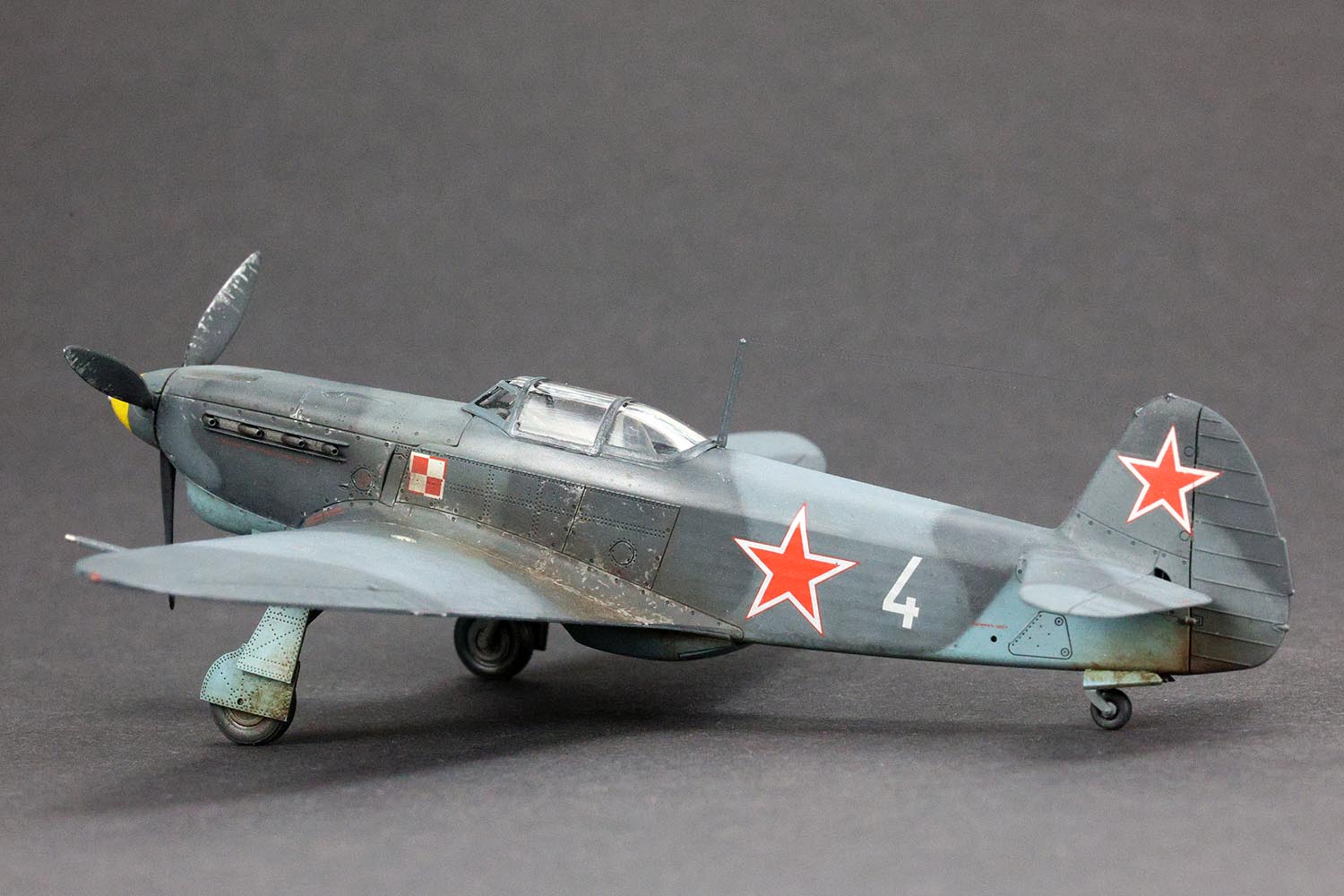
Weathering – less really is more
I approached the whole finish very calmly — thin paint flow, layer by layer. More like drawing with paint than simply spraying it on.
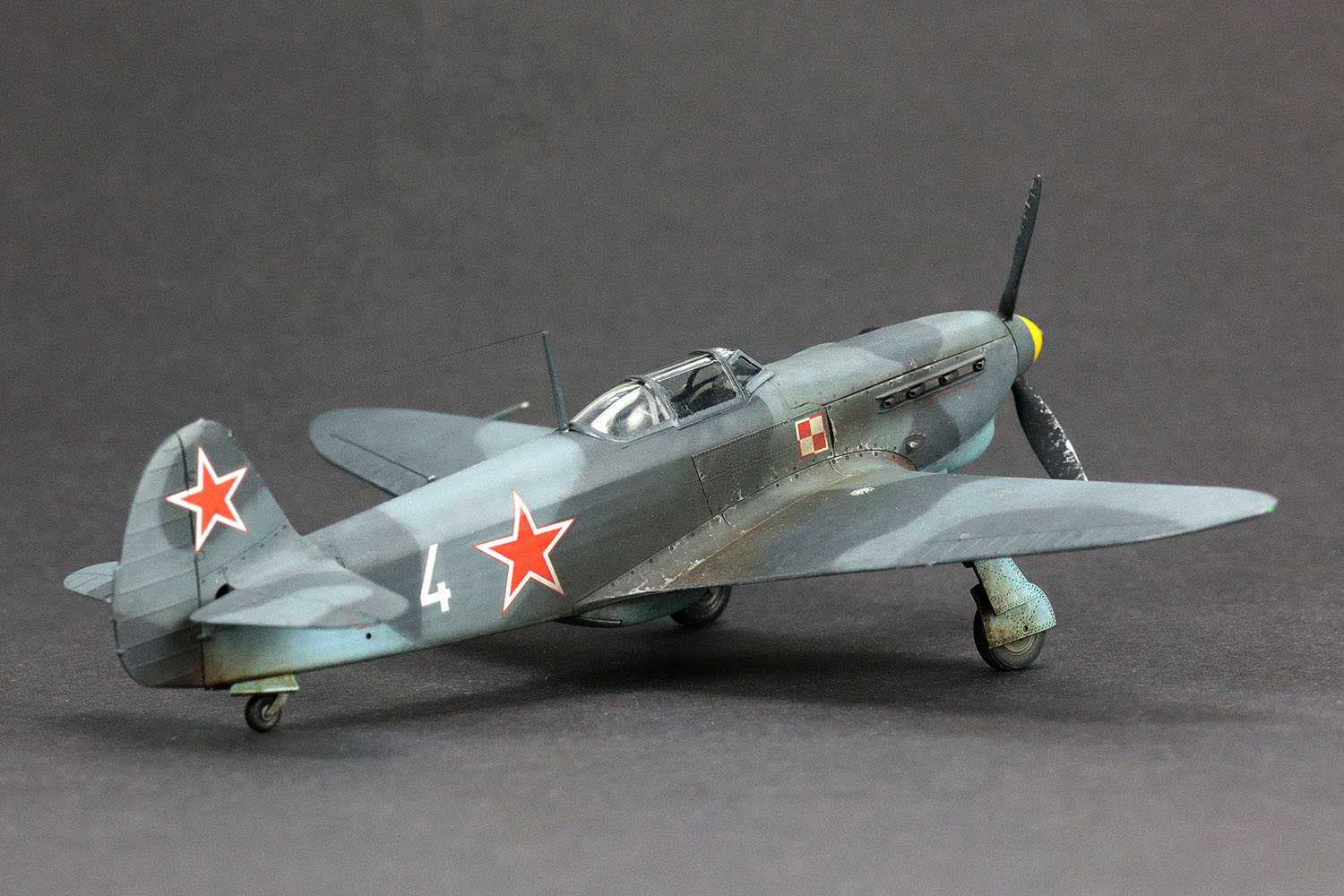
The most important thing for me was this: not making everything look equally worn. Because real aircraft do not look like that. There are always areas that are more used, more exposed, more beaten up — and others that still look almost fresh. Once you even all of that out, the model may still look “impressive”, but something stops feeling right.
So here I deliberately kept the contrast: the landing gear and underside feel more “alive”, some parts of the wings are dirtier, but right next to them there are areas that remain almost clean. One of the most common mistakes is simply making everything dirty. And then the model starts to look comic-book rather than convincing. I prefer it when something happens only where it makes sense.


If you enjoy this kind of model…
You can find more of my Arma Hobby builds here. And if you would like to see some of my other models too — not just Arma kits — feel free to visit my blog. If you have any questions, just leave a comment. I am always happy to talk models.
See also:

- Yakovlev aircraft models and accessories in the Arma Hobby store
Wanted to be Philanthropist, statesman and patron of the arts. Temporarily focused on developing scale model production in Poland. Co-founder of Arma Hobby. Designer of kits: TS-11 Iskra, PZL P.7a, Fokker E.V, PZL P.11c, Hawker Hurricane, Yak-1b, Wildcat, P-51B/C/D Mustang and 1/48 Hurricane.
This post is also available in:
 polski