

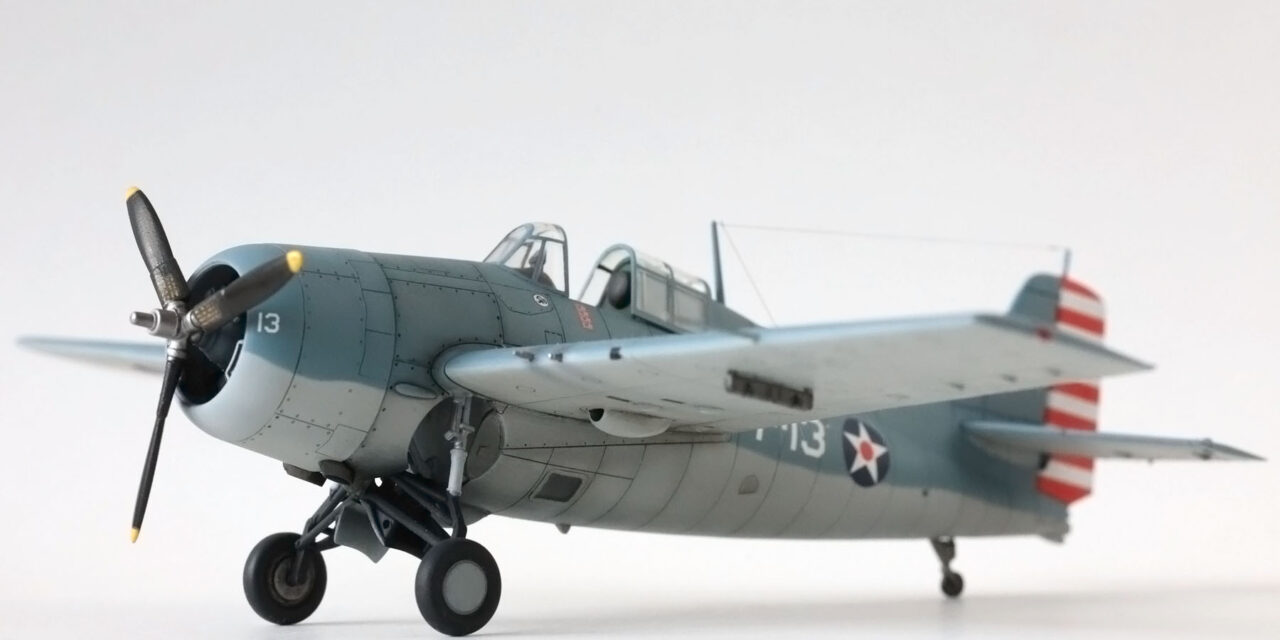
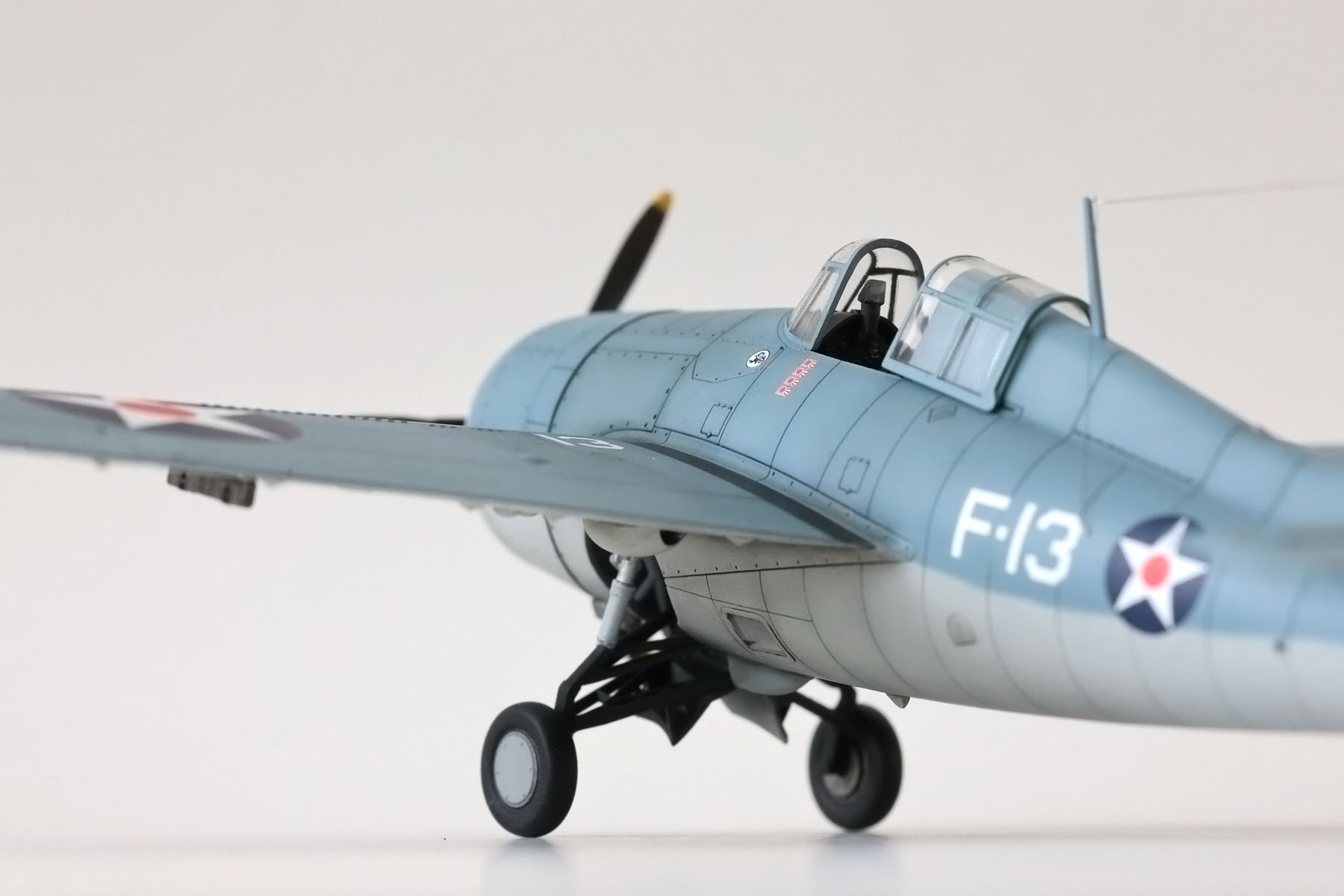
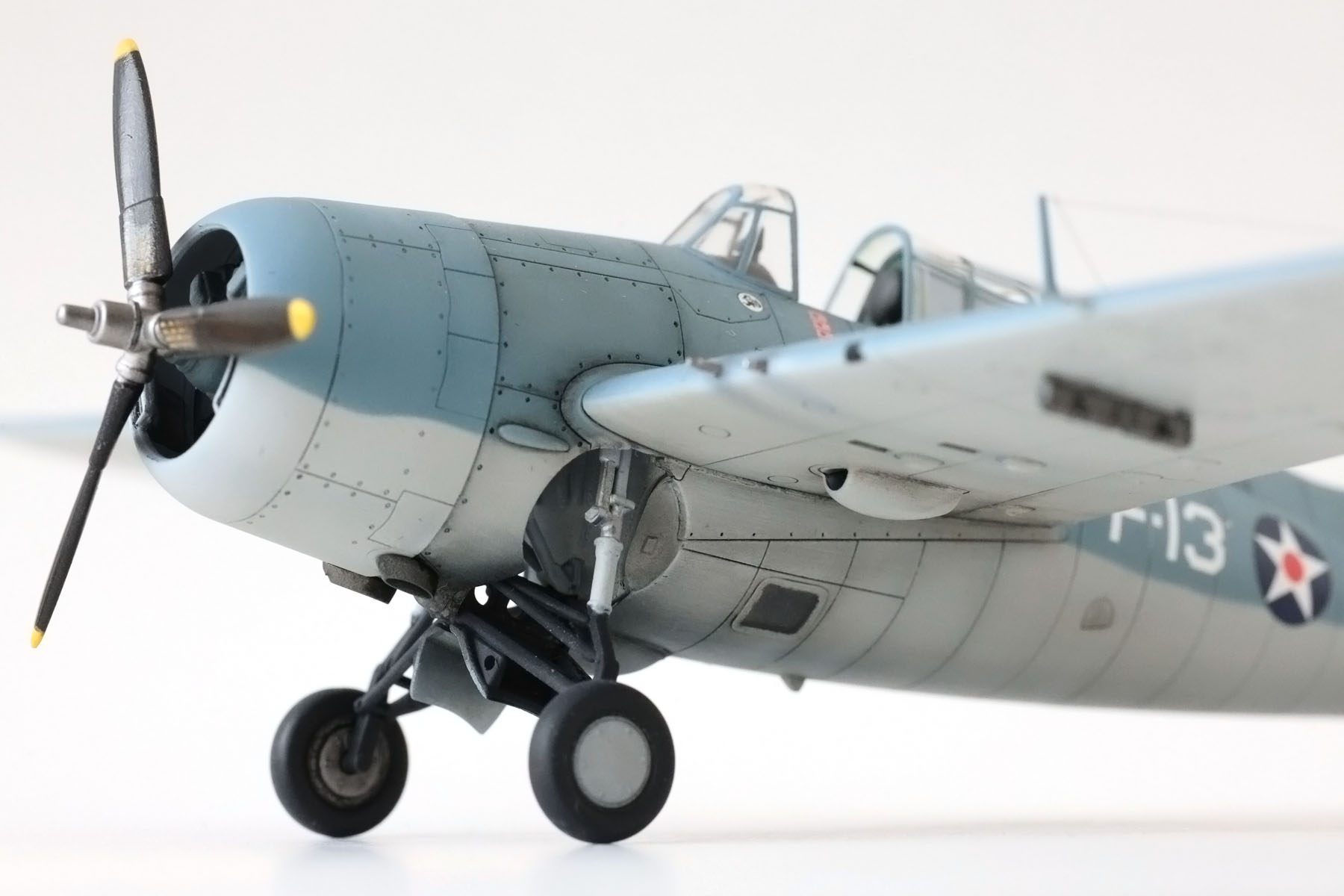
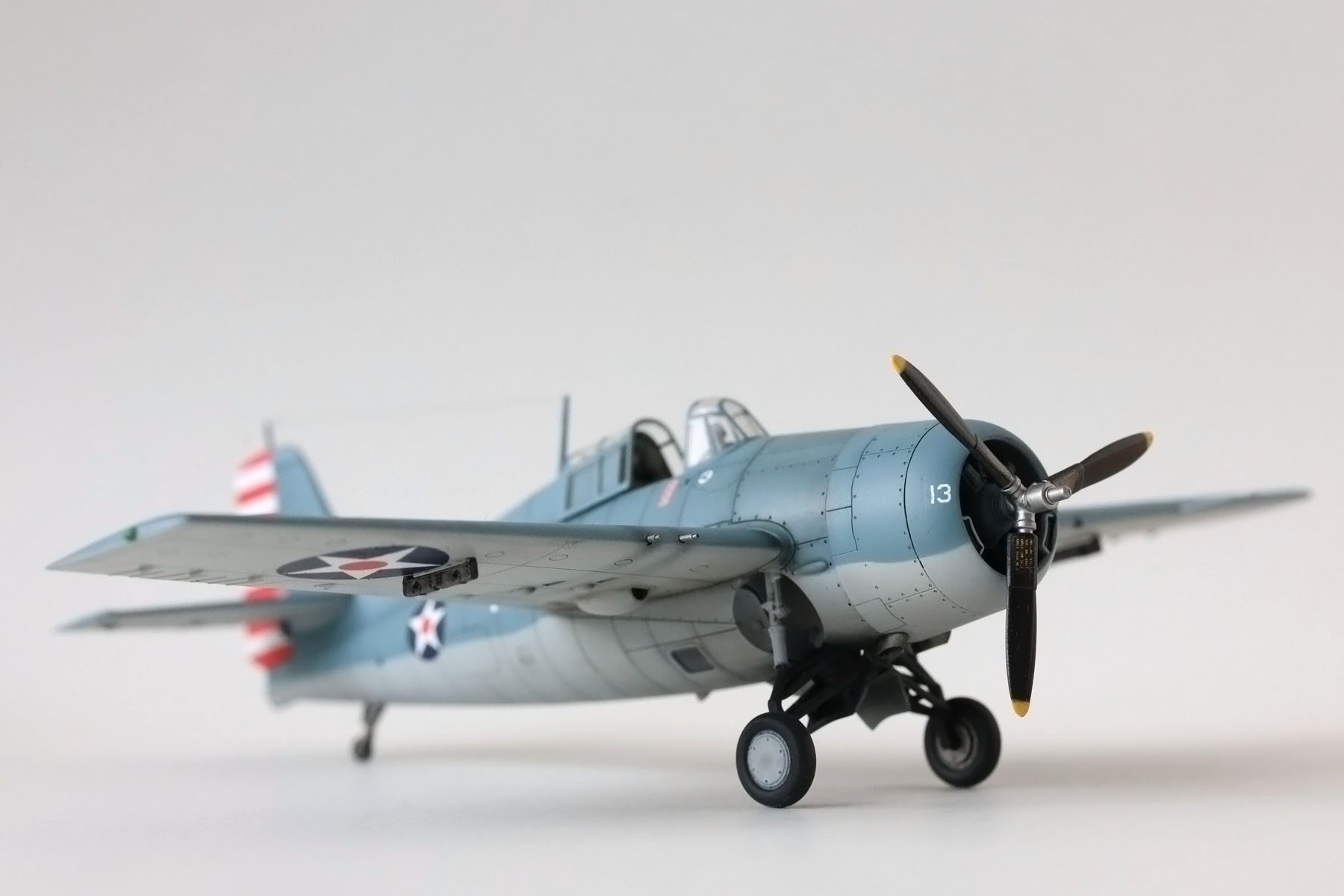
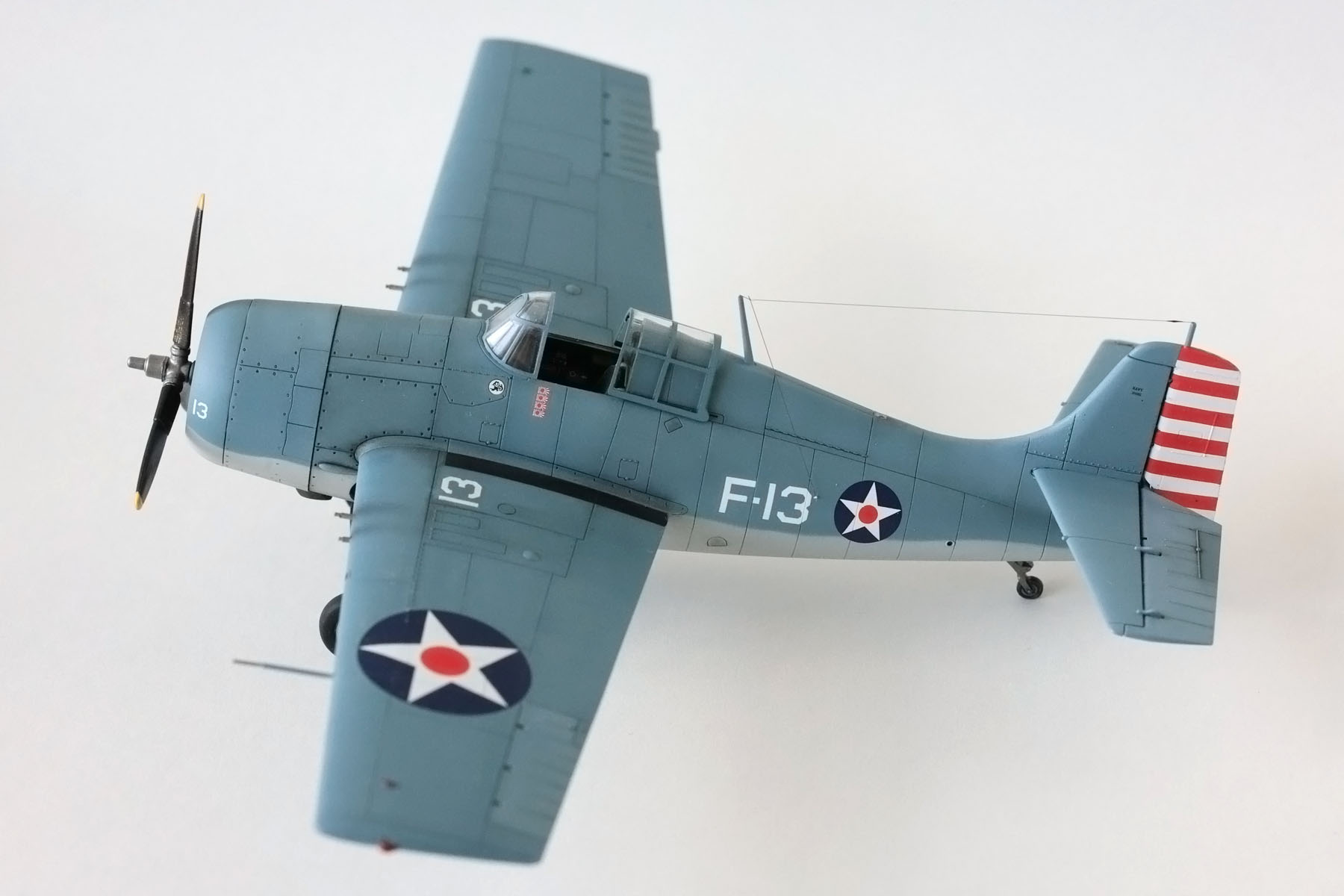
F4F-3 is probably my favourite Wildcat variant. It was this version that carried the first burden of US Navy and US Marine Corps fighting after the outbreak of the Pacific War. It took part in the defense of Wake Island, fought in the Coral Sea, and escorted American aircraft carriers during the most difficult period of the war. It also has something very “naval” about it — a compact silhouette, short wings, and the distinctive, austere look of early US Navy aircraft.
I will certainly return to this model several more times — both in wartime and pre-war schemes. The next one I build will be a Wildcat from the defense of Wake Island. The F4F subject also reminded me how enjoyable the other Arma Hobby Wildcats are to build. The classic F4F-4 and FM-2 are also slowly making their way onto my workbench. So many models, so little time 🙂
Built straight from the box
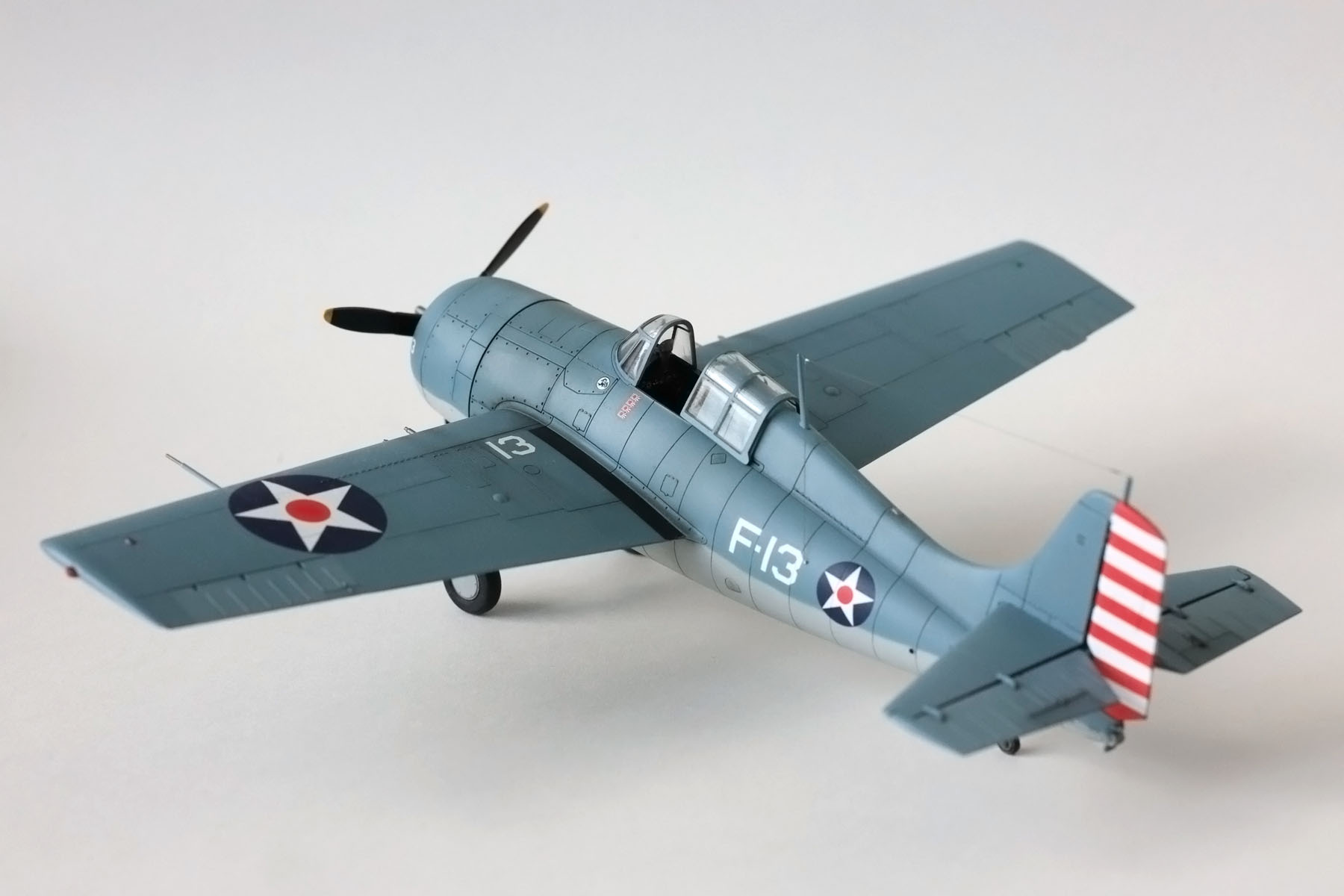
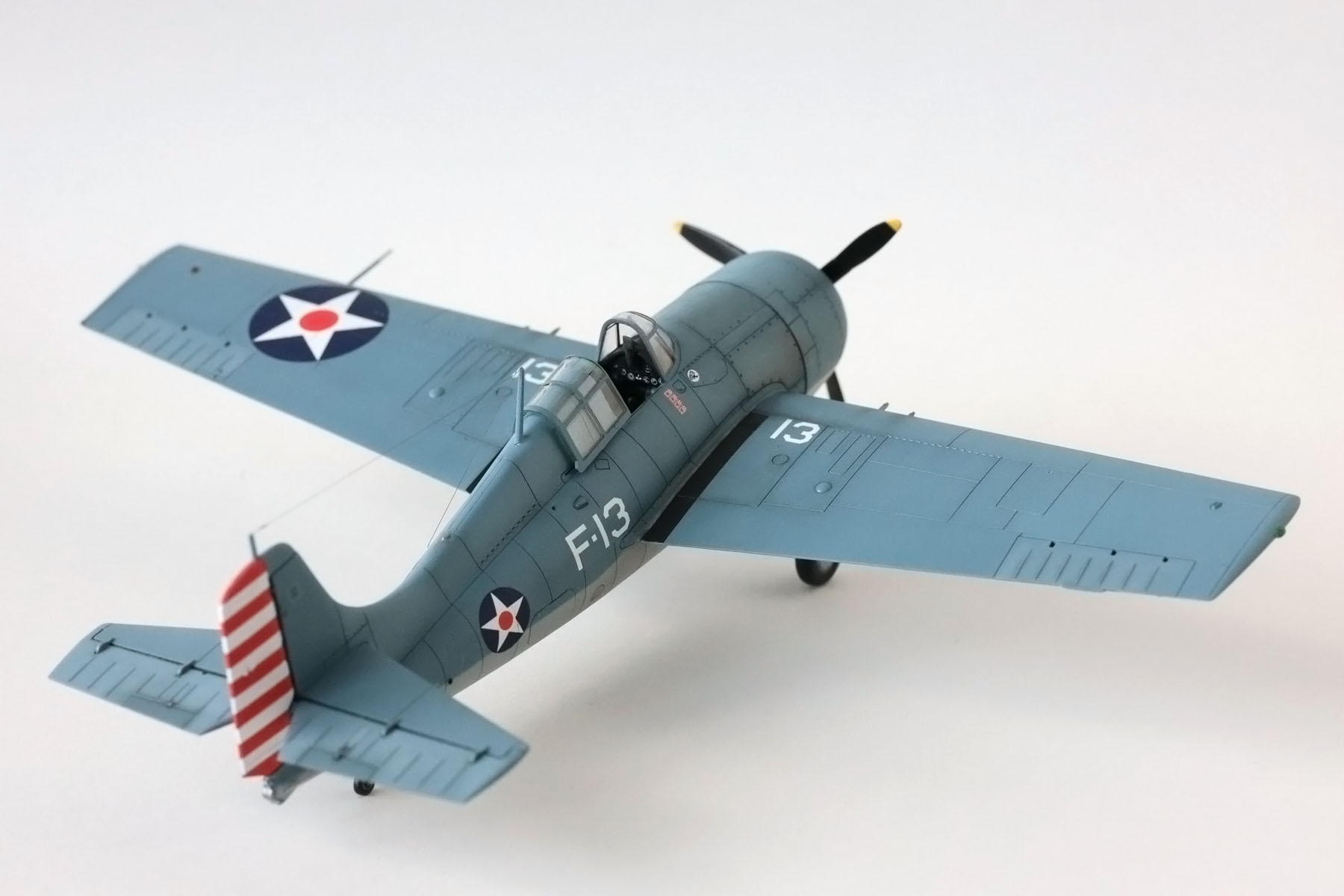
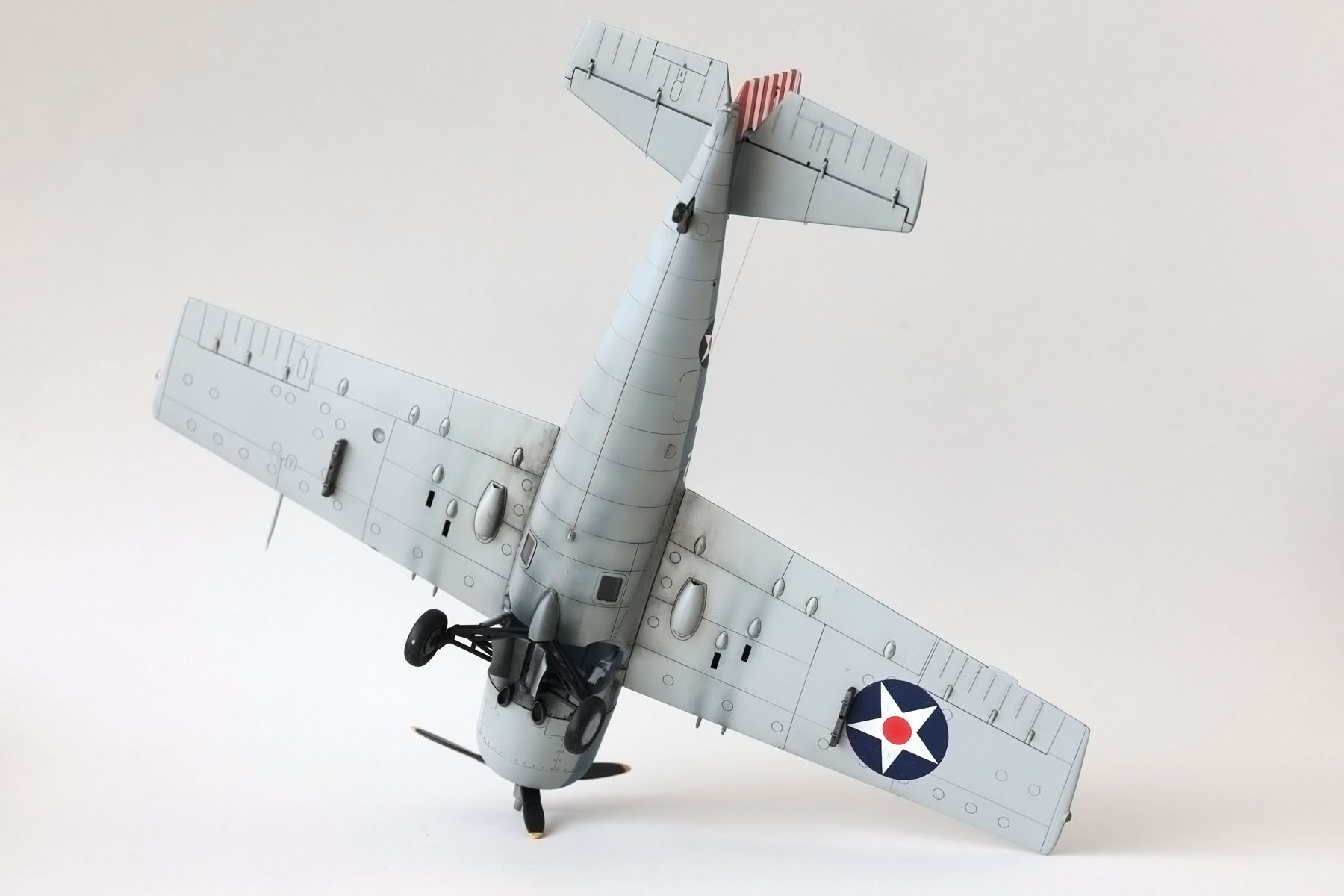
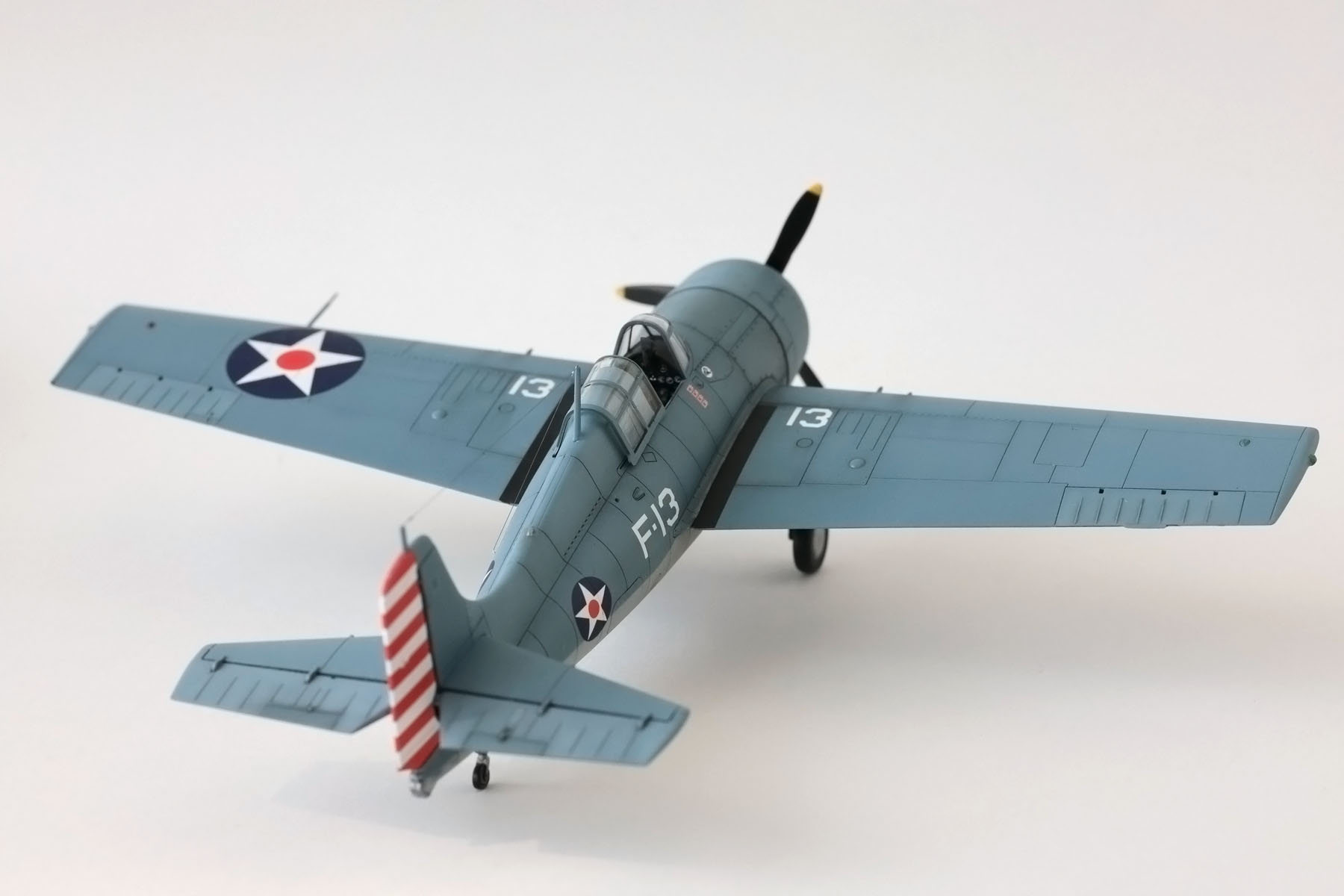
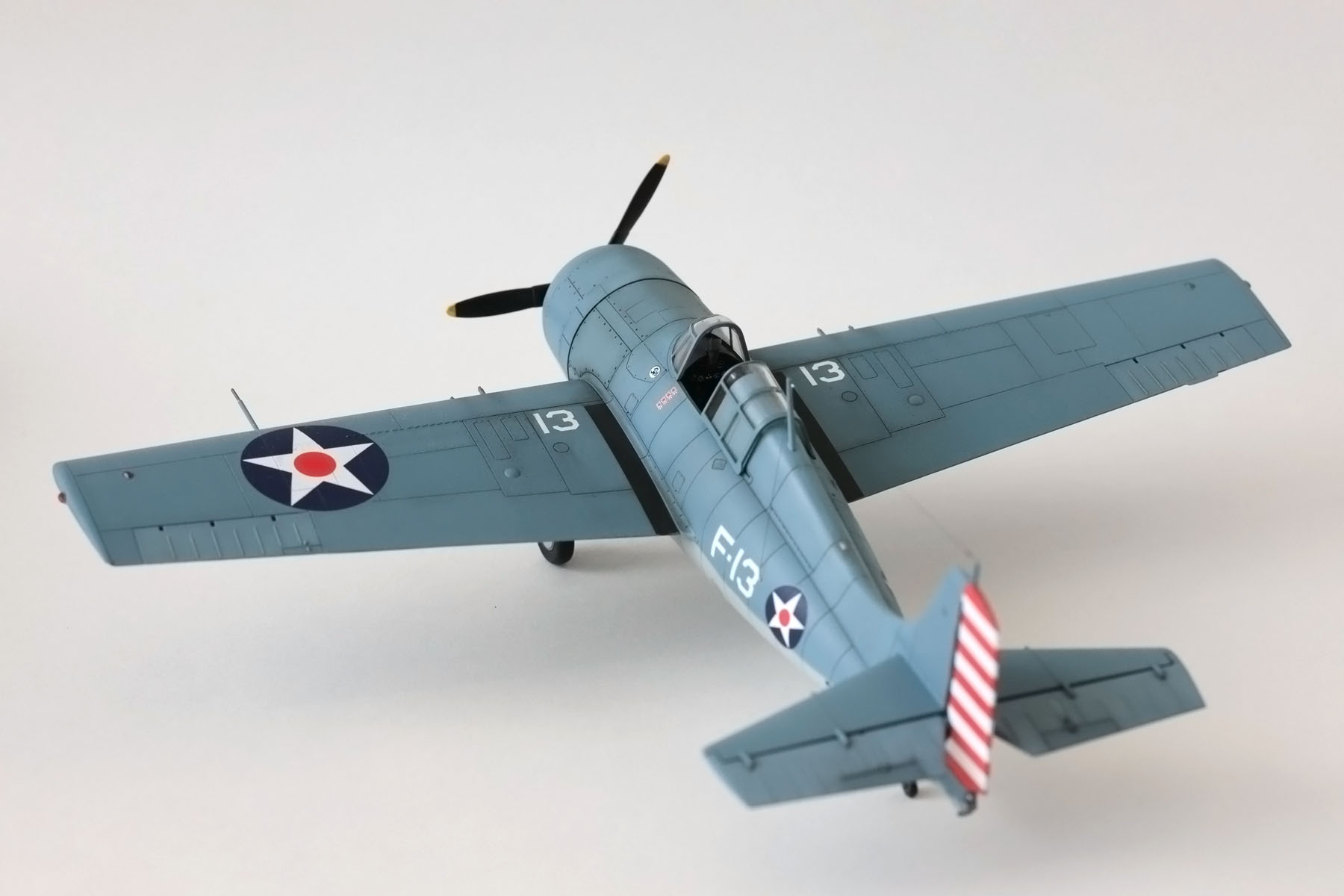
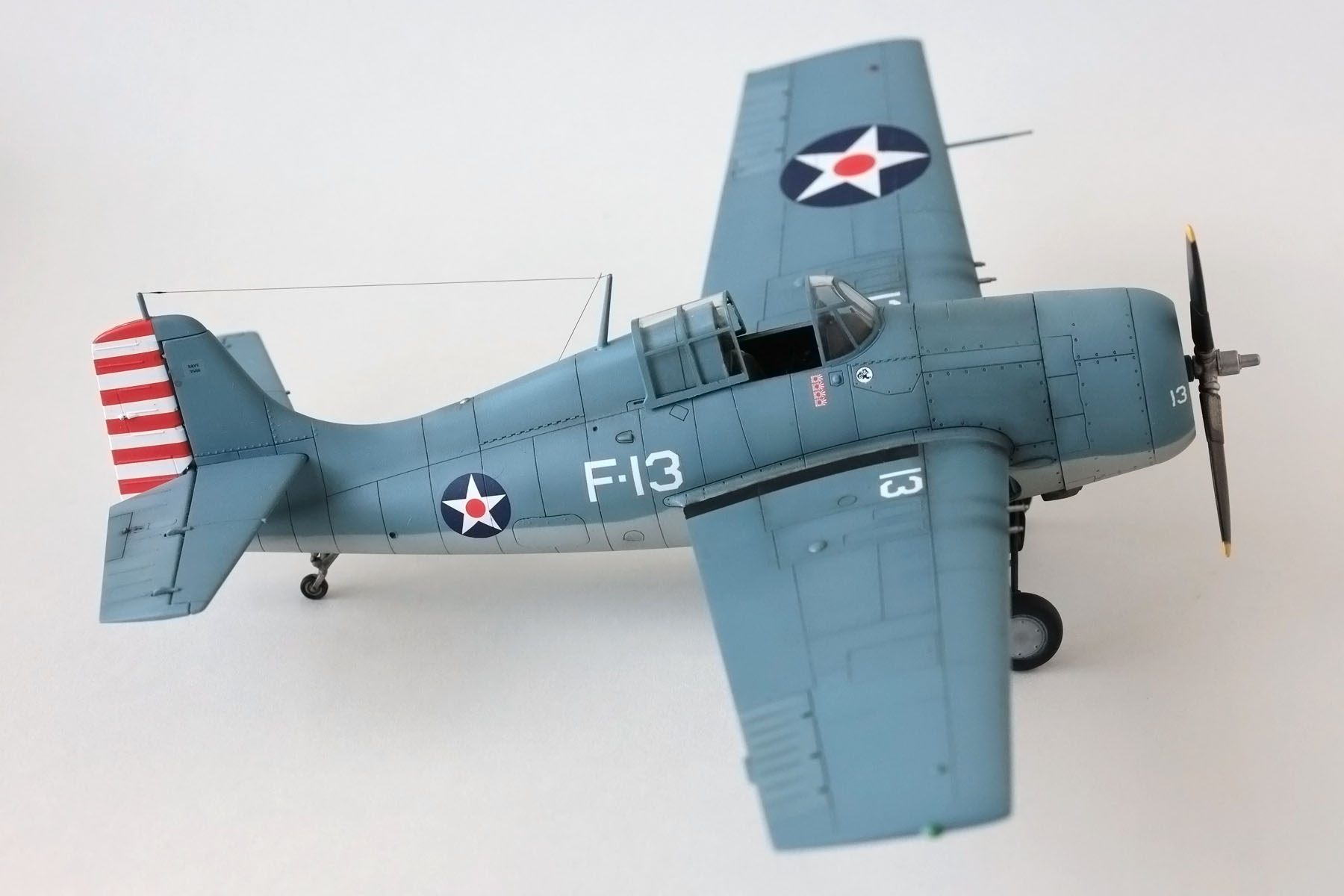
The model shown here was built almost straight from the box, using test shots of the Arma Hobby F4F-3 Wildcat 1/72 kit (70090).
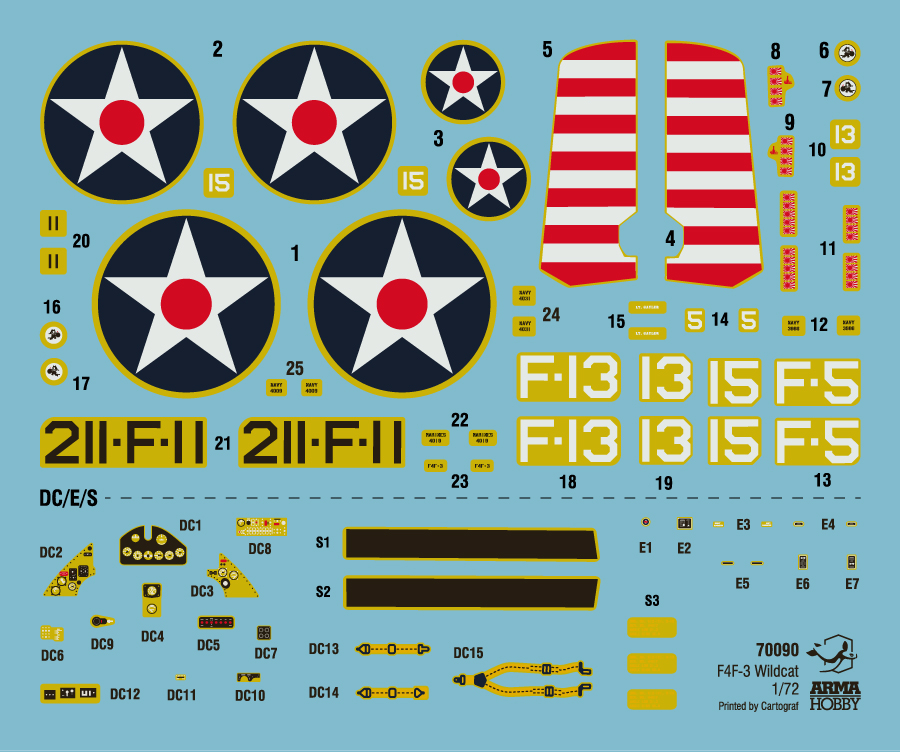
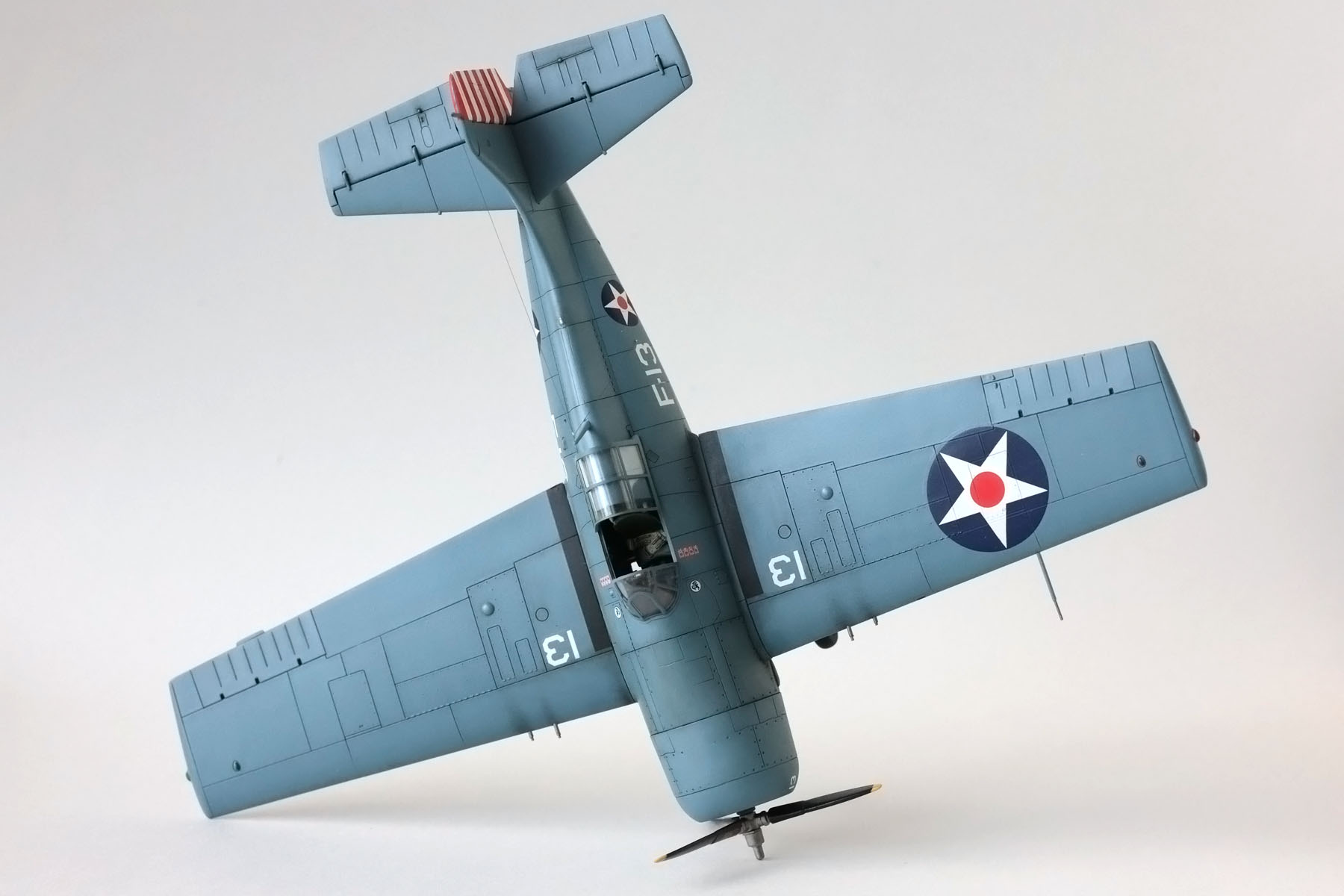
In the cockpit I added only a few small 3D-printed details and Quinta seatbelts. It is worth remembering that early Wildcats had only lap belts. The cockpit decals do a very good job of bringing the interior to life, so there is practically no need for additional accessories.
A quick project for pleasure
I built the model very quickly — the whole project took about a week and a half. At that pace, little mistakes happen 🙂 Only after finishing the model did I notice that I had forgotten to apply the engine decals, and they are a very nice detail that helps bring the whole model to life.
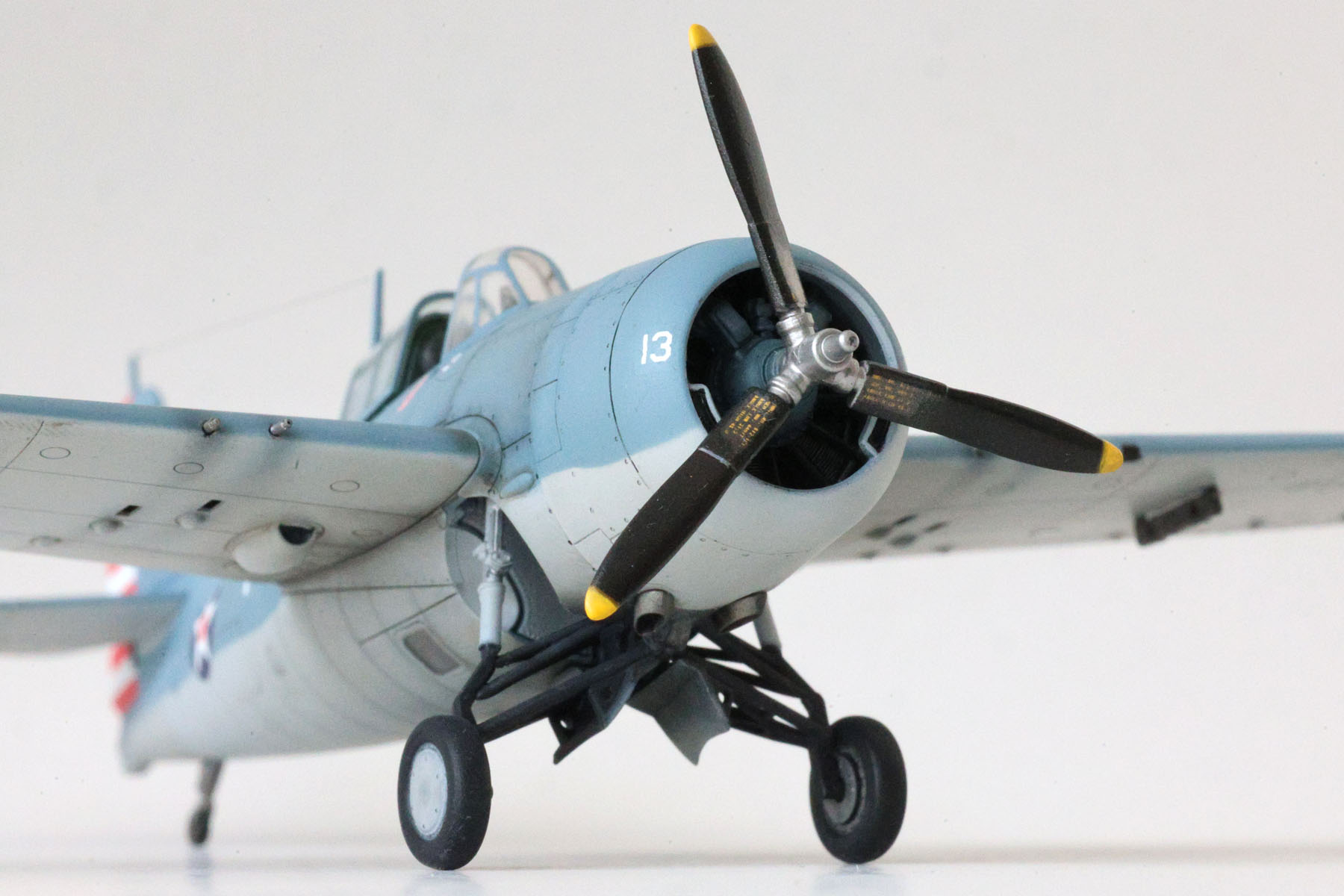
My example still has the landing gear assembly from the F4F-4 kit. The early test shots did not yet have the correct F4F-3 part ready.
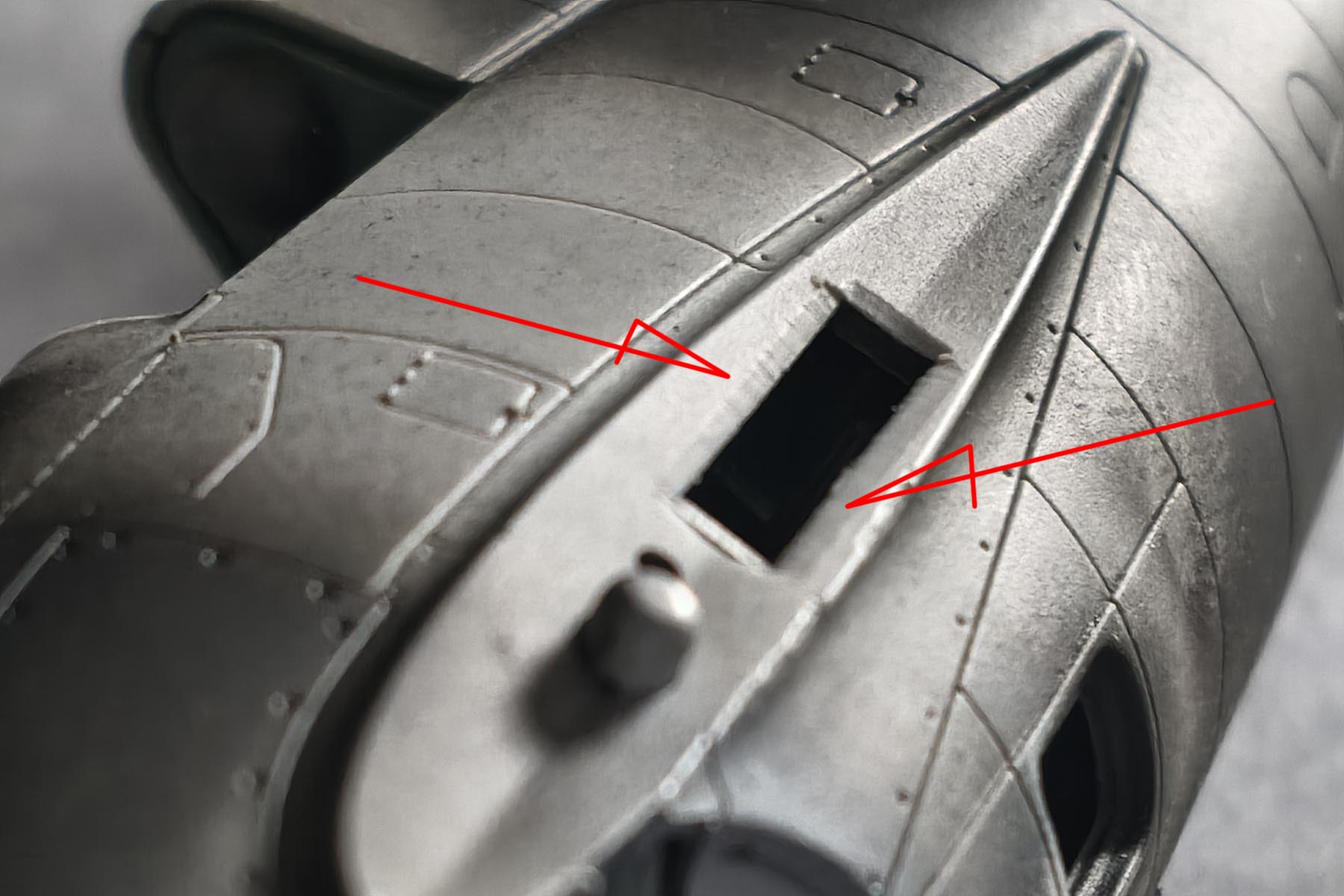
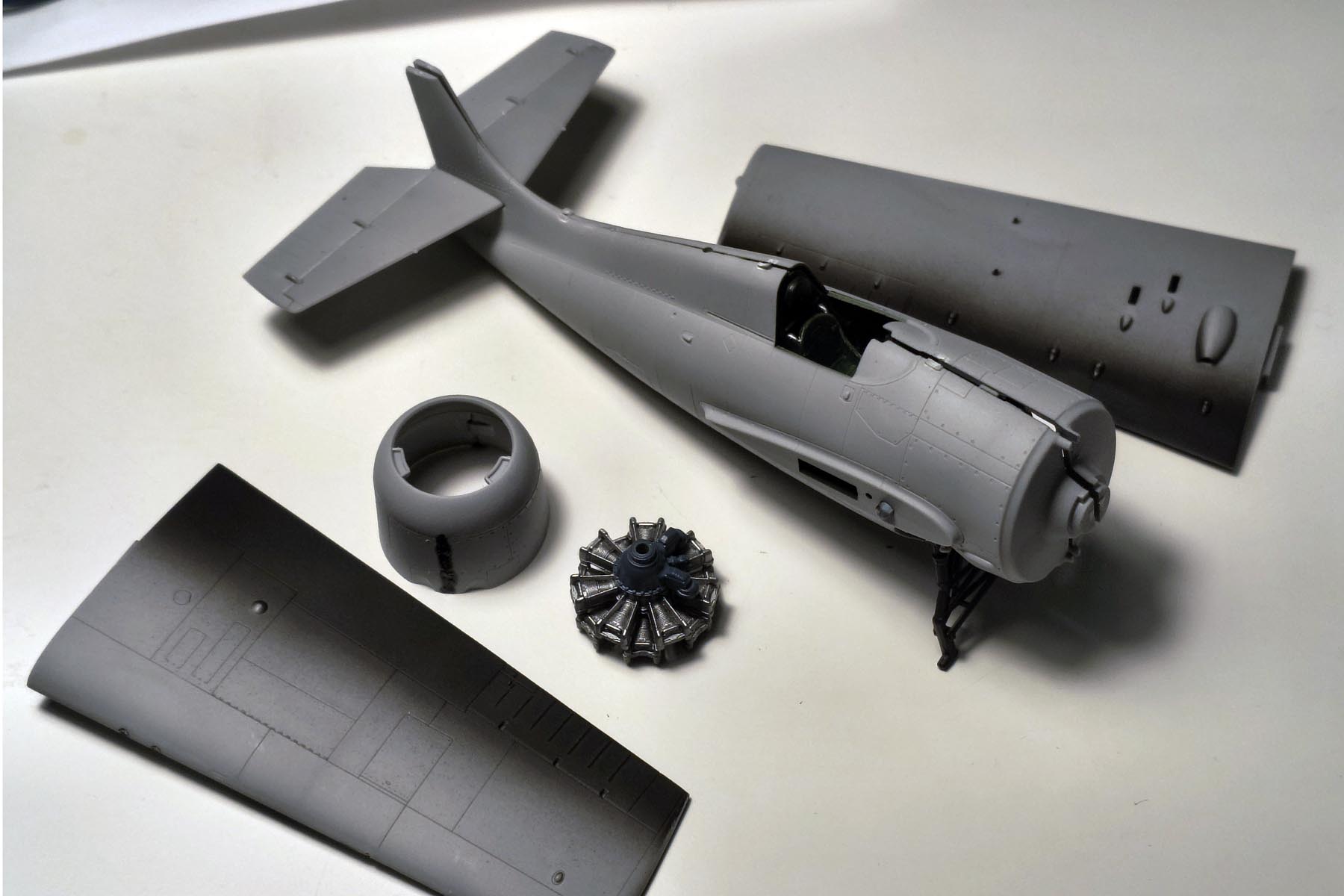
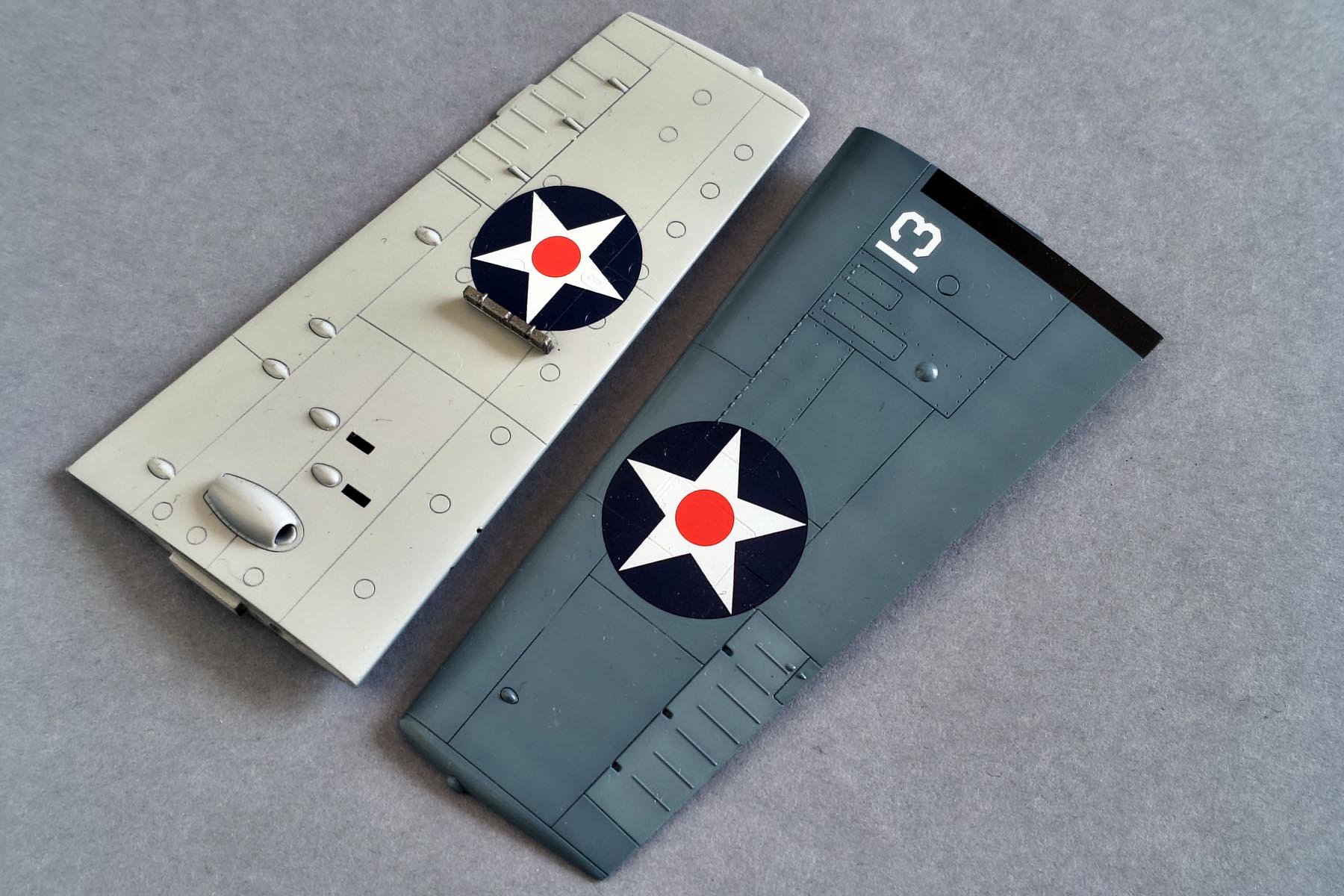
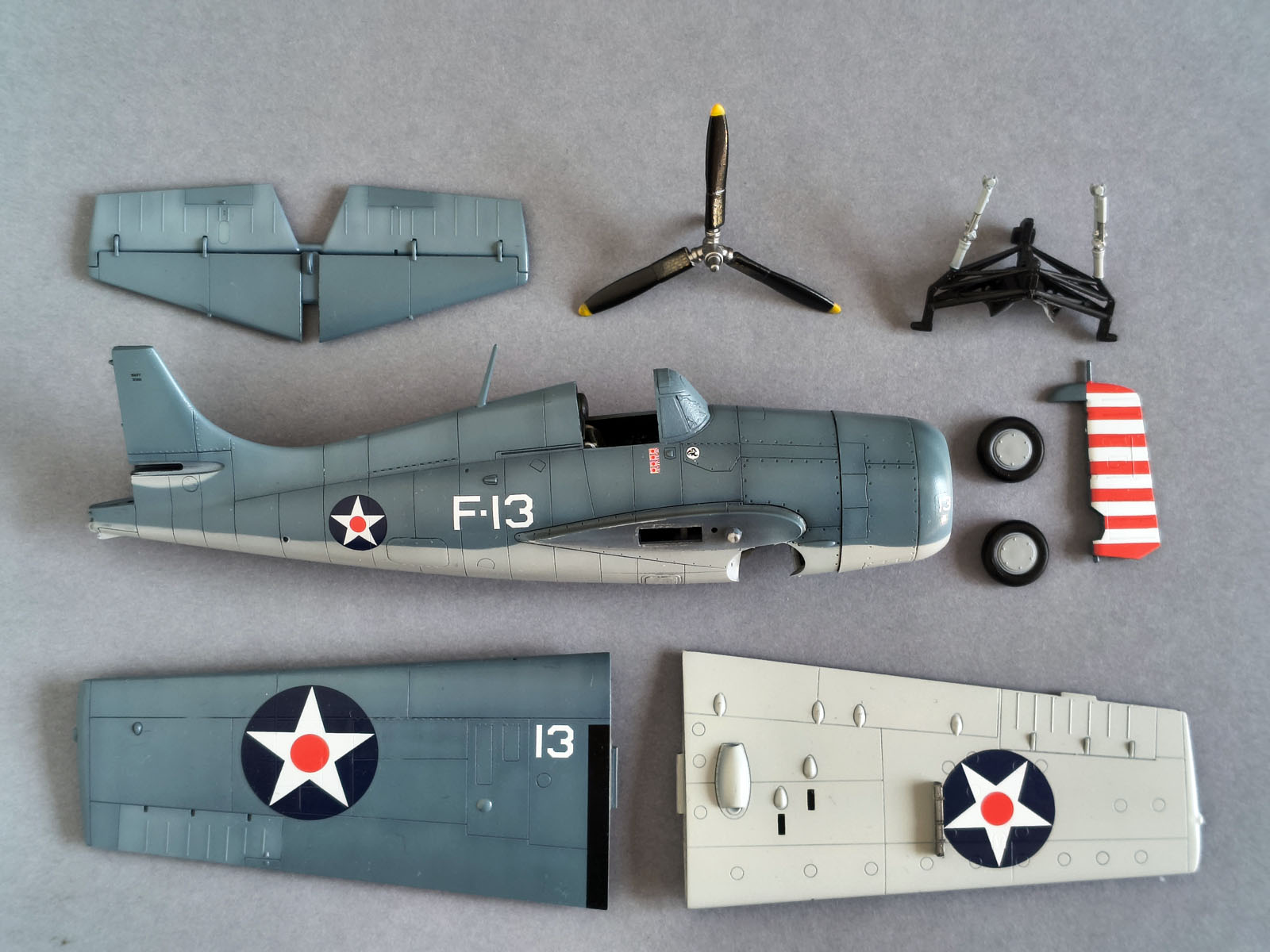
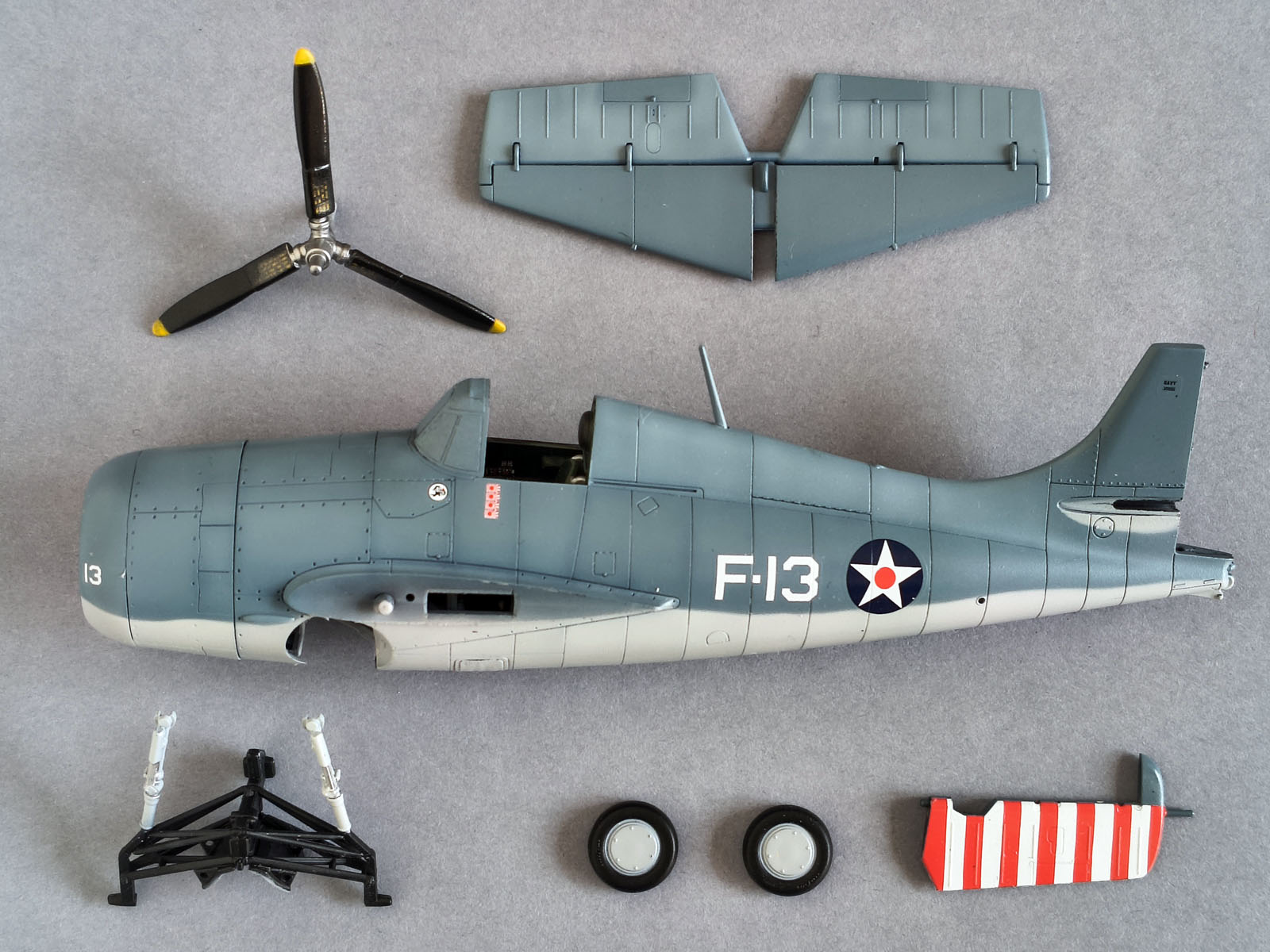
I really like building models in modules — painting and decaling the main assemblies separately, and only then bringing everything together. Not every kit allows this approach, but here it worked very well.
To make this possible, I lightly chamfered the wing socket in the fuselage. This simple adjustment allowed me to achieve an almost perfect wing-to-fuselage joint after painting and decaling, without the risk of damaging the finished surfaces.
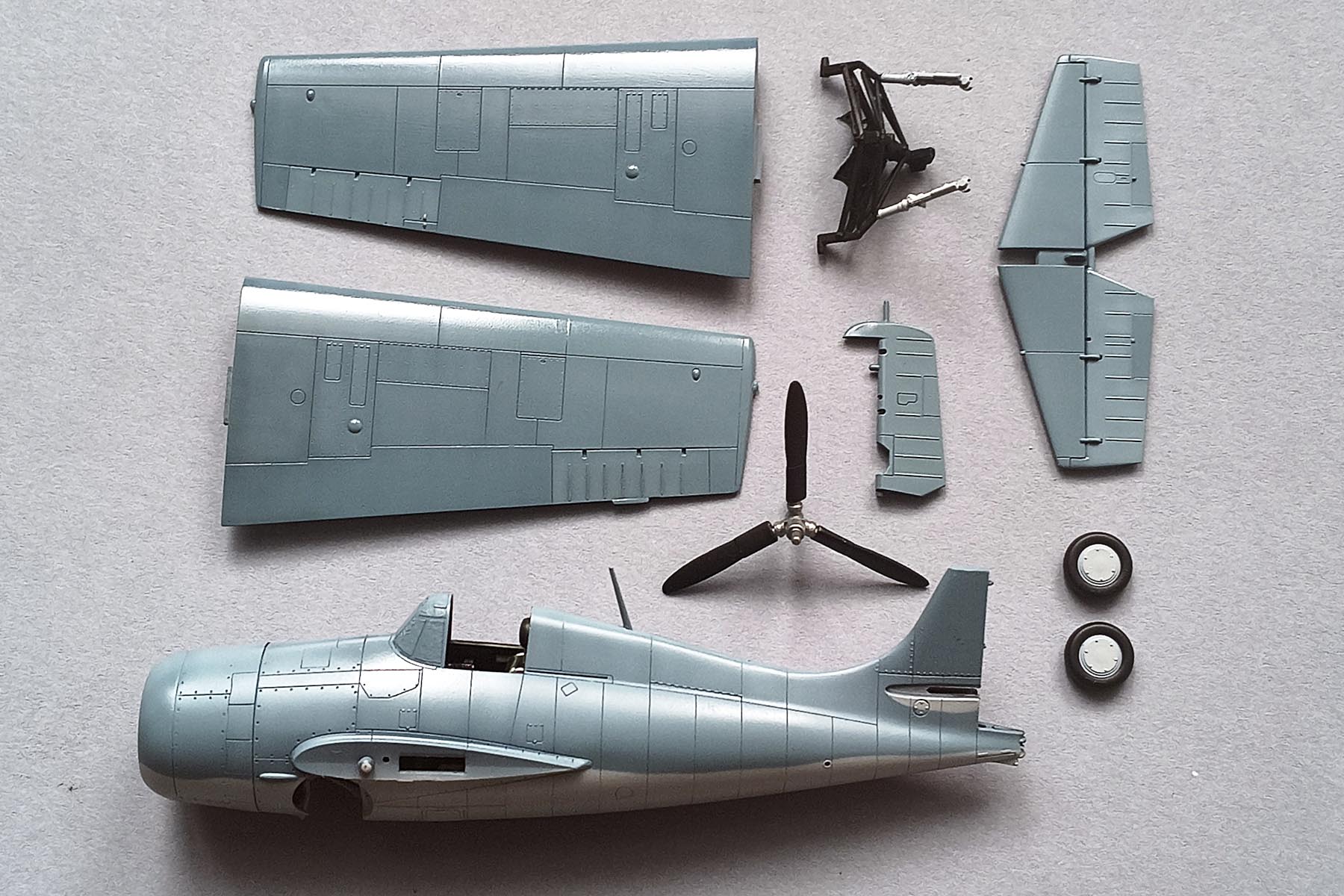
Painting and weathering
I painted the camouflage with dedicated colours from the MR.Paint range for early US Navy aircraft. They capture the characteristic Blue Gray and Light Gray shades used before the introduction of the tri-colour camouflage very well.
I kept the weathering very subtle. F4F-3 aircraft usually did not serve long in front-line conditions, and I also wanted to base the finish on photos of the original machines, which often looked surprisingly clean.
I made the gun barrels and pitot tube myself from aluminium Albion Alloys tubing. It is a small detail, but it greatly improves the look of the model in this scale.
The whole model was finished with Hataka cellulose matt clear varnish.
Details worth keeping
It is also worth paying attention to the clear sprue in the kit. In line with Arma Hobby’s new approach, we have included a transport stand for the model on that sprue. It may come in handy when taking models to exhibitions or contests, so it is better not to throw it away.
The same sprue also includes three identification lights. They are not used in this particular Wildcat version, but they are definitely worth keeping — they may come in useful for later US Navy or USAAF aircraft models.
Do not forget to keep the 100 lb bombs (parts A24-25 and B19) and the practice bomb racks (B29) as well. These were typical U.S. Navy aircraft equipment, but are rarely included in model kits.
The same applies to some of the small details, such as part A20 or gunsight T5. Such parts often find a use later in other projects or modelling conversions.
A Wildcat you want to return to
Building this Wildcat reminded me how enjoyable quick projects can be — the kind done more “for fun” than as a months-long fight over every extra detail. And the F4F-3 has exactly the kind of character that makes you want to start another one as soon as you finish the first.
See also
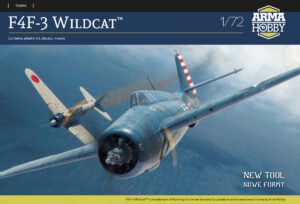
- See the Grumman F4F-3 Wildcat model kit in the Arma Hobby store
https://armahobbynews.pl/en/blog/2026/04/28/70090-f4f-3-wildcat-three-aircraft-that-stood-against-japan/
Wanted to be Philanthropist, statesman and patron of the arts. Temporarily focused on developing scale model production in Poland. Co-founder of Arma Hobby. Designer of kits: TS-11 Iskra, PZL P.7a, Fokker E.V, PZL P.11c, Hawker Hurricane, Yak-1b, Wildcat, P-51B/C/D Mustang and 1/48 Hurricane.
This post is also available in:
 polski

Super fajny!!!
I am really enjoying the blogs! Where does one find such detail about the historical facts?