

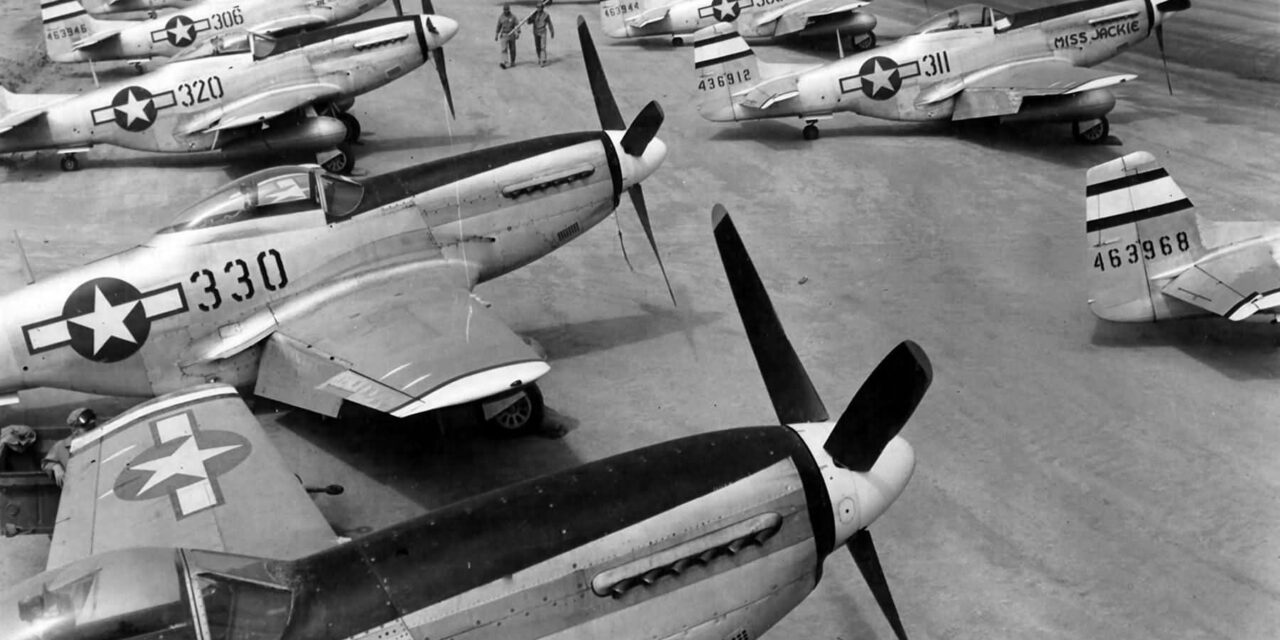
The pilots who flew P-51D Mustangs with the USAAF 7th Fighter Command out of Iwo Jima in the closing months of World War II faced some of the toughest challenges faced by any fighter pilots of the war.
Yes, they were flying world-class fighters in what was by then clearly a winning cause. But their missions required them to fly from a postage-stamp island in the middle of a huge ocean some 650 miles over water to reach their heavily defended targets on the Japanese mainland.
VLR pilots had to manage their fuel supply to be able to engage in combat and then turn around and fly all the way home – sometimes with a monsoon weather front blocking their way.
It wasn’t unusual for crew chiefs to have to lift their pilots out of the cockpits of their Mustangs because the aviators were stiff from having spent eight hours or so sitting on their lumpy parachute packs while they flew their missions.
This wasn’t an occasional situation; it happened after every Very Long Range mission.
Navigation was another problem faced by the VLR pilots, especially on their return flights.
Though it was easy enough for them to dead-reckon their way due south from Tokyo toward Iwo Jima, the island measured just six miles long by two miles wide, so it was easy for a pilot to miss Iwo in the otherwise empty sea if he encountered crosswinds, was flying a battle-damaged aircraft or perhaps was wounded.
A picket line of submarines patrolled the route, ready to pick up pilots who went down on their homeward flights, but this was small comfort to the flyers.
The 7th Fighter Command had only been operational for a short time in the spring of 1945 when technicians began installing an innovative radio device in the VLR Mustangs to help the pilots find their way home.
The SCR-522 VHF communication set, including an AN/ARA-8 homing adapter and MD-34 modulator keying unit, allowed the fighters to be vectored to a beacon, either on an Air Sea Rescue B-29 “Super Dumbo” aircraft or on Iwo Jima itself.
The beacon system aboard the fighter picked up the homing signal and converted it into two audio channels consisting of the International Morse letters “U” or “D” with a steady tone separating them.
Following the wartime phonetic alphabet, this homing procedure was referred to as “Uncle Dog.”
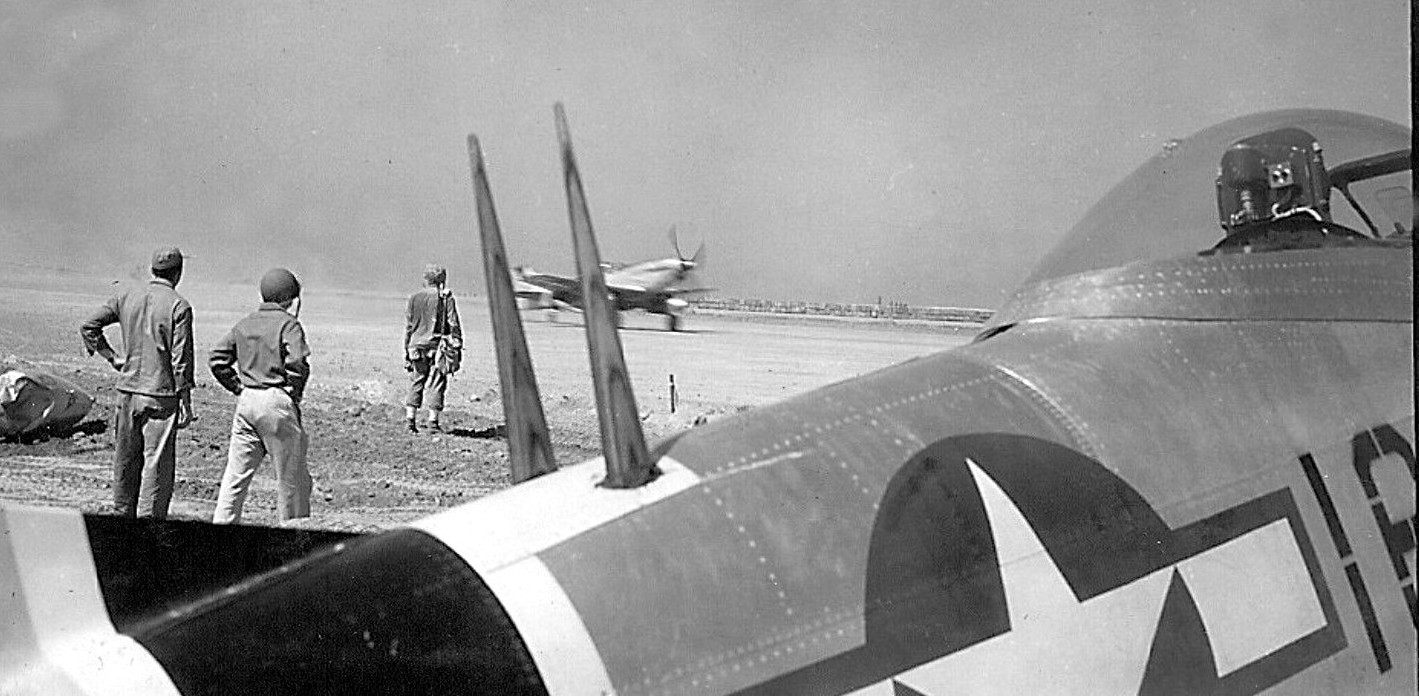
Mustangs equipped with the Uncle Dog system mounted twin wooden masts on the top of the fuselage behind the cockpit.
To make room for these masts, the radio antenna mast was relocated to the bottom of the fuselage, just forward of the inboard landing gear doors.

Aircraft of the 15th and 21st Fighter Groups received the Uncle Dog modification incrementally as sets became available starting in late April 1945, and most were converted by the end of the war.
The 506th Fighter Group P-51s already carried Uncle Dog equipment when the unit arrived on Iwo Jima in May 1945.
Military aviation historian Barrett Tillman said pilots of the 7th Fighter Command regarded Uncle Dog as the greatest invention to come out of the war.
It is impossible to say how many pilots’ lives Uncle Dog saved, but every VLR pilot who flew with the system appreciated the confidence it gave him that he could find his way home to Iwo Jima.
Material from two of the author’s books, Very Long Range P-51 Mustang Units of the Pacific War and
VLR P-51 Mustangs vs Japanese Fighters: Japan 1945, was included in this article.

Snortin’ Phyllie – When Photographs Don’t Tell the Whole Story
A short research story from Zbyszek Malicki
Snortin’ Phyllie was Carl Molesworth’s choice for our kit. I had asked Carl to help us find an interesting VLR Mustang that had not already appeared as a marking option in another model kit. He came back with Snortin’ Phyllie – and that was where this story began.
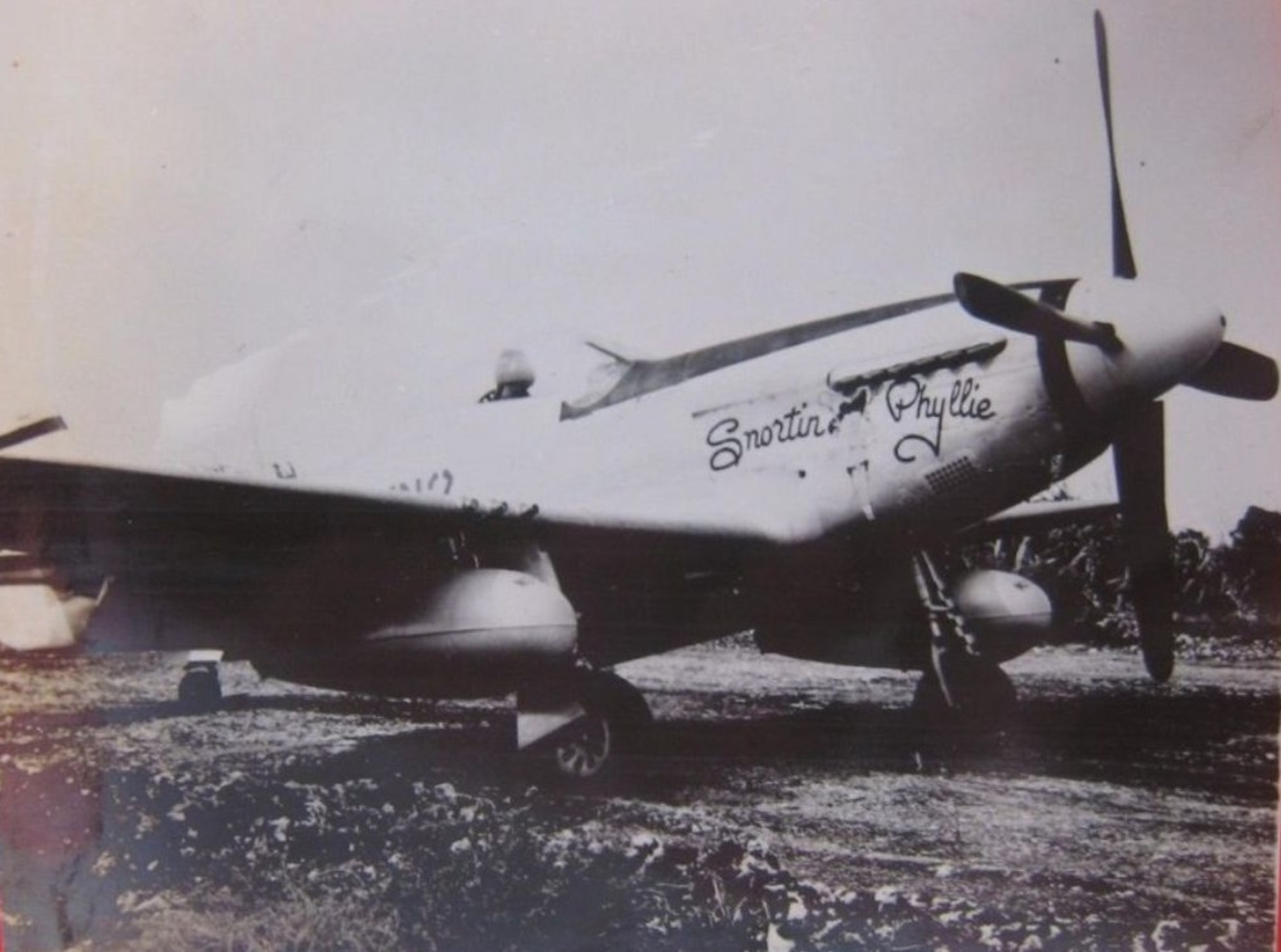
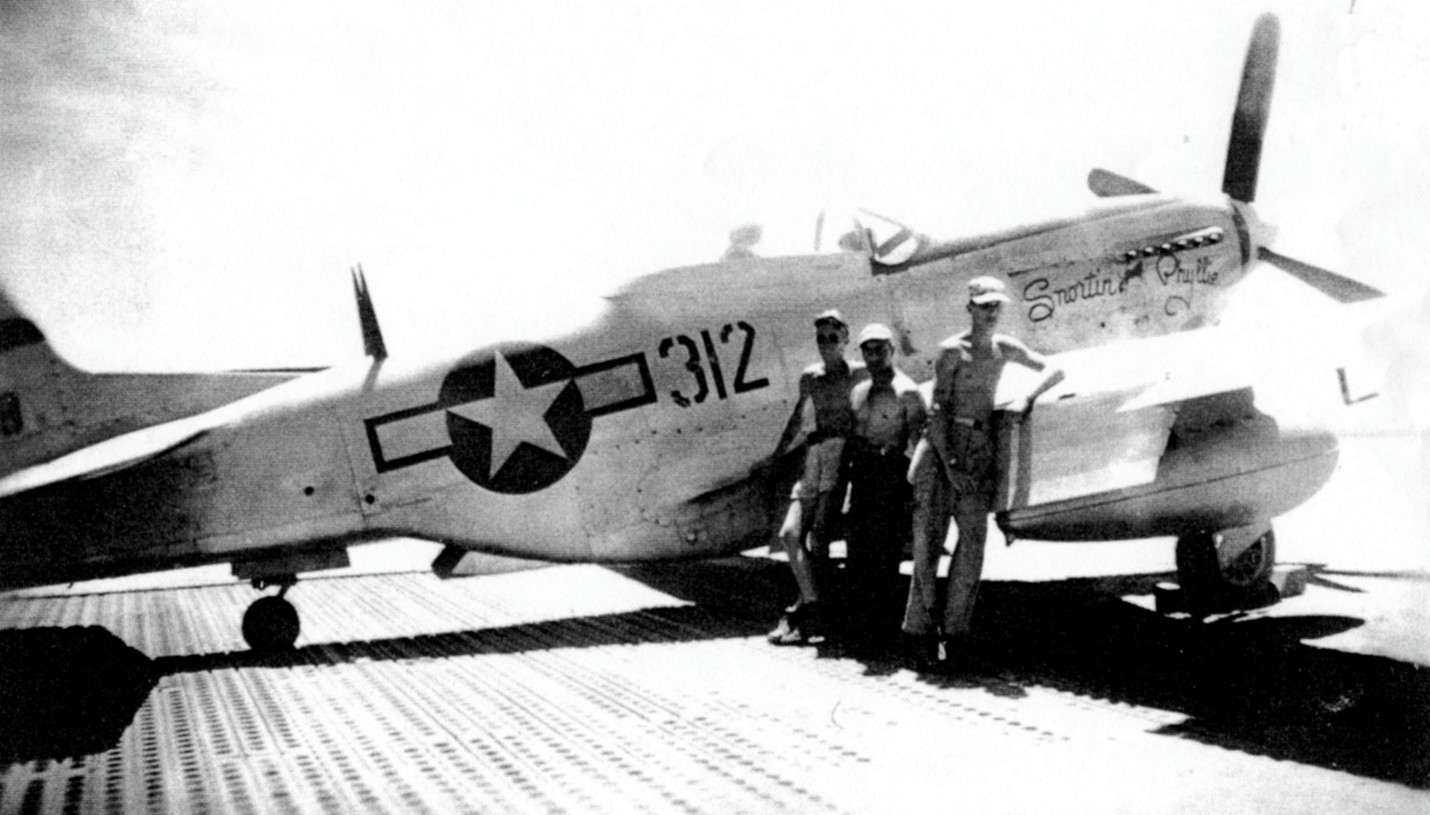
When we prepared the kit, we were working from four photographs of Snortin’ Phyllie. They were snapshots taken from different angles and, quite possibly, at different moments in the aircraft’s service. None showed the complete antenna arrangement clearly, so we had to put the pieces together.
Some views suggested the characteristic twin Uncle Dog antenna masts behind the cockpit. In another view we could see a small wire-like antenna underneath the fuselage. What we could not identify was the blade-type radio antenna normally relocated underneath an Uncle Dog-equipped Mustang.
The simplest explanation seemed to be that the small wire was a substitute for the relocated blade antenna. That was how we interpreted the four photographs when preparing the kit.
Then a fifth photograph appeared
After the kit had been prepared, another photograph gave us a new piece of the puzzle.

This photograph seems to show Snortin’ Phyllie with a single standard radio mast still on top of the rear fuselage, while the mysterious short wire is visible underneath the aircraft at the same time. The image is not sharp enough to make every detail completely certain, but it changes our interpretation significantly.
The wire was evidently not simply a substitute for the standard radio antenna. It was something else. What it was for, however, we still do not know.
It also gives us another possible configuration of Snortin’ Phyllie: the aircraft with the normal single radio mast on its back and the mysterious wire underneath.
Putting the snapshots together
The difficulty is that the surviving photographs give us only fragments of the story. We do not have one clear photograph showing the complete antenna arrangement from nose to tail. Instead, we have snapshots from different sides which show different details.
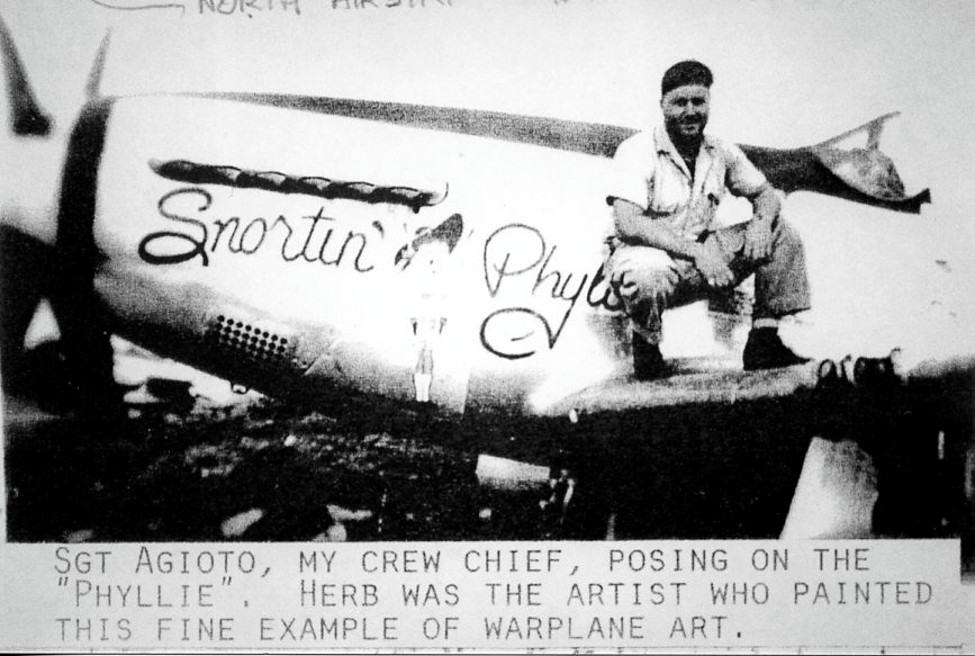
The other four photographs still suggest another stage, with the twin Uncle Dog masts behind the cockpit. What we cannot establish from them is whether the standard blade radio antenna had already been relocated underneath the fuselage at that moment. No single photograph gives us a clear view of the complete installation.
This makes us wonder whether the photographs may record Snortin’ Phyllie at different stages of the Uncle Dog conversion. The fifth photograph may show an earlier configuration, with the original radio mast still on the rear fuselage and the mysterious wire already present. Other views appear to show the aircraft after the twin Uncle Dog masts had been fitted.
A further possible stage would be the completed textbook Uncle Dog installation, with the twin masts behind the cockpit and the standard blade radio antenna relocated underneath the fuselage. This would be the normal final arrangement described above by Carl. But we do not have a sufficiently clear photograph of Snortin’ Phyllie showing the whole aircraft in that configuration.
Perhaps the lower blade antenna was installed later. Perhaps it is simply hidden by the angle or quality of the photographs available to us. Perhaps it was temporarily missing or had been damaged. We do not know.
So which Snortin’ Phyllie can we build?
The configuration presented in our kit – the twin Uncle Dog masts behind the cockpit together with the unusual wire underneath the fuselage – is our reconstruction based on the four photographs available to us when the kit was prepared. Each of these elements is supported by the photographic record, although no single photograph shows the complete arrangement clearly.
The fifth photograph adds another possible configuration: Snortin’ Phyllie with a single standard radio mast on its back and the same mysterious wire underneath. This may represent an earlier stage in the aircraft’s evolution, before the Uncle Dog modification was completed.
What we still cannot document clearly is the final textbook Uncle Dog configuration, with the twin masts on the rear fuselage and the standard blade radio antenna relocated underneath. It may have existed, but the photographs currently available to us do not prove it.
We also cannot say with certainty whether the markings remained exactly the same throughout all these stages. Aircraft changed. Equipment was added, removed, damaged or replaced, and markings changed too. Each photograph records only one moment – and sometimes only one small part of it.
That is also what makes Snortin’ Phyllie such an interesting Mustang to model. It had attractive and distinctive nose art, its antenna story is more complicated than the textbook Uncle Dog installation, and the surviving photographs still leave us with a genuine research puzzle.
Perhaps one of our readers has another photograph that will finally solve it.
If you recognise the mysterious wire underneath the fuselage, or know of another photograph showing Snortin’ Phyllie and its antenna installation more clearly, please let us know in the comments.
See also:
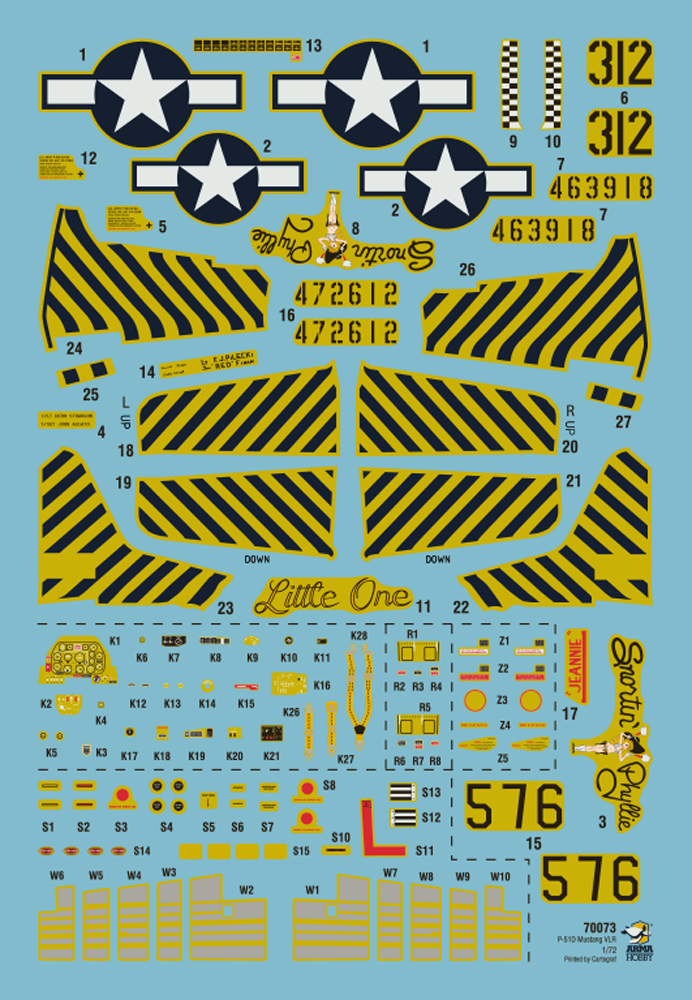
P-51D Mustang VLR kit in Arma Hobby Store

Carl Molesworth is the author 17 non-fiction books about the history of air combat during World War II, many of which cover aspects of the air war in the China-Burma-India Theater. Carl is considered an authority on the combat history of the Curtiss P-40 fighter aircraft.
Carl served in the U.S. Air Force from 1968 to 1972, and after that he earned a BA in English with a minor in history from the University of Maryland Baltimore County. Carl worked as journalist for newspapers and magazines for nearly 40 years before retiring in 2015. He now serves as a volunteer researcher at the Petaluma Historical Library and Museum. His web site is www.carlmolesworth.com.
He lives in Petaluma, CA, USA, with his wife, Kris, and their two dogs. His daughter, Claire, and her family, live in Bolinas, CA

A computer graphic artist with a passion for modeling. Only the correct 1/72 scale, planes, Pacific WW2.
This post is also available in:
 polski

The answer was found in Hyperscale, a post by “Tourist-51”, On the first Snortin’ Phyllie picture you can see the short wire antenna just behind the right wheel bay, this means the SCR-695 IFF set was in the cockpit behind the radio box, the battery was then moved behind the engine, the small scoop for its vent being visible on the fuselage side.
At that time Snortin’ Phyllie did not have the ARA-8 homing adapter (uncle dog) installed, so no dual antennas on the spine and no single antenna mast under the nose (in front of the wheel wells) is visible.
The ARA-8 did get installed at some point as shown on another picture of the same plane.
The one thing that wouldn’t happen is the dual antennas on the spine without the single radio mast being transferred under the nose.
Thank you for information. Could you share a link to Hyperscale post?