Messerschmitt Me 262 A-1a serial number 500071, known as “White 3” of JG 7, is one of the best-documented surviving examples of the first operational jet fighter in aviation history. Preserved today at the Deutsches Museum in Munich, this aircraft offers a unique opportunity to trace both the actual production and painting practices used on the Me 262 in the final months of the war, as well as the dramatic story of the Luftwaffe’s last days in the spring of 1945.
The story of this particular aircraft includes production in an improvised forest assembly facility, its distinctive camouflage scheme, and a final flight that ended with the aircraft being interned in neutral Switzerland. For modellers, it is an especially compelling subject, as the preserved airframe allows historical sources to be combined with direct observation of authentic construction and finish details.
Production, Assembly, Delivery
The Messerschmitt 262 A-1a with serial number 500071 was built at the end of March 1945 in a forest assembly plant (German: “Waldwerk“) codenamed “Stauffen”, located in woodland at a site known as Mooshof, less than 5 km east of Regensburg. The assembly facility formed part of the Messerschmitt Regensburg–Obertraubling complex, where in March and April around 600 prisoners—brought on 20 February 1945 from the Flossenbürg concentration camp—were forced to work on aircraft production for Messerschmitt. Aircraft number 500071 was one of several dozen (approximately 60) Me 262s built there. At the beginning of April 1945, Stauffen was shut down, and the surviving prisoners from Obertraubling were evacuated to Dachau.
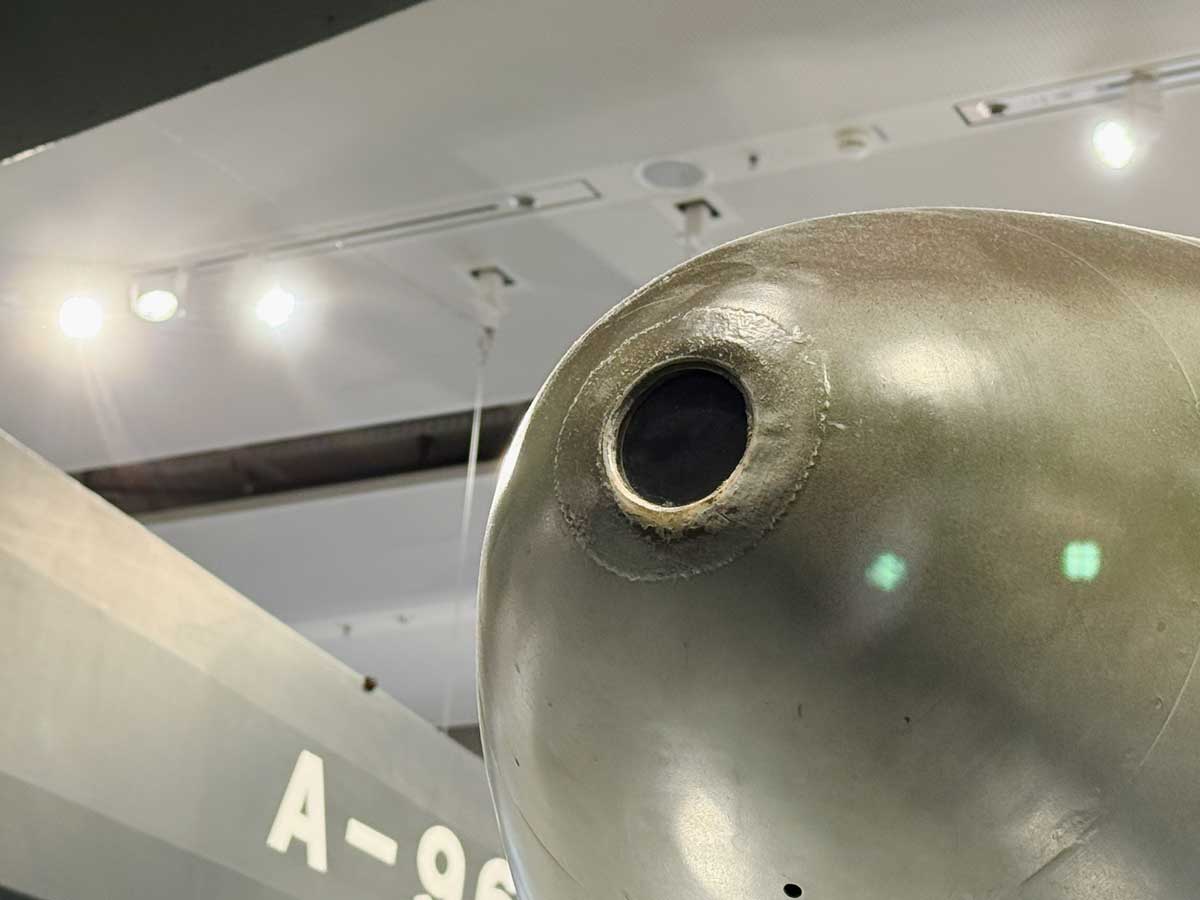
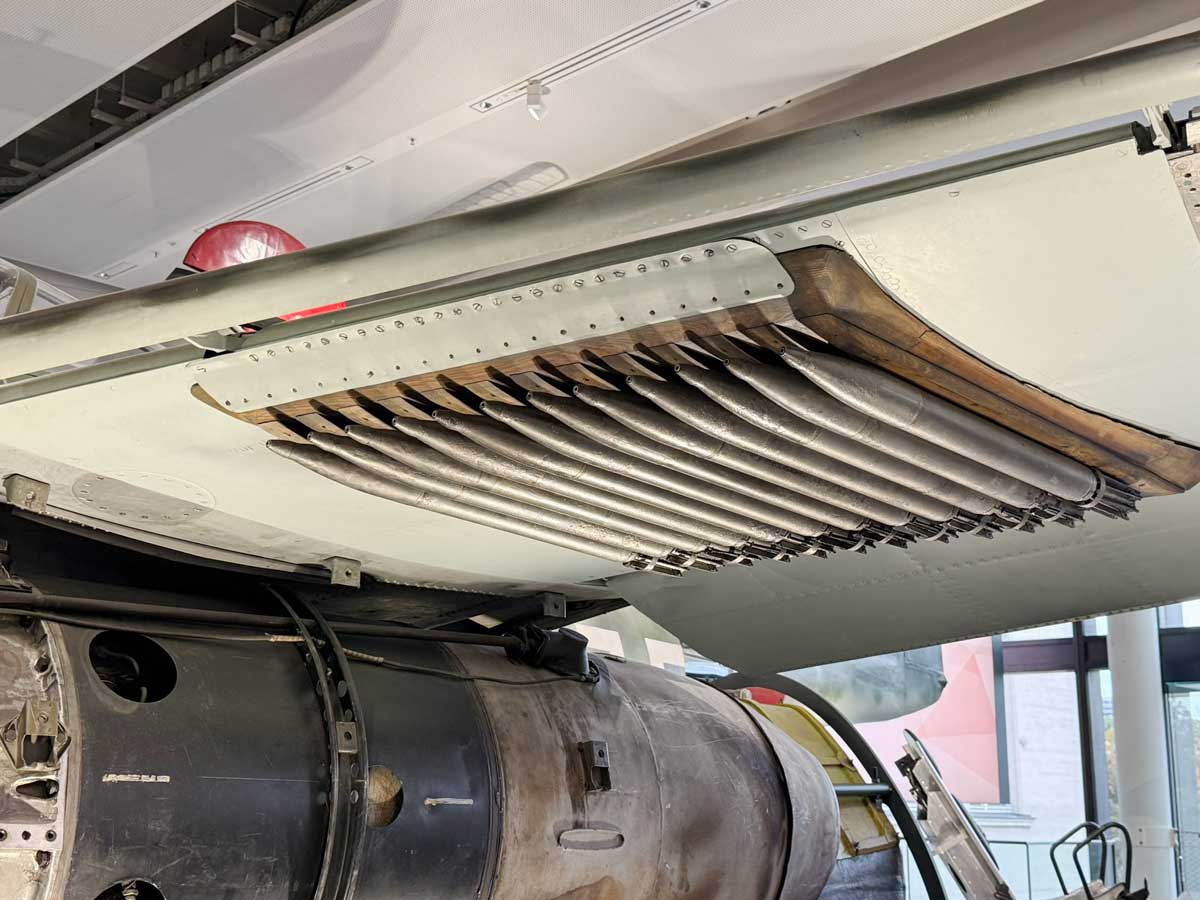
The partially assembled airframe from Stauffen was most likely transported via an improvised railway built for the plant to the Obertraubling airfield, where final assembly, painting, and technical test flights were carried out. The aircraft was completed to Rüstsatz 7 standard, fitted with four 30 mm MK 108 cannon and two underwing launchers for unguided R4M rockets. It was then flown to München-Riem airfield, which served as the final fitting-out and Luftwaffe handover point. There it was assigned to Jagdgeschwader 7 (9./JG 7), given the tactical marking “White 3”, and allocated to combat duties, which it most likely never actually carried out.
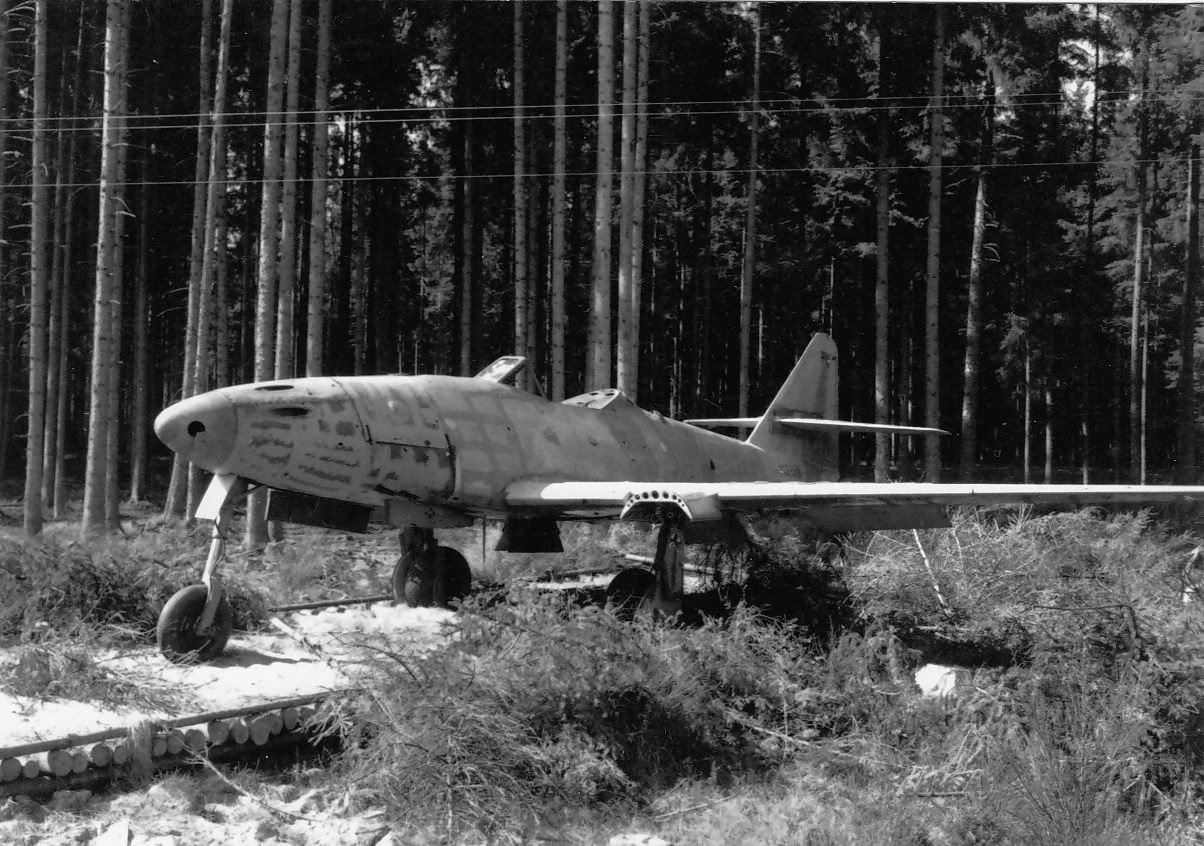
An unfinished Me 262 in Waldwerk Leipheim, photo: WW2 Photos.
Aircraft Appearance After Test Flight
Painting of the Me 262 was carried out in two stages. Some structural elements, delivered to the assembly plant as finished subassemblies, were usually already painted by subcontractors. Here, painting should be understood as either the application of camouflage colours—often in simplified form—or simply the use of protective coatings.
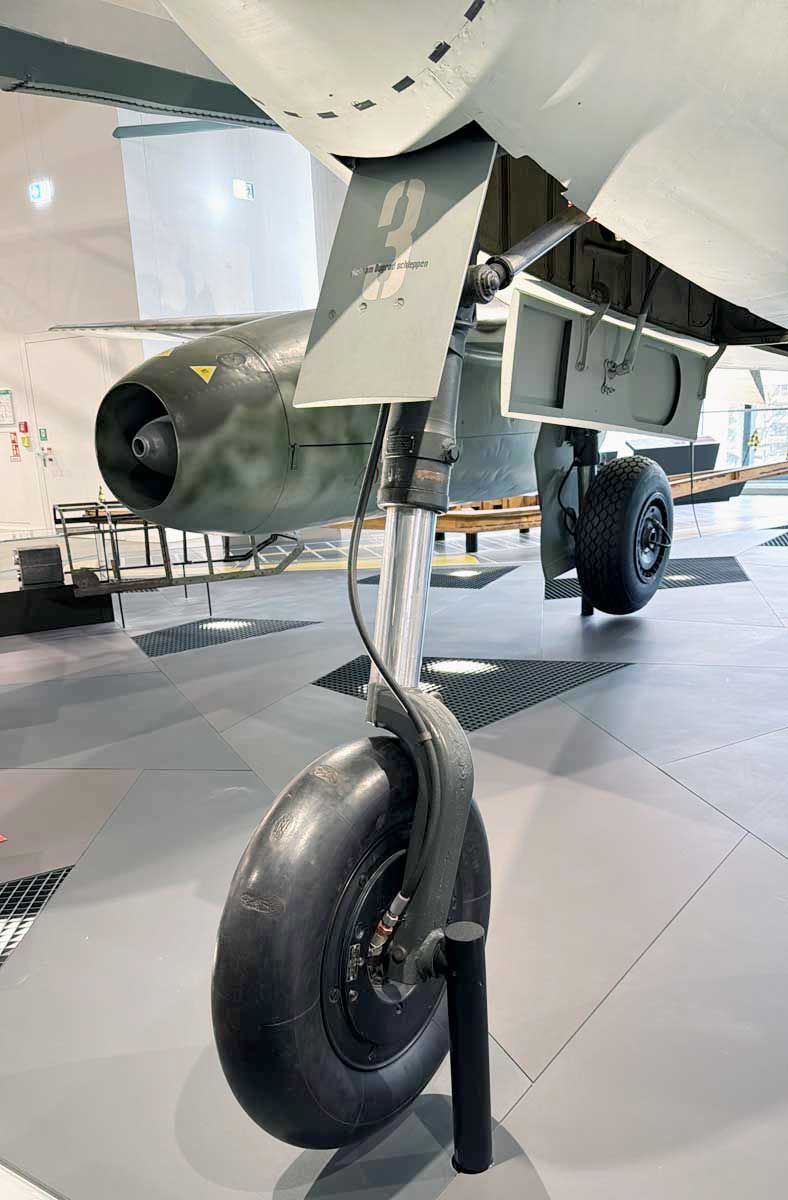
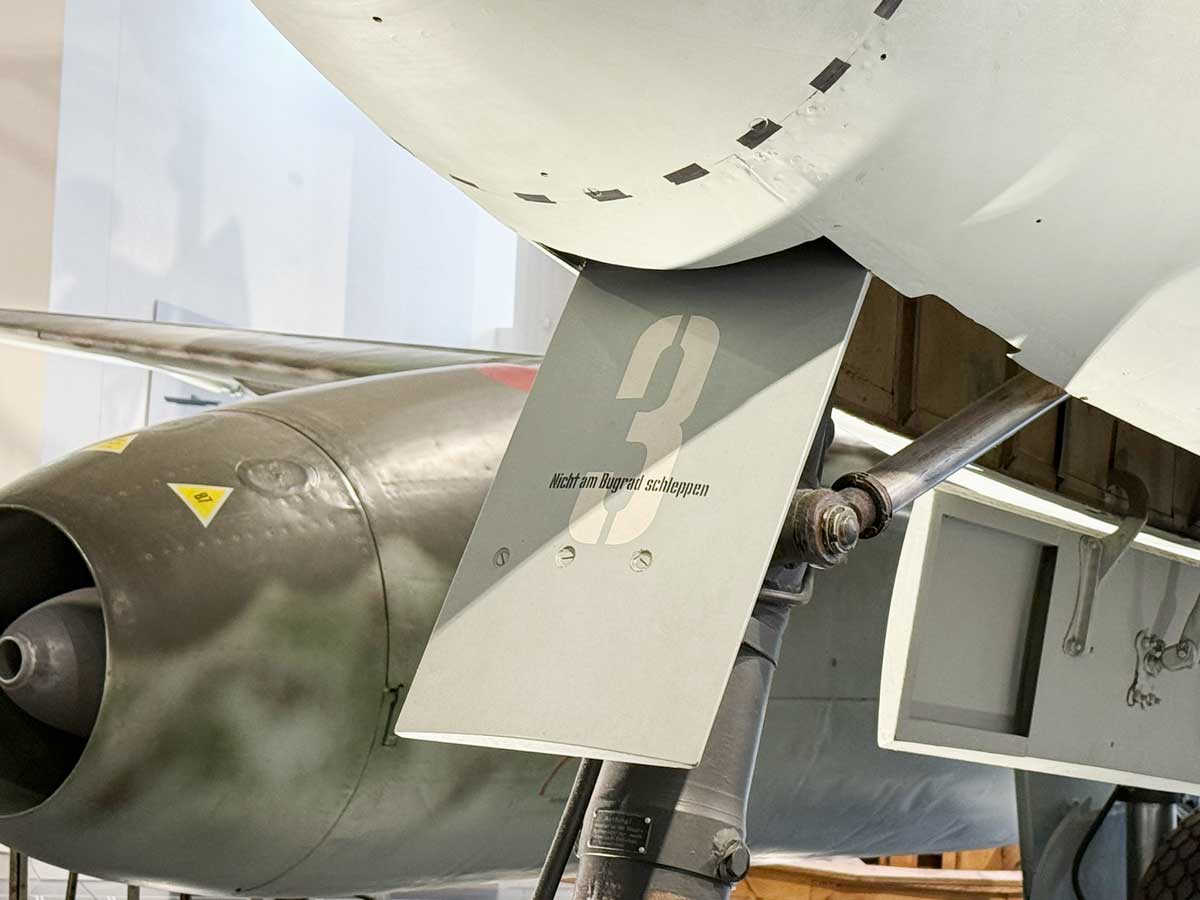
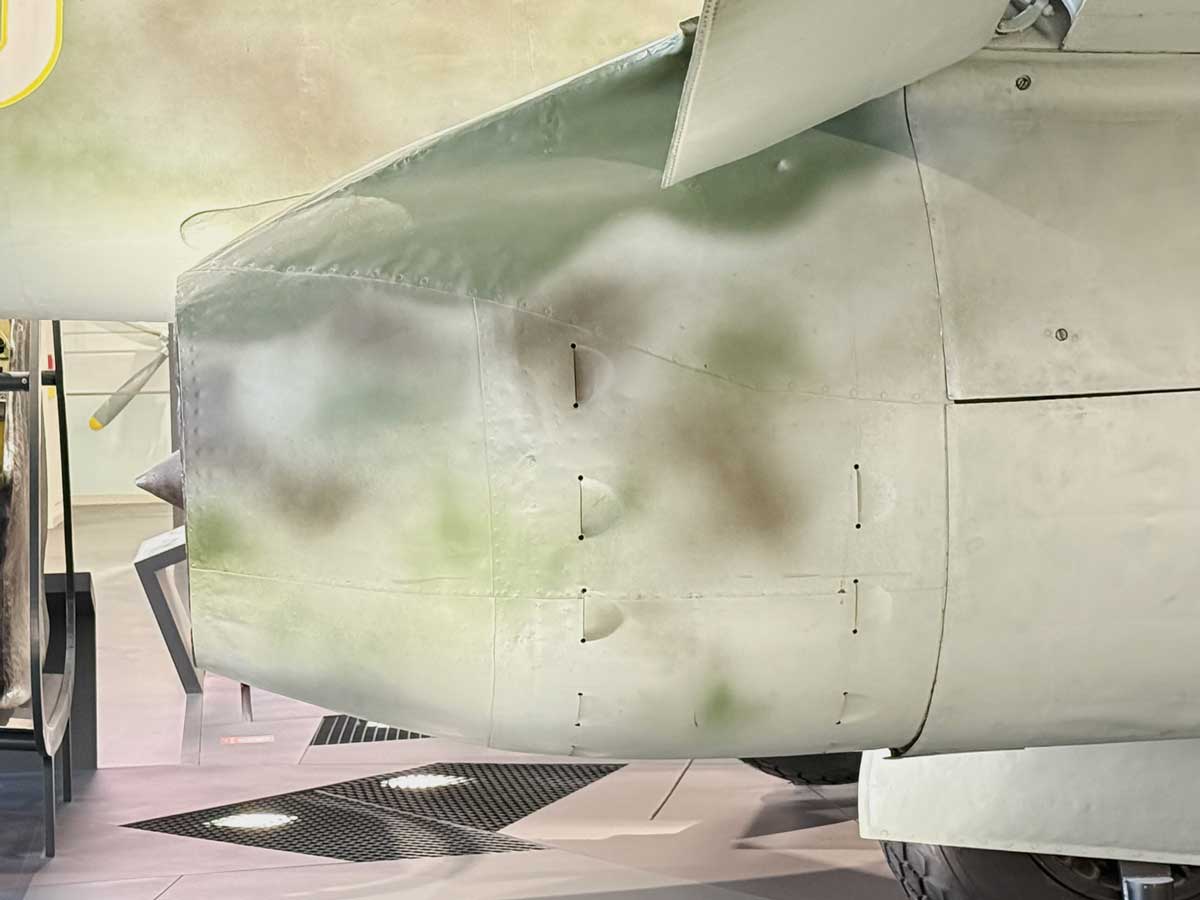
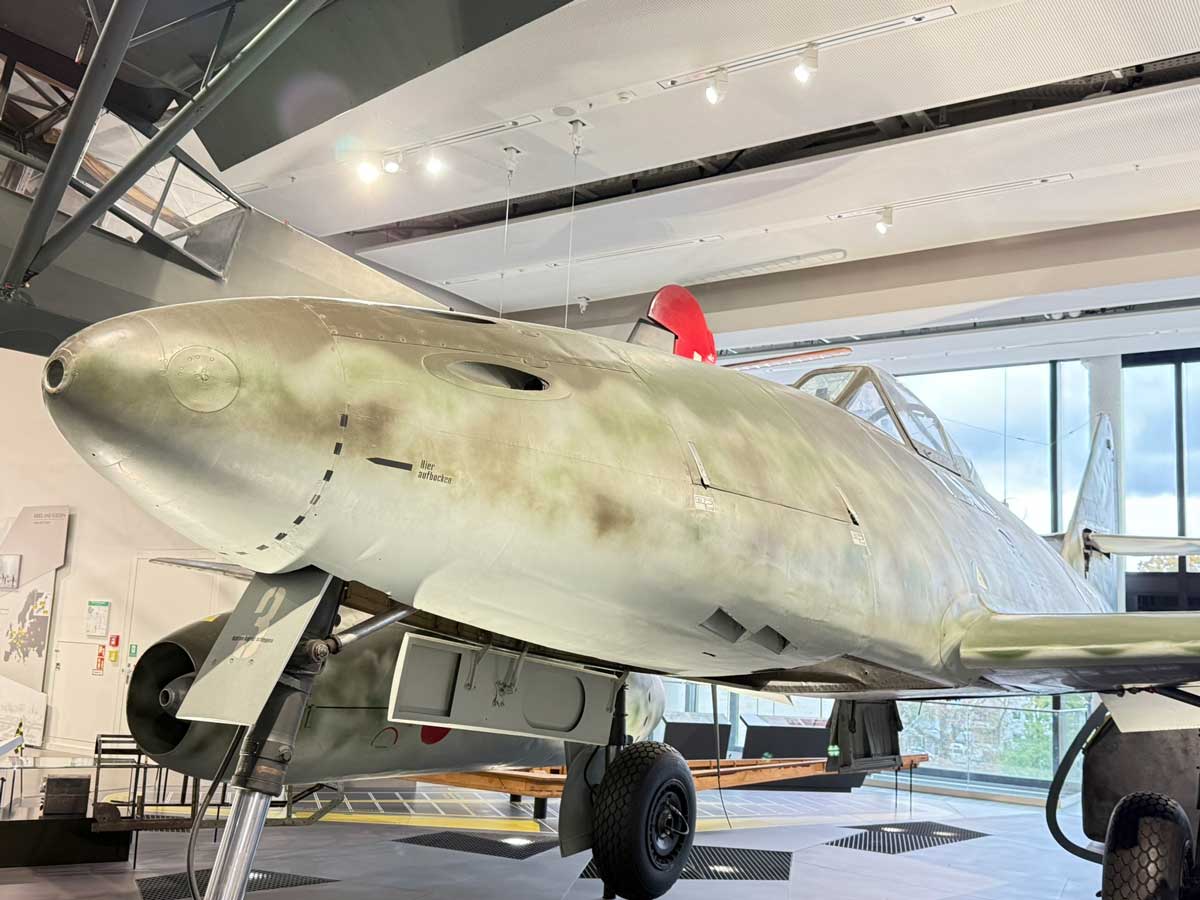
The nose section, housing the complete nose landing gear and gun armament, was painted in protective RLM 02, including the nose gear bay. The painted skin was then filled and smoothed. At this stage, the nose colour was RLM 02, while the filler used was light grey. In the case of aircraft 500071, painting of this section ended at that point.
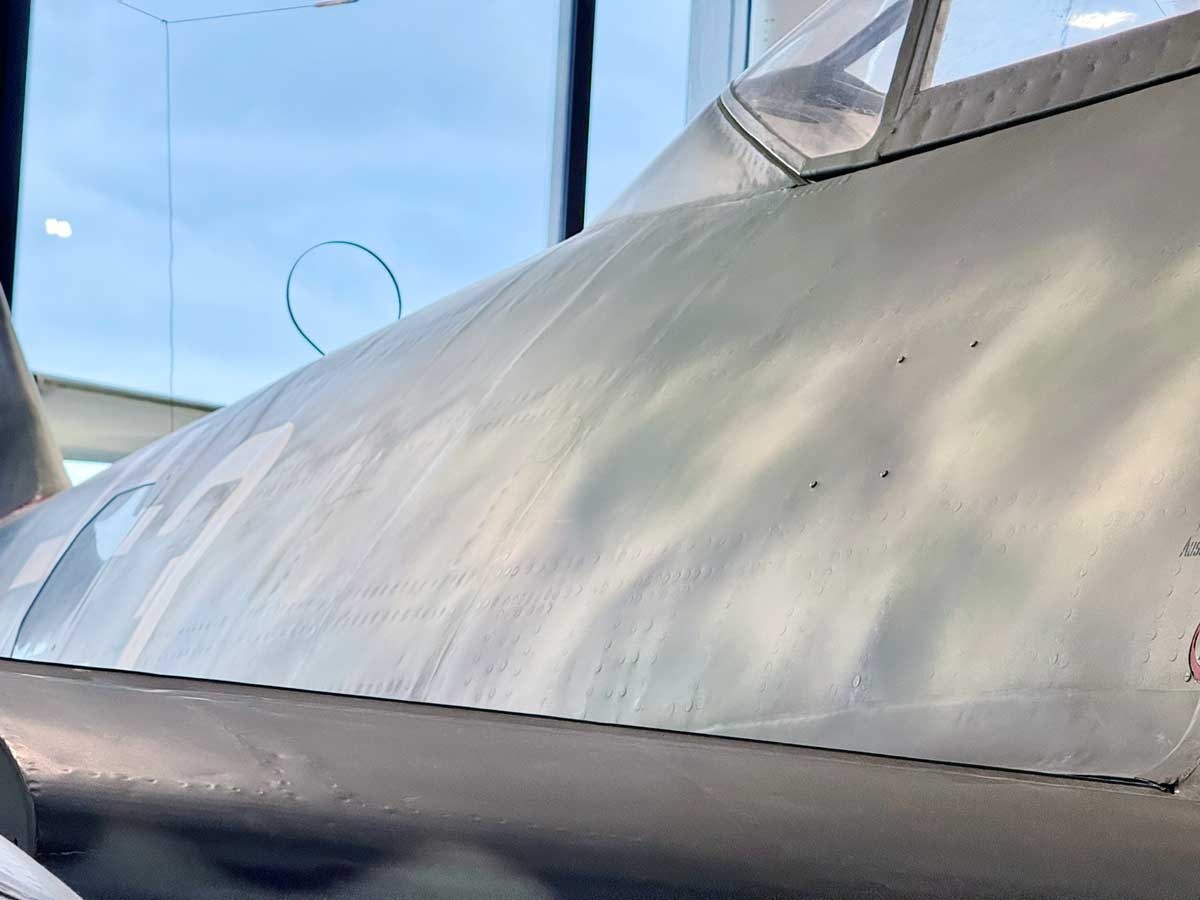
The next fuselage section housed the pilot’s cockpit and fuel tanks. Made from duralumin sheet, it remained unpainted except for steel components such as the windscreen base and frame, as well as selected internal elements. These were again protected with RLM 02. The inside of the fuselage and the cockpit tub also remained unpainted, while the cockpit interior itself was finished entirely in RLM 66.
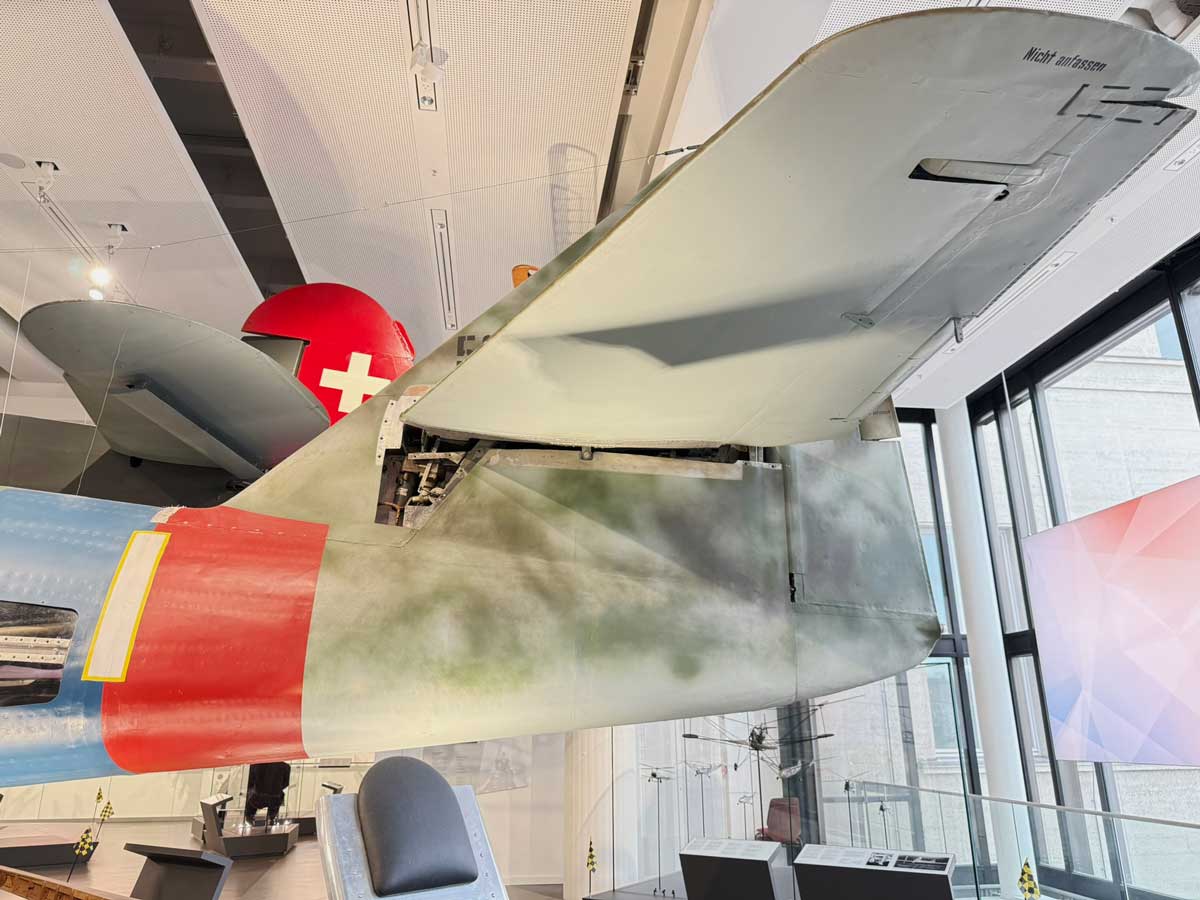
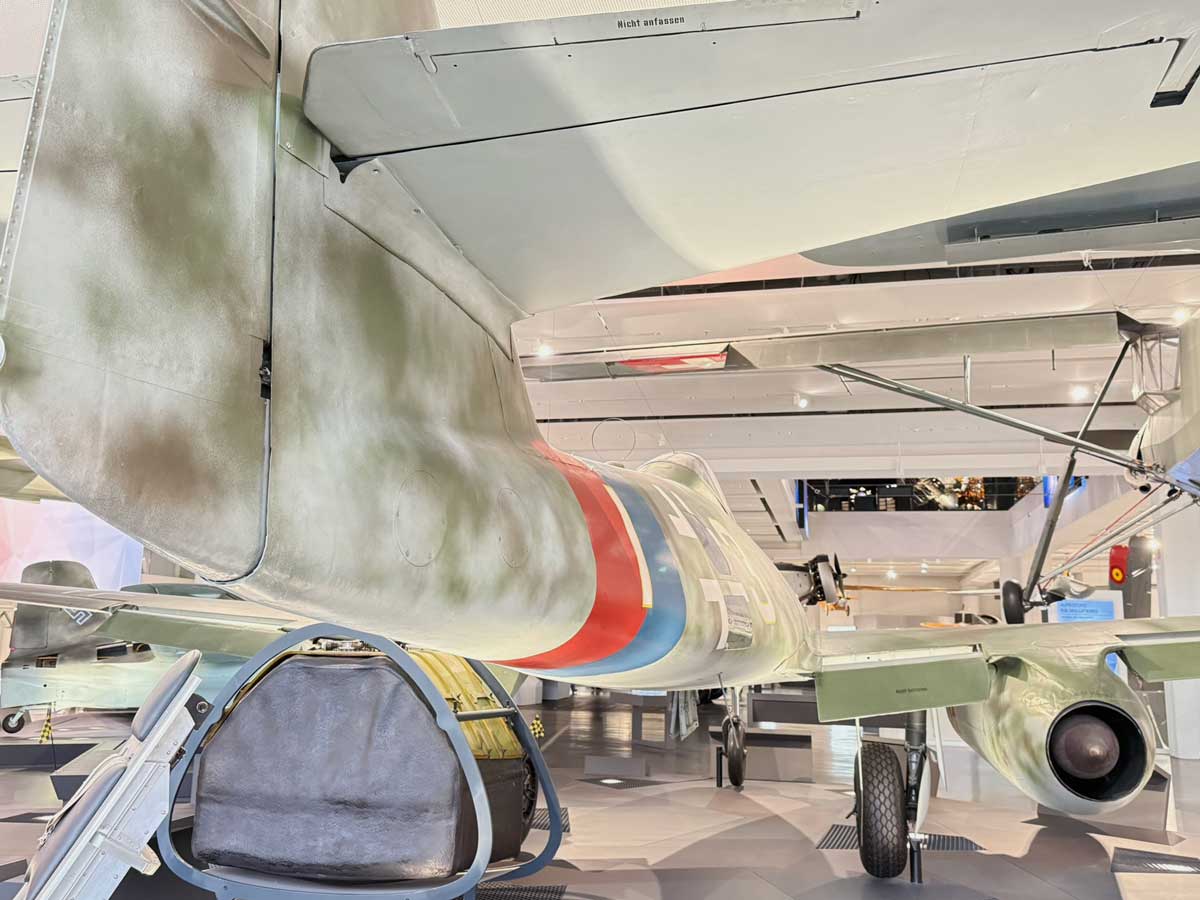
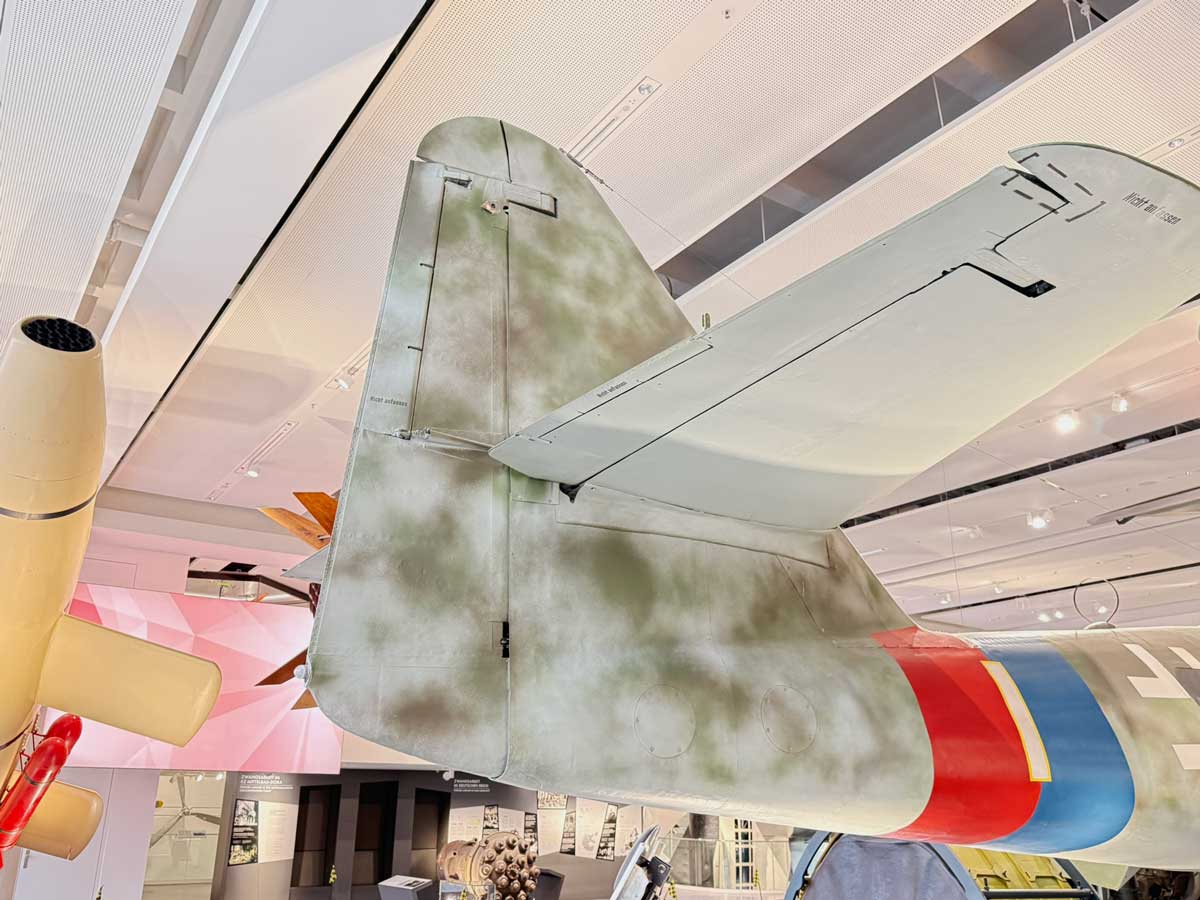
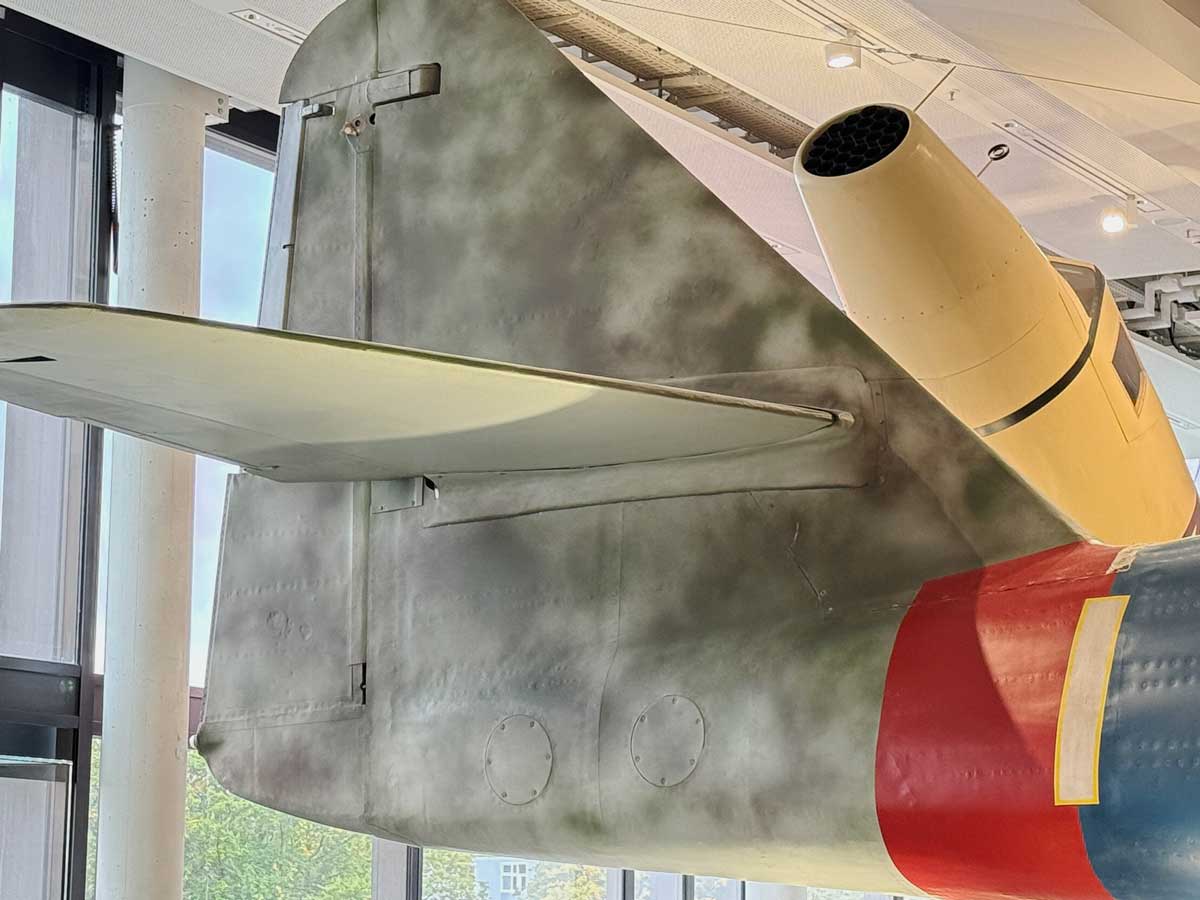
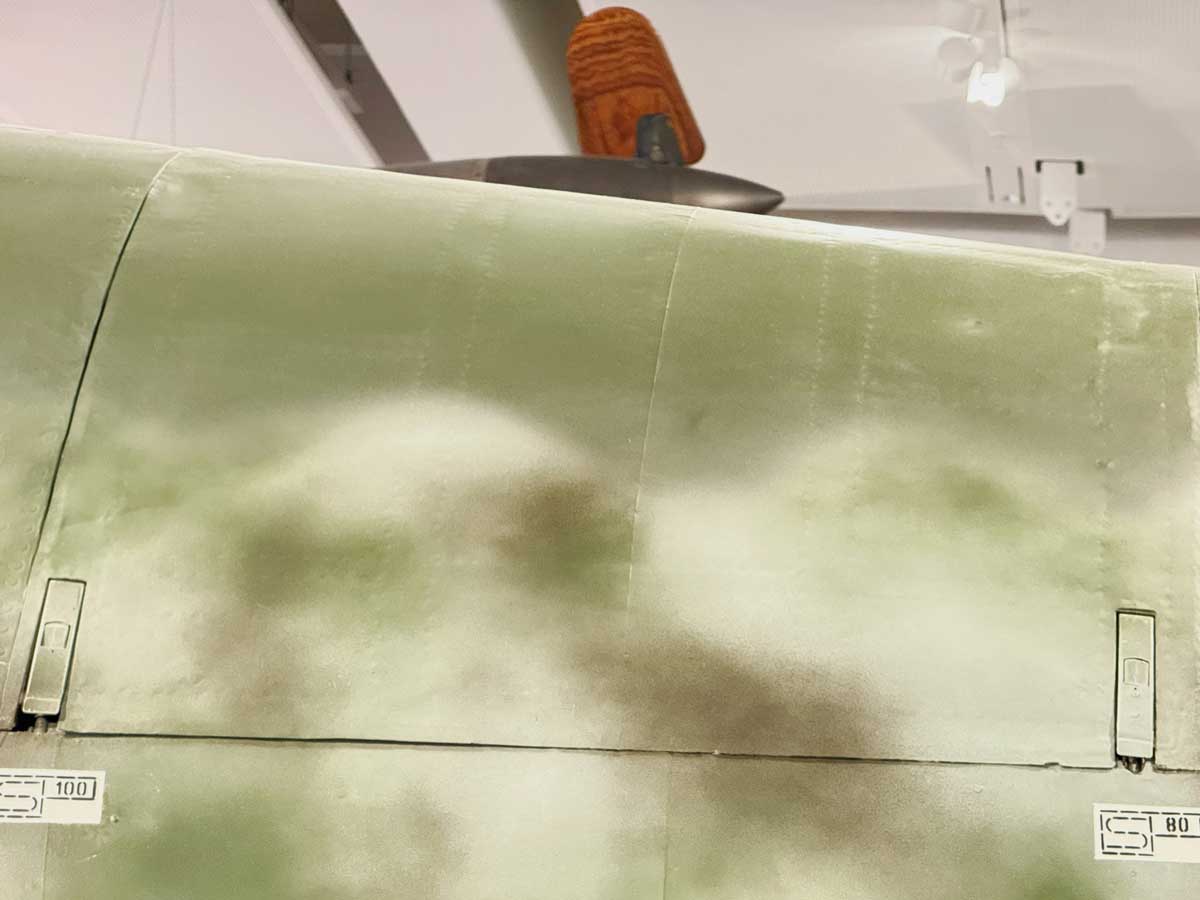
The seams of rivets and panel joints, visible externally on the cockpit section and tail, were sealed with paint and filler in RLM 02 and grey, often applied simply with a brush. The final separately produced fuselage section was the tail unit, including the fin, tailplanes, and control surfaces. Depending on the subcontractor, either the entire assembly was painted or only the fin and sheet-metal joints were protected.
The wings, produced in a forest assembly plant located near Horgau railway station, about 17 km west of Augsburg, were also transported to Stauffen as complete assemblies. Ready for installation, they were joined into a complete wing and attached to the fuselage only at the final assembly stage. In the case of 500071, the wings most likely arrived without the camouflage applied at Horgau, protected only by basic preservative treatment at the production stage.
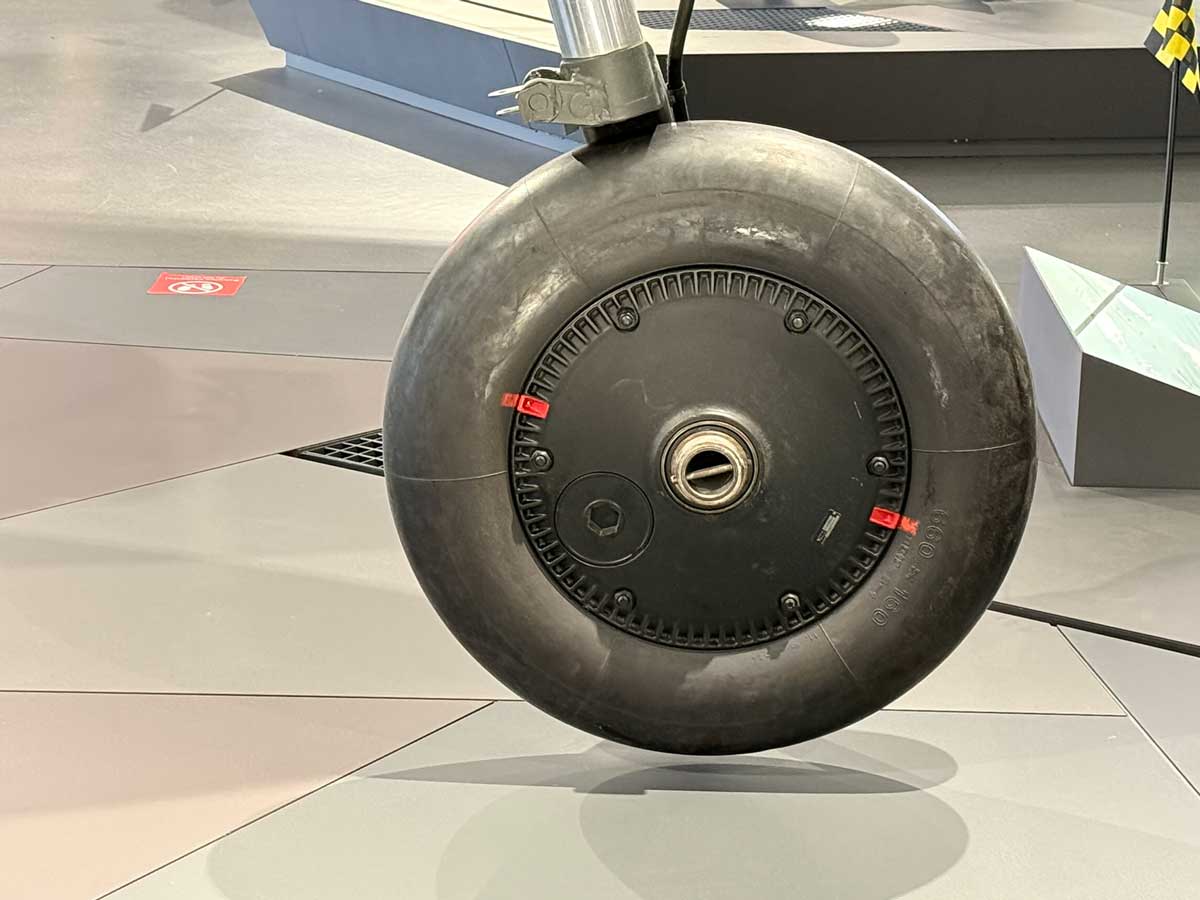
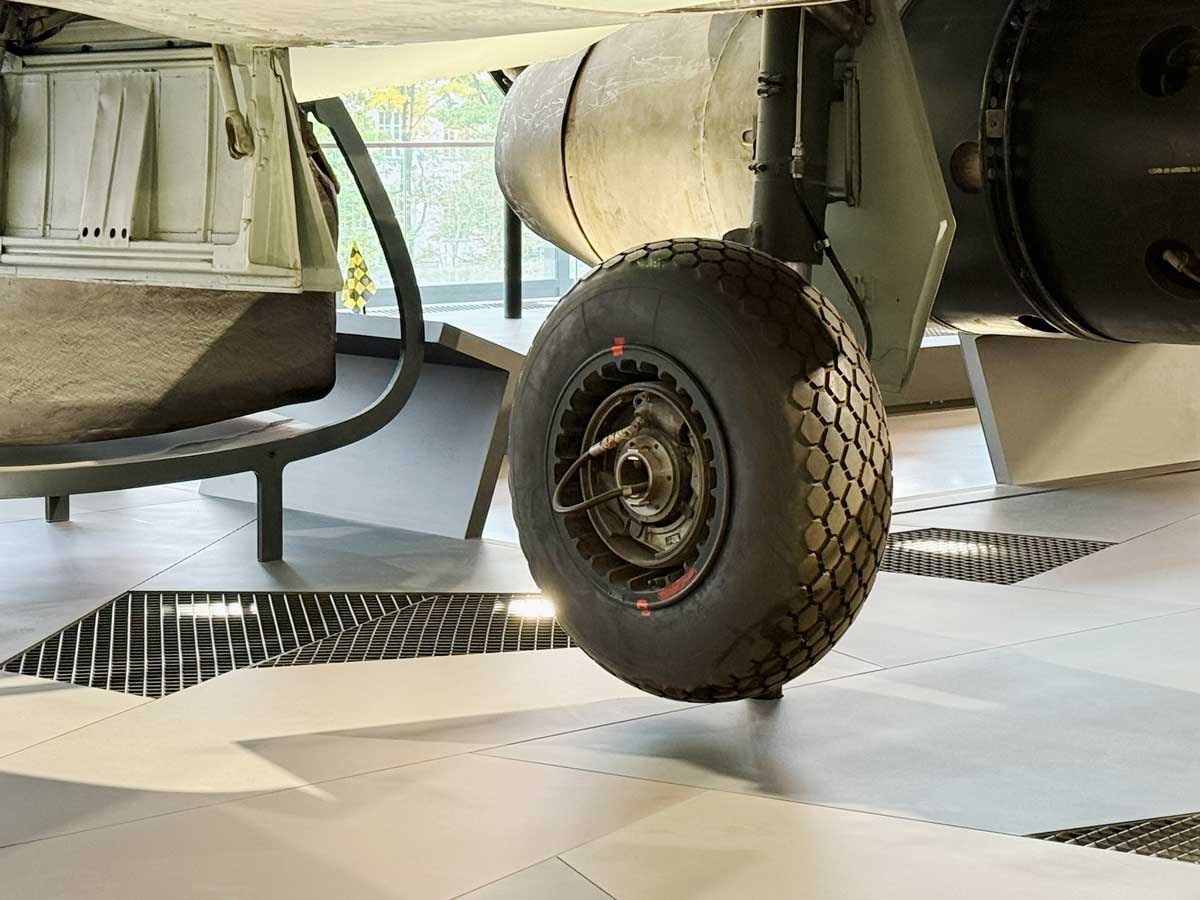
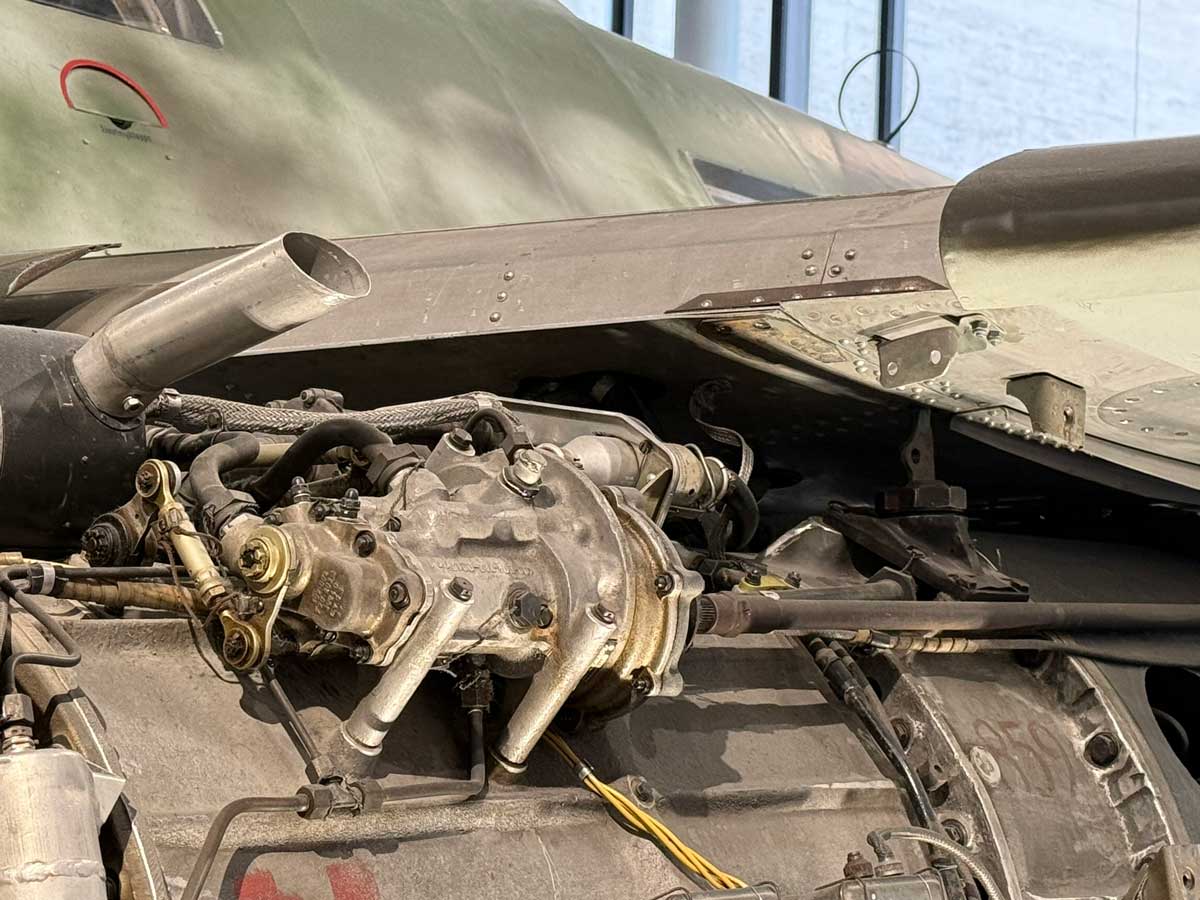
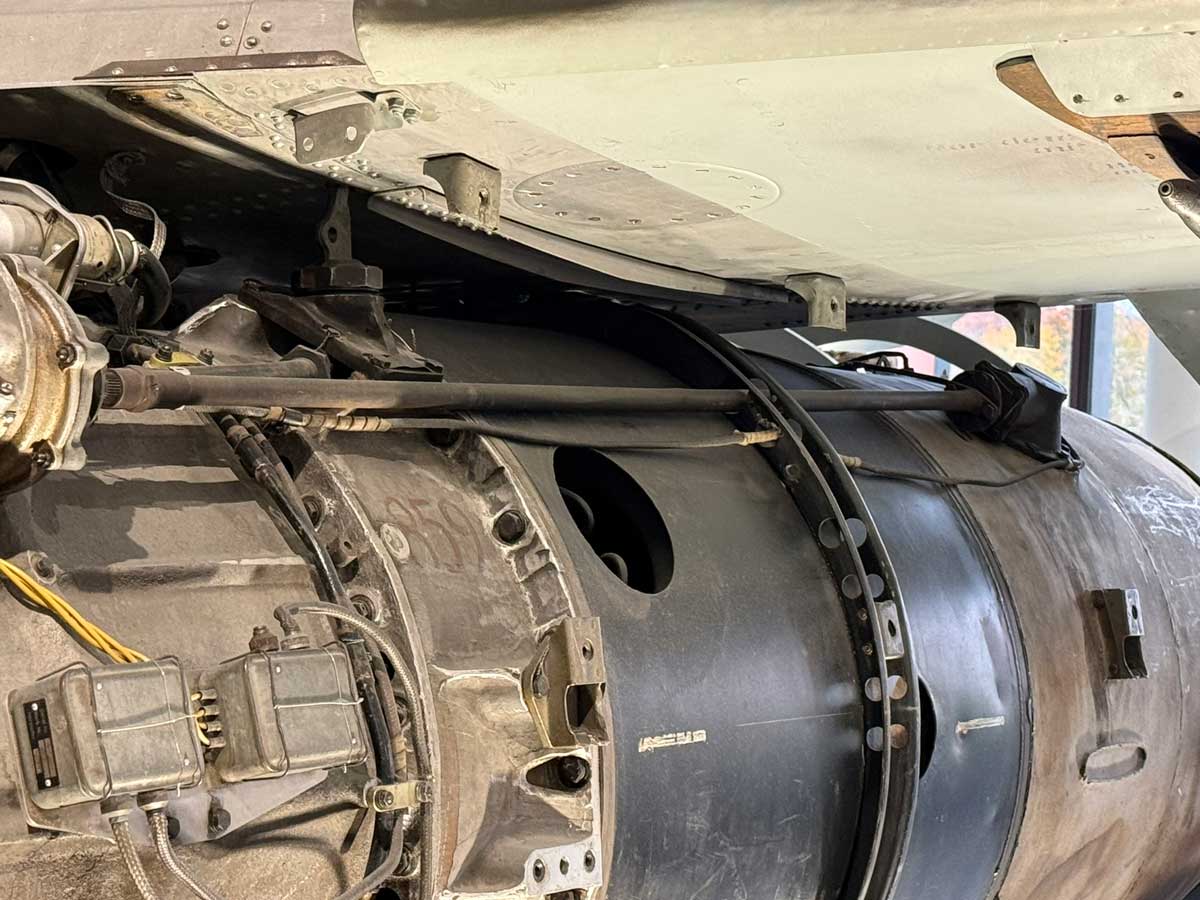
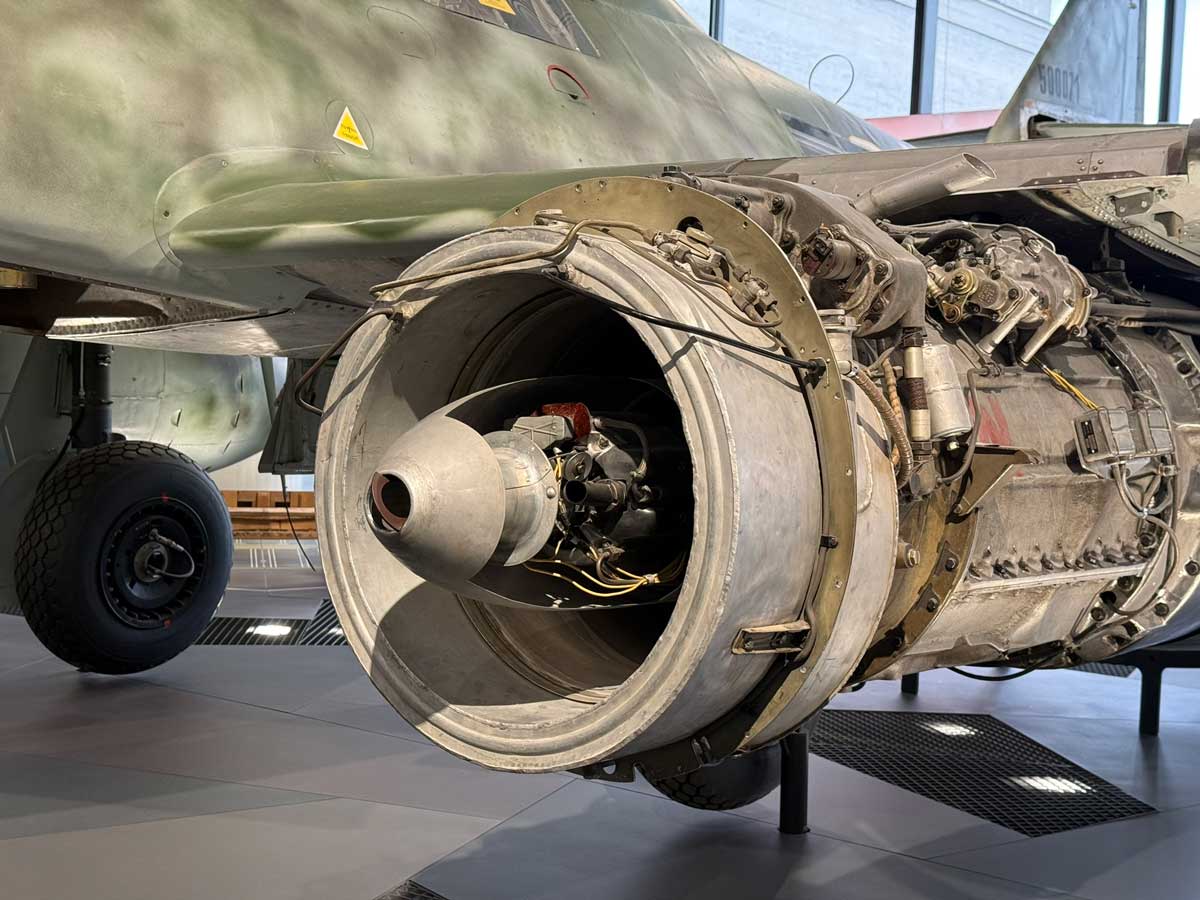
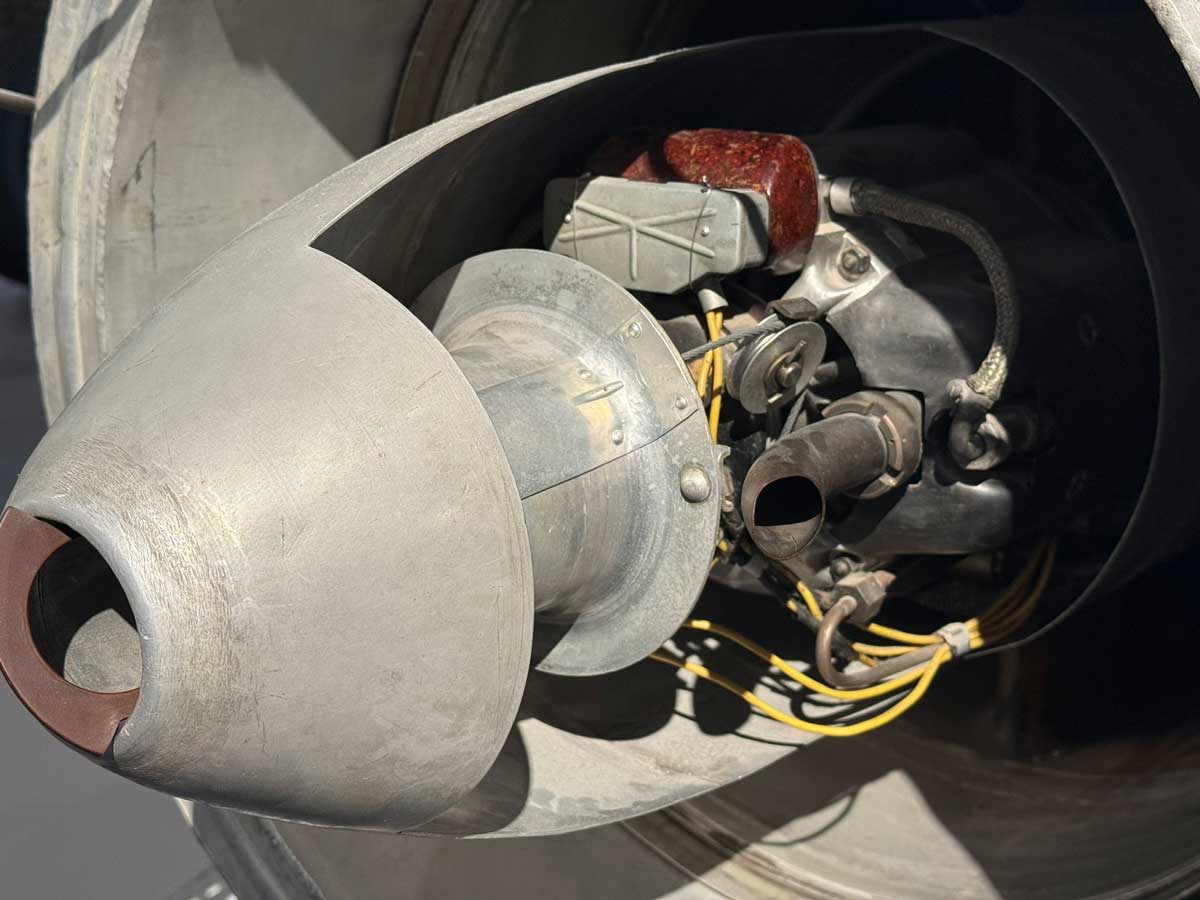
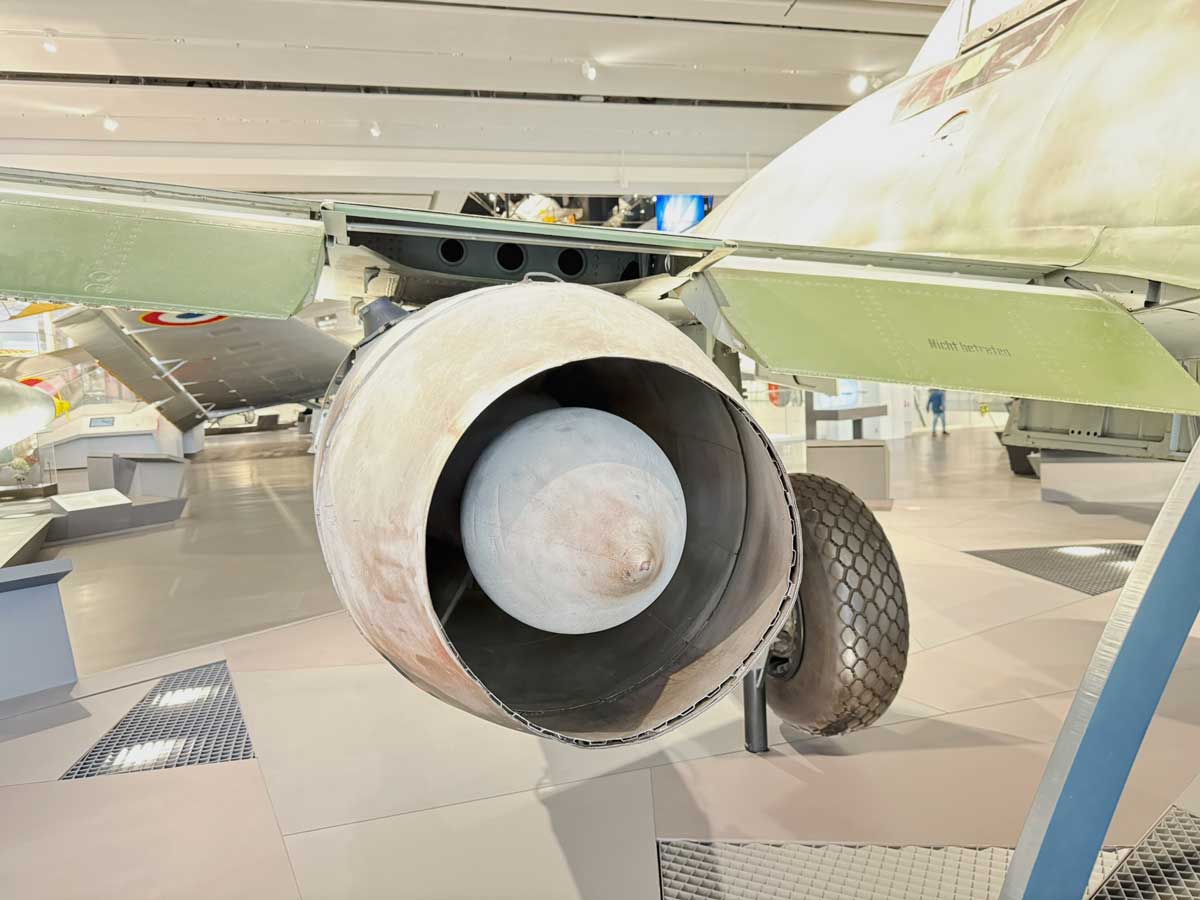
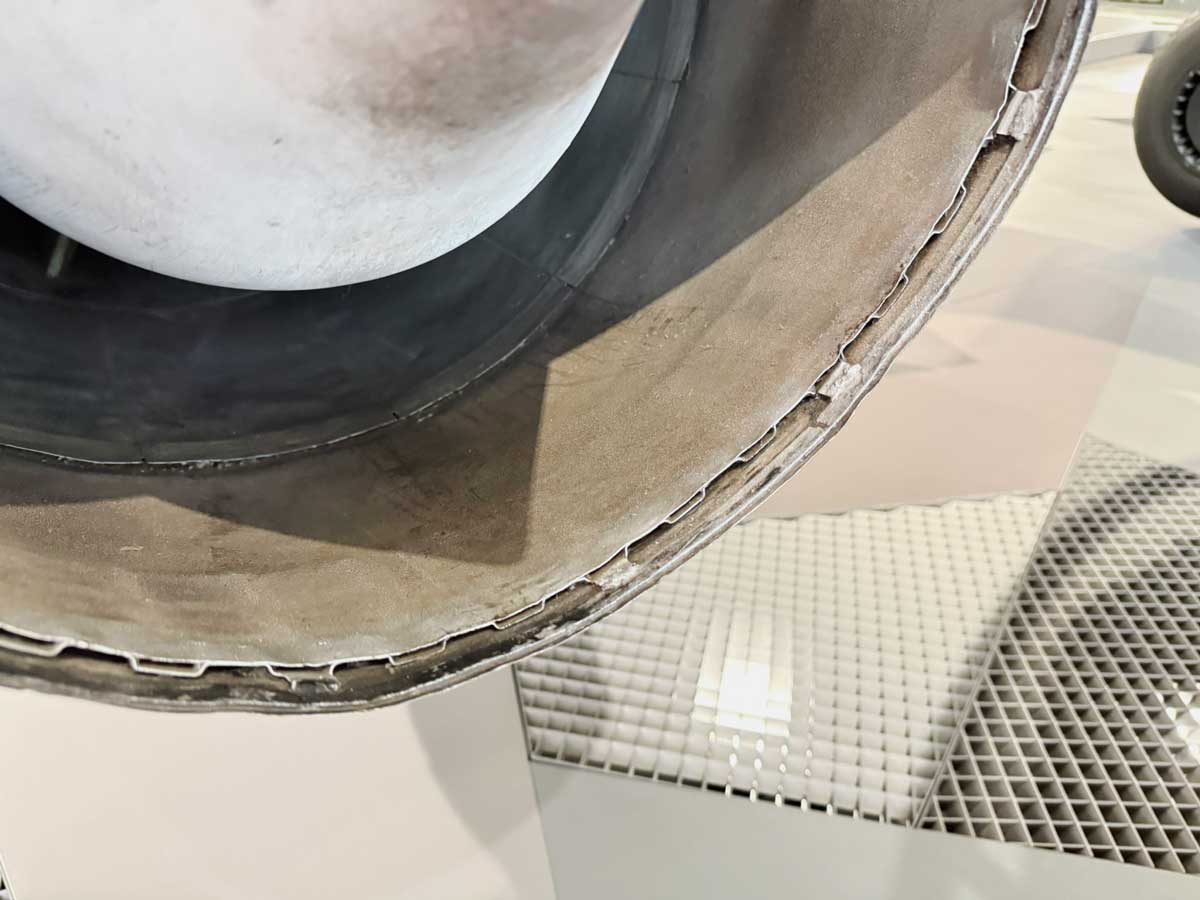
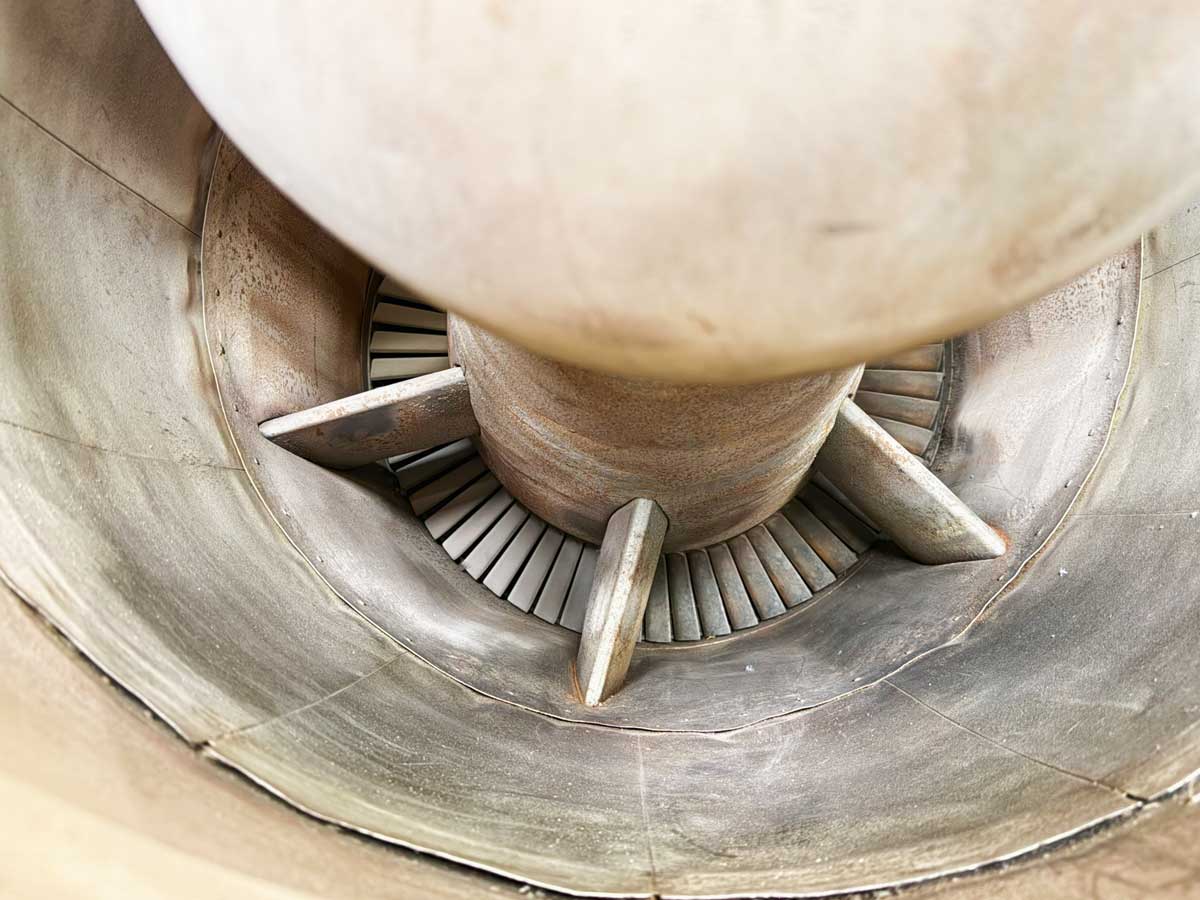
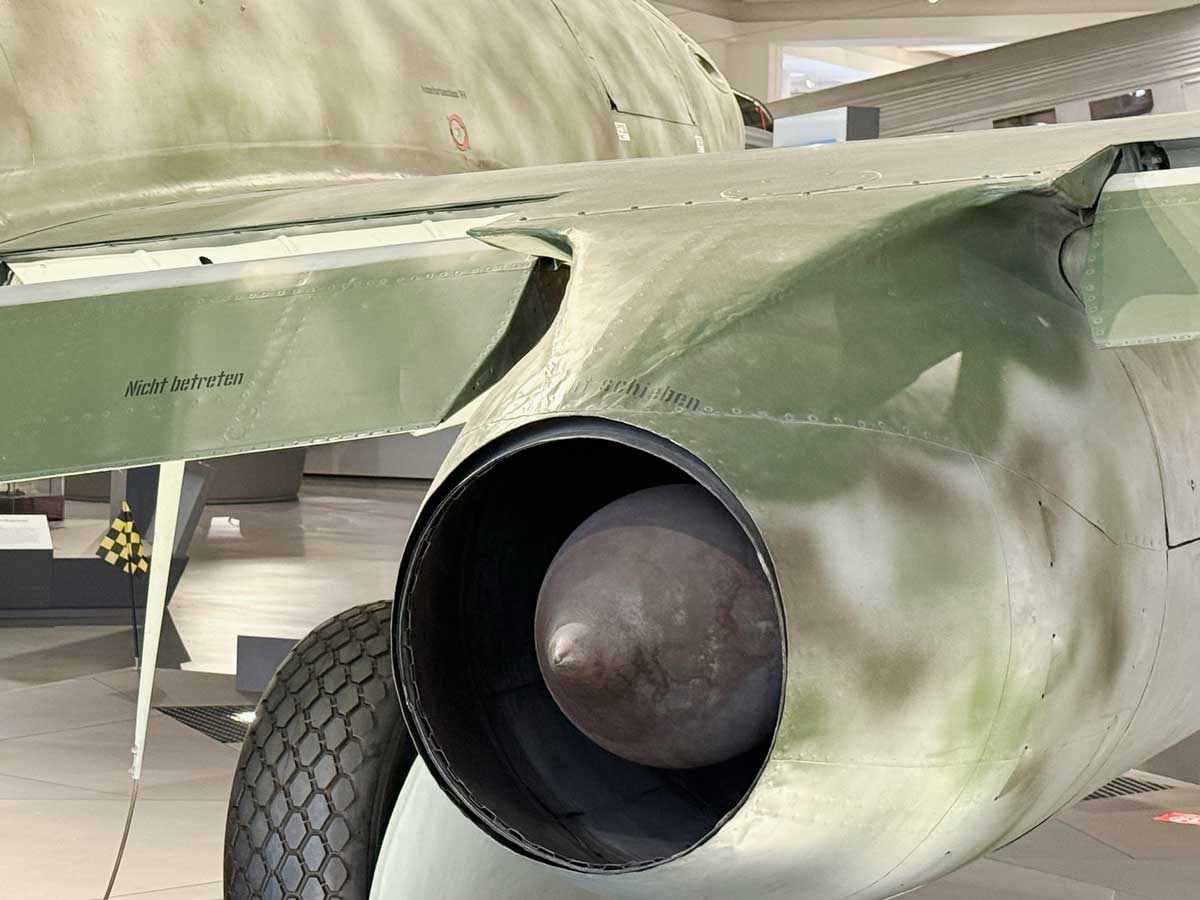
The engines were supplied by Junkers, which had dispersed Jumo 004 production between two main plants in central Germany and smaller facilities further east, including Prague. The complete engine cowlings were supplied by Ködel und Böhm and by Tuchfabrik Ludwigsau Feller GmbH & Co. of Lauingen. These were painted by the manufacturers only with protective coatings in light grey and blue shades, often limited simply to protecting the steel elements. The same applied to smaller equipment items such as landing gear doors and access panels, which were also delivered ready for installation. The landing gear units themselves were supplied by Opel from its Rüsselsheim works.
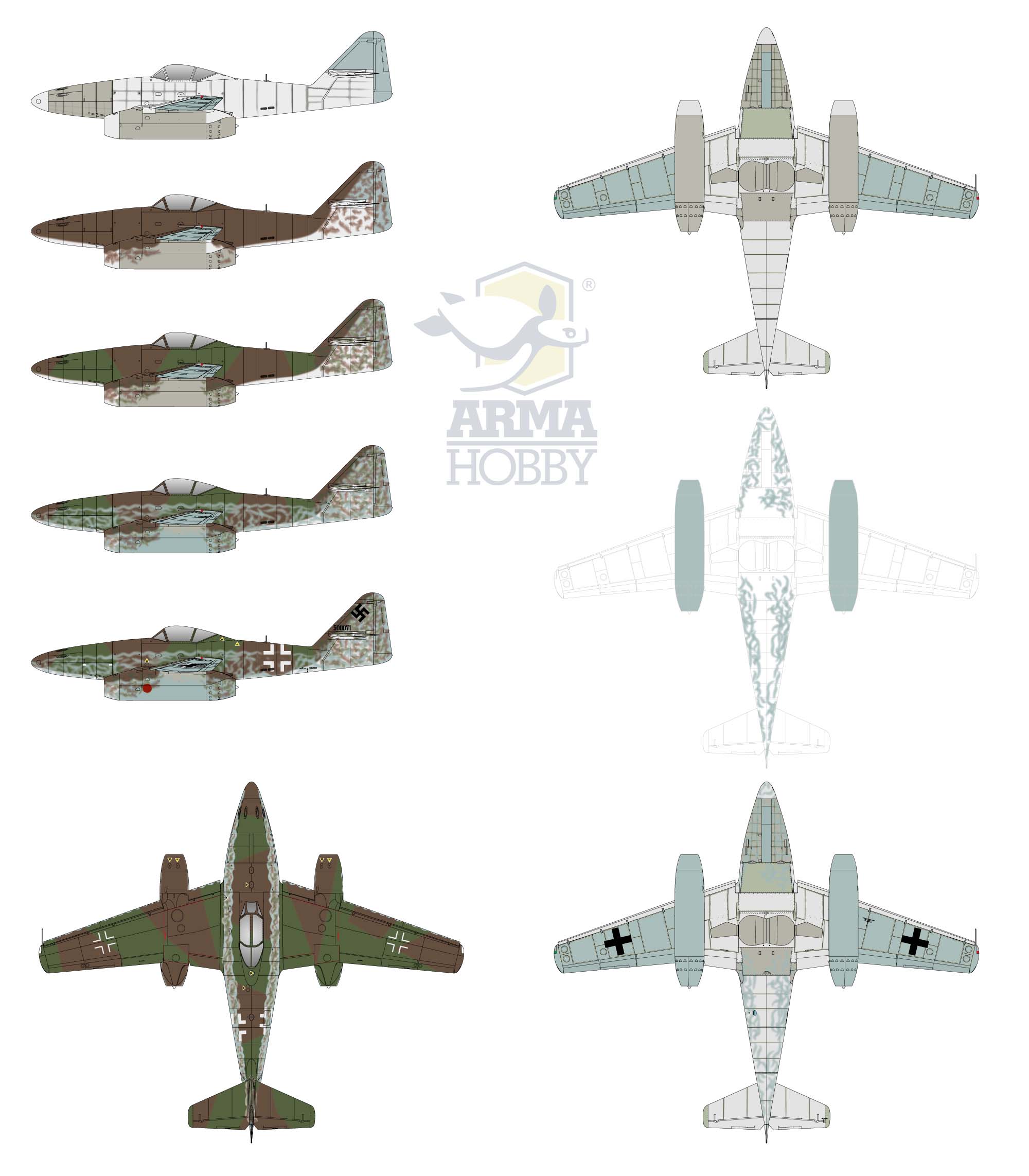
Painting Stages of Me 262 A-1a WNr 500071 Airframe
Painting of the assembled aircraft was carried out in several stages. It began with the application of upper and side surface colours according to one of the successive official instructions for finishing the Me 262. Over time, the standard camouflage scheme gradually gave way to simplified solutions. The formal pattern was often reduced to one dominant colour on the fuselage, while the wings retained their two-colour scheme for longer—though frequently in a simplified and less geometric form.
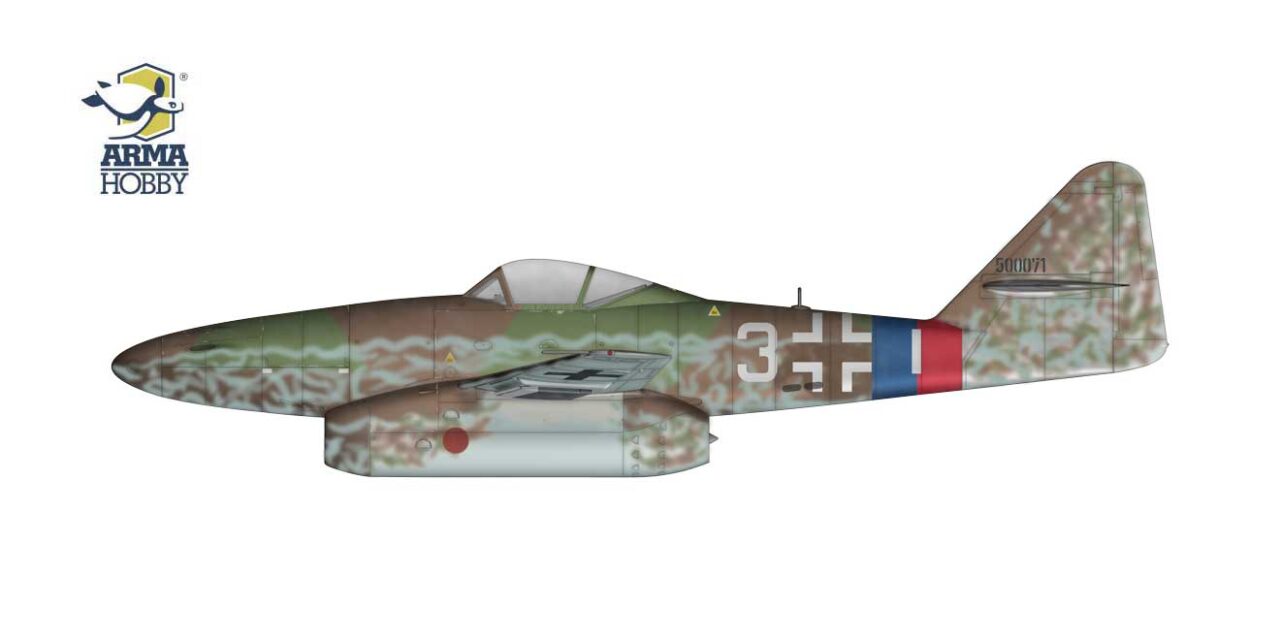
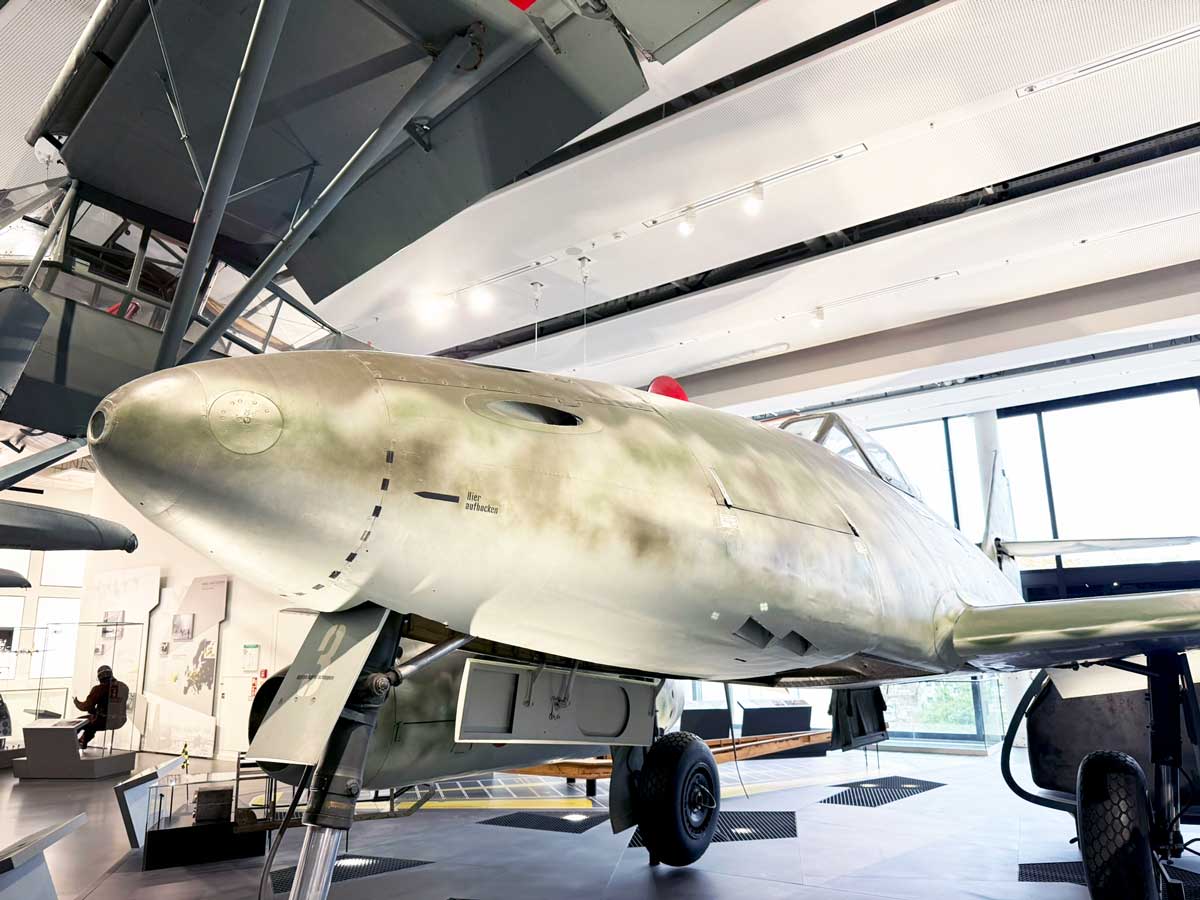
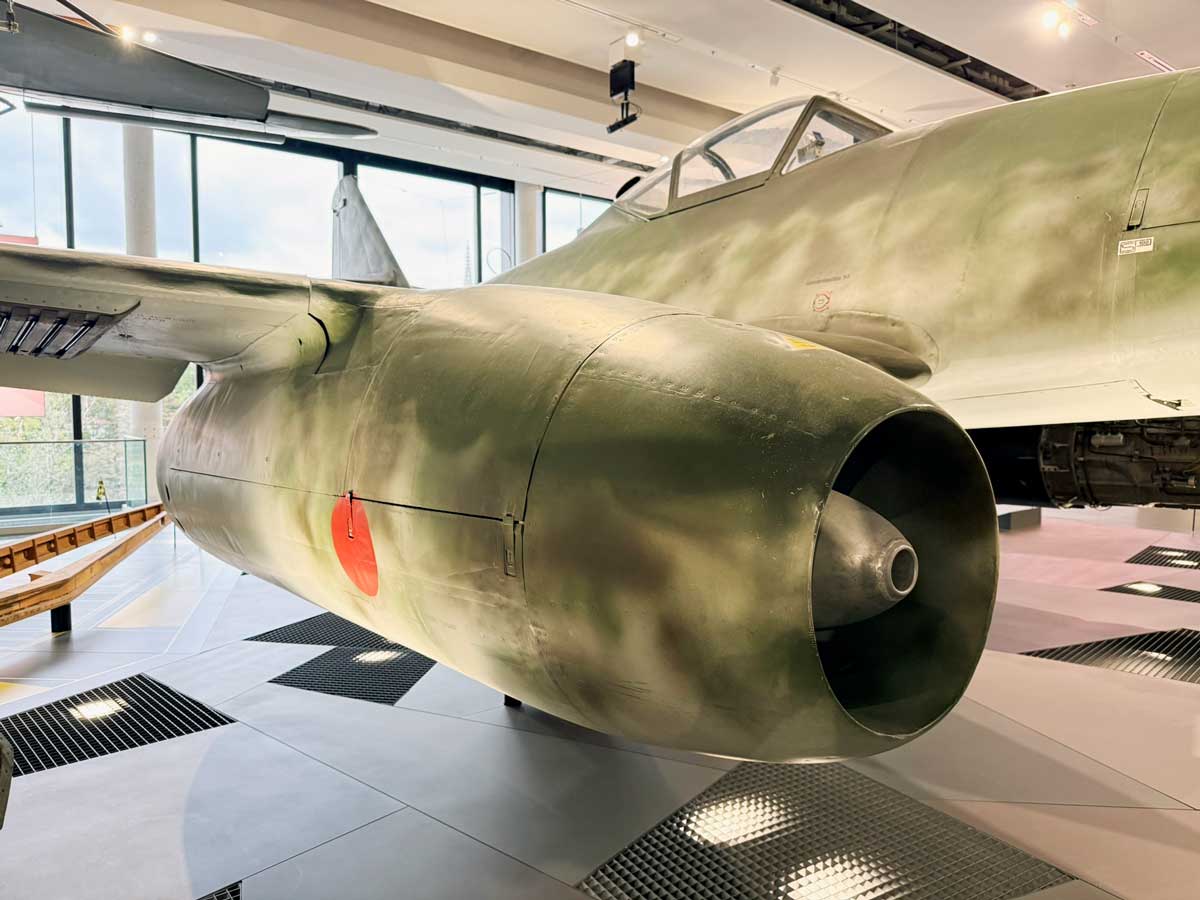
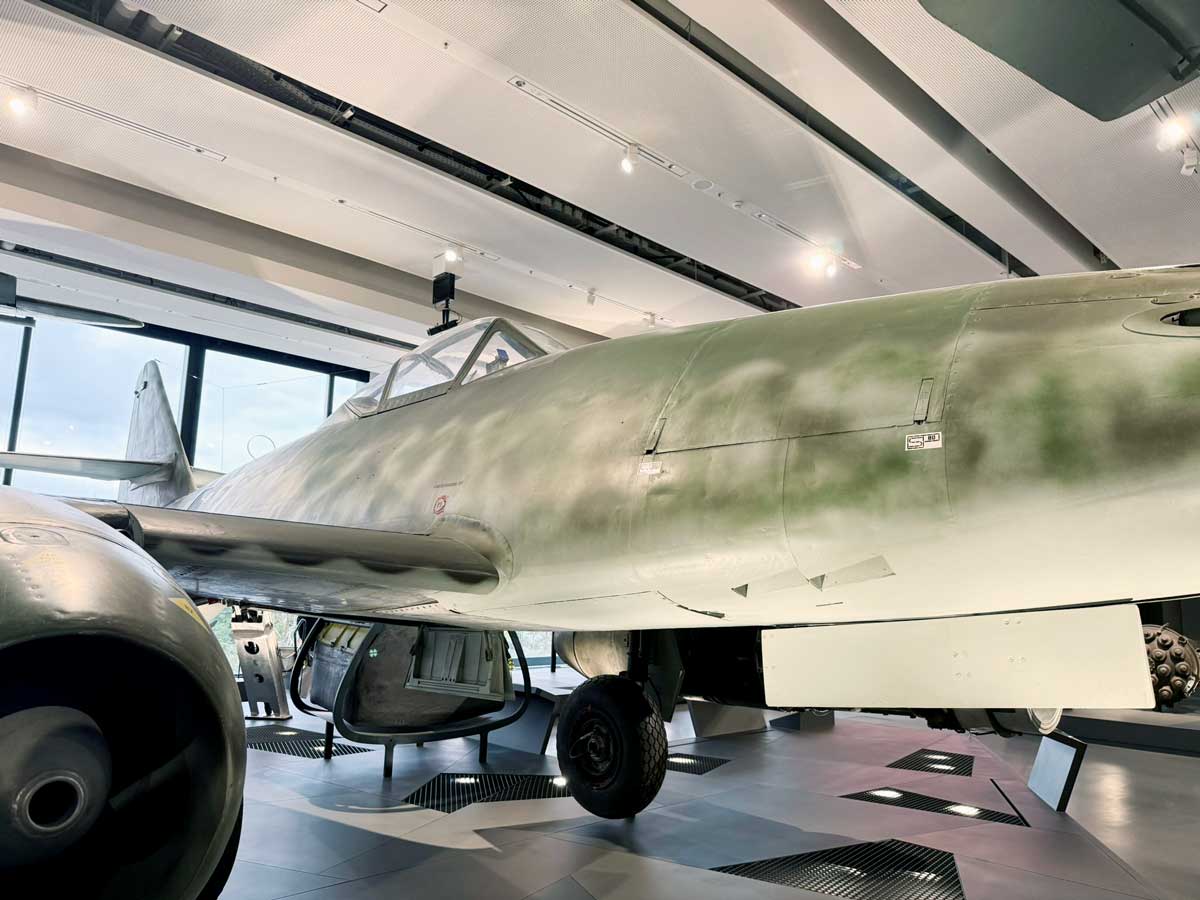
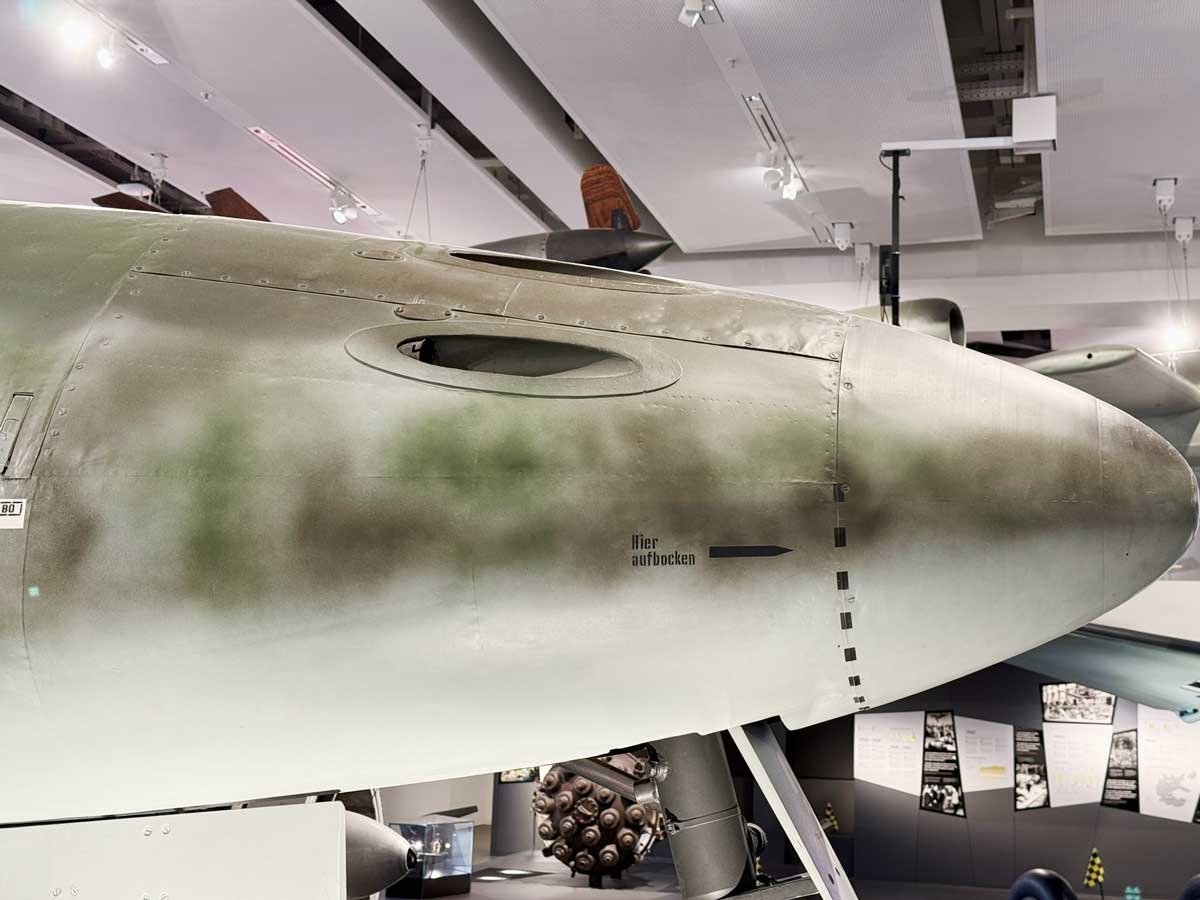
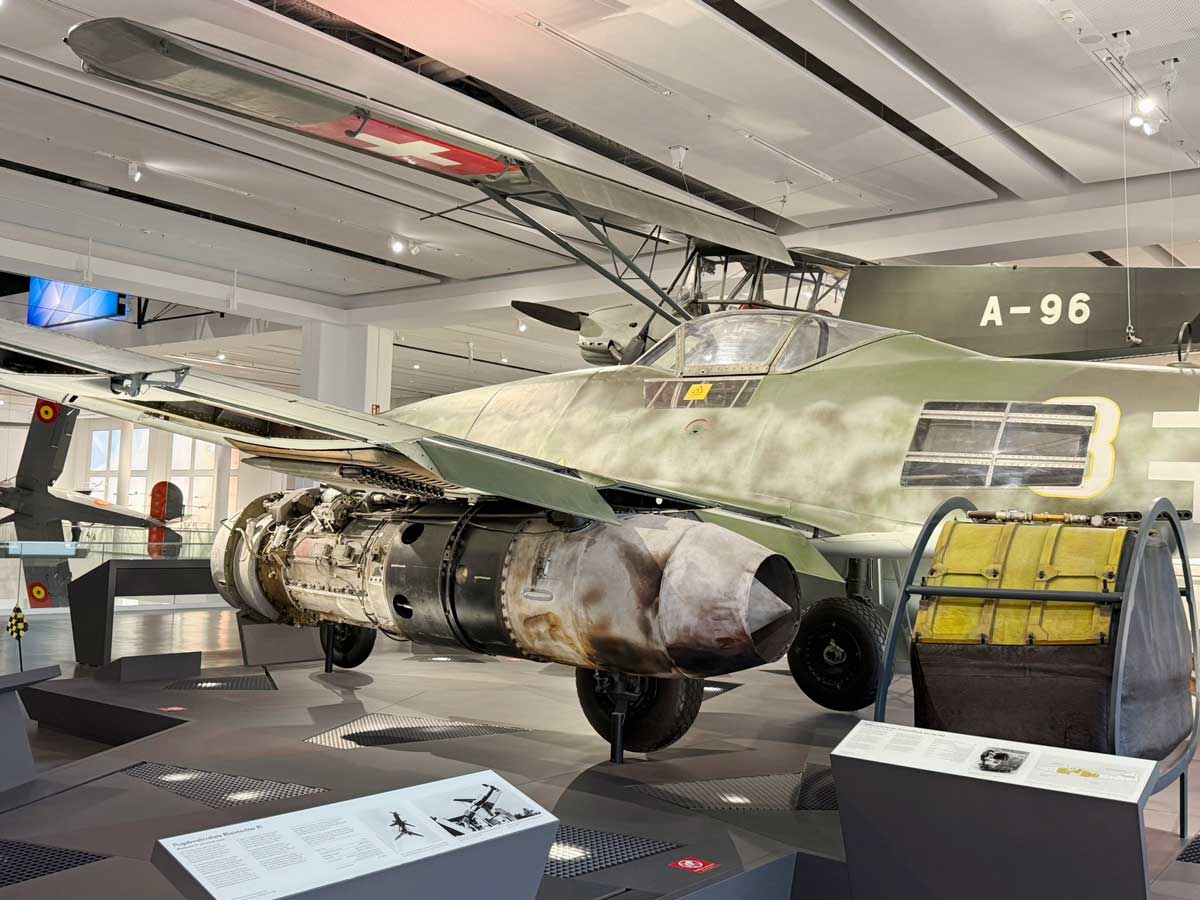
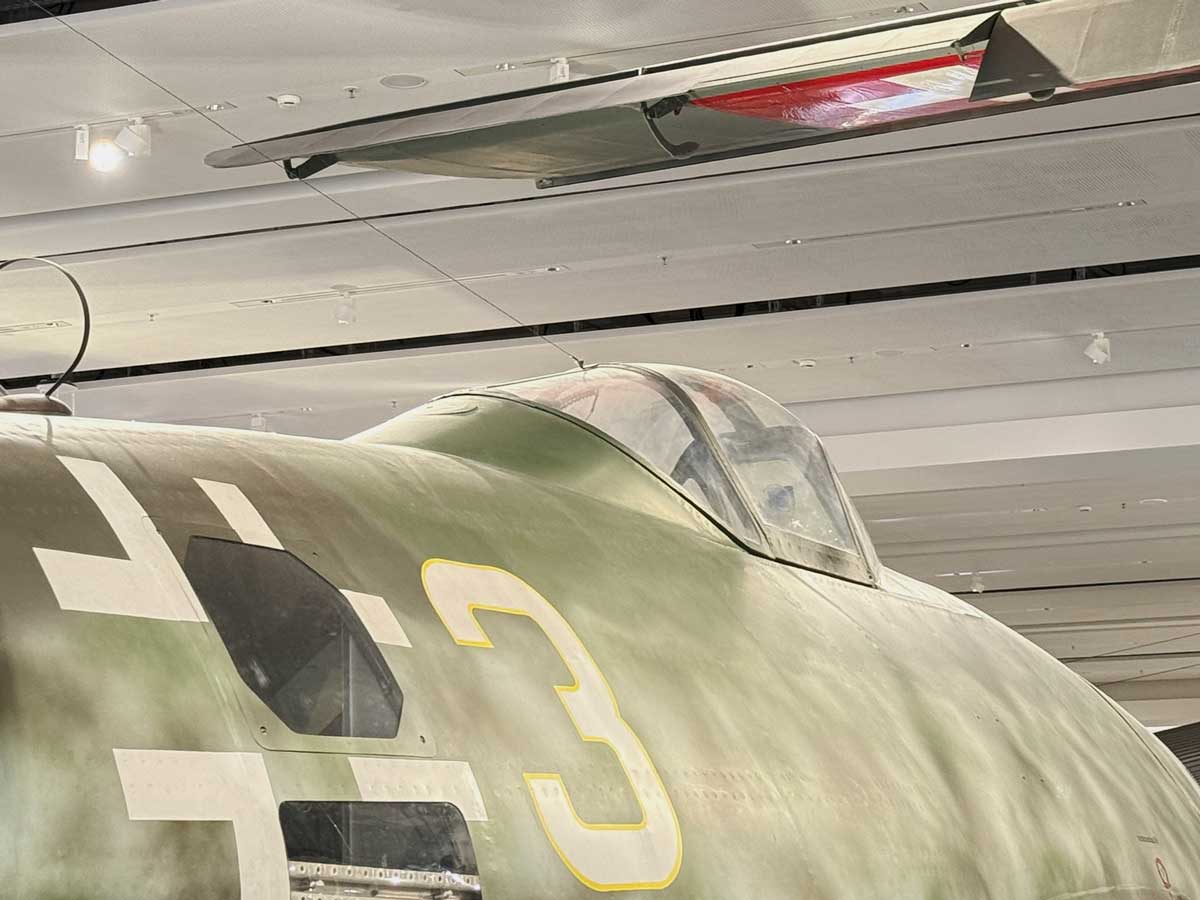
In the case of 500071, both the fuselage and wings received a relatively standard two-colour camouflage pattern. The fuselage sides, in line with practices observed at the Messerschmitt Regensburg works, were then sprayed with RLM 76 blue. However, this was not applied as an even coat; instead, the surface was lightened using a thin, irregular, semi-transparent spray. A characteristic feature of aircraft produced at Regensburg—seen on both Bf 109 variants and the Me 262—is the wavy demarcation line separating the upper colours from the blue fuselage sides. This feature is clearly visible on 500071, particularly around the nose and cockpit area.
Me 262 i późno wojenne kolory RLM – próba uporządkowania tematu
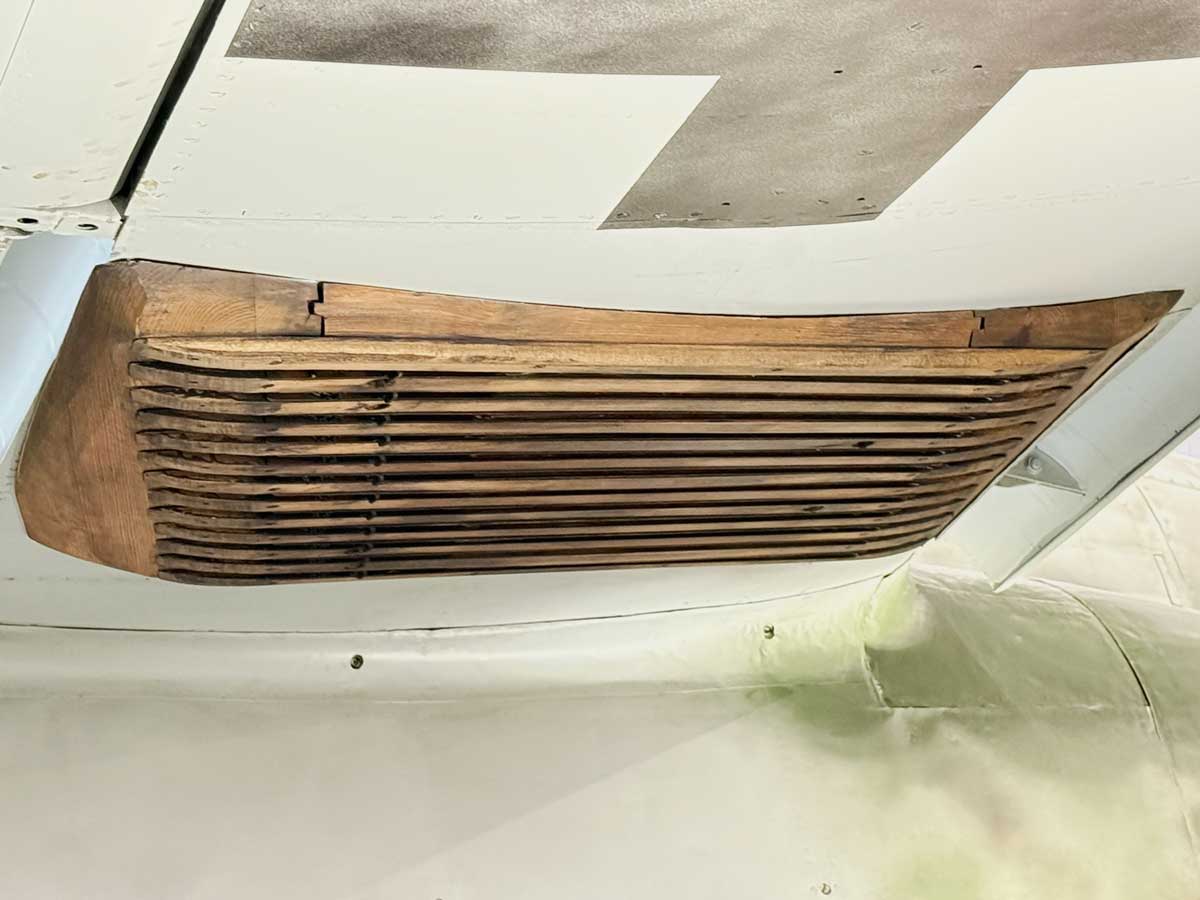
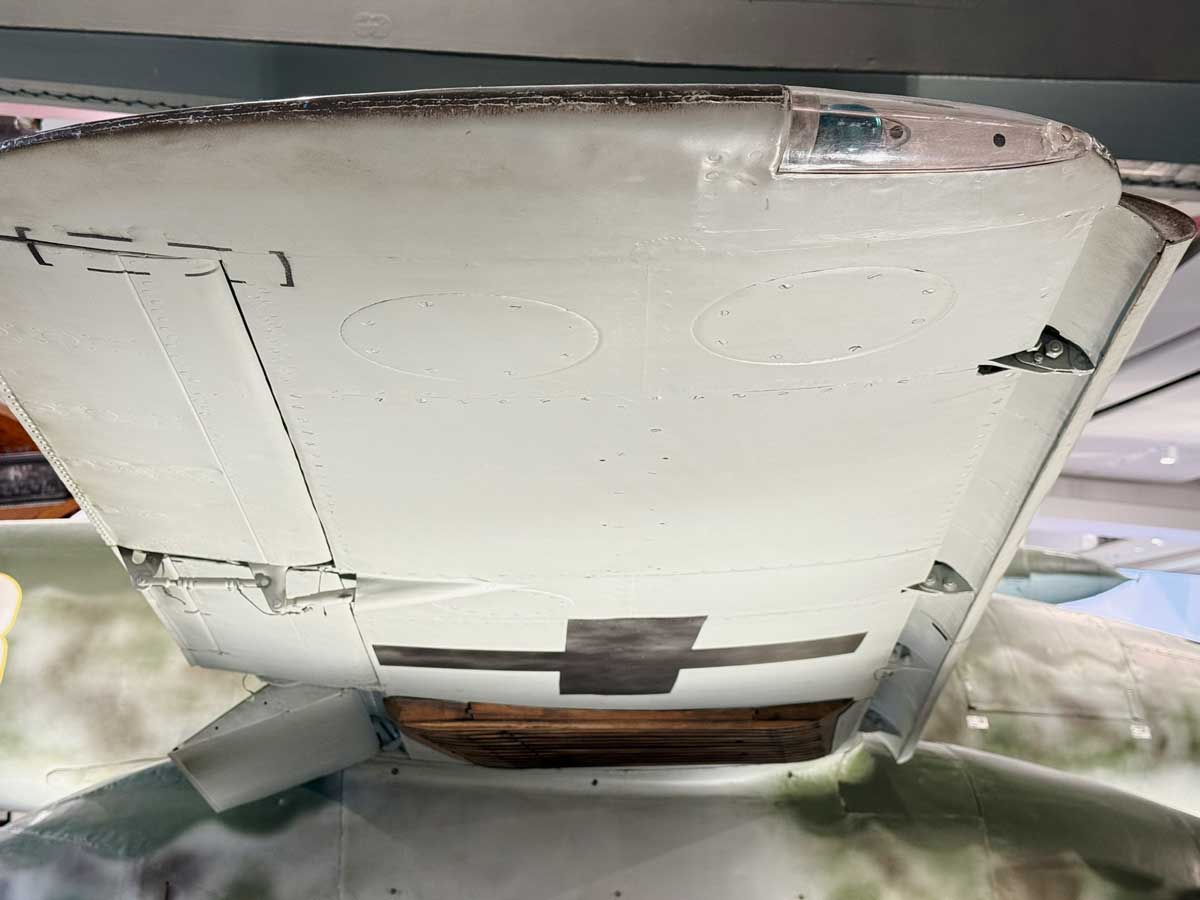
The leading edge of the wings also features a characteristic blue wavy line painted over the previously dark-painted (RLM 81 and RLM 82) slats. The wing surface beneath the slats should match the upper-surface colour. The slats themselves were likely installed after painting. It is worth noting that on a serviceable Me 262 standing on its landing gear, the slats hang fully extended along their entire span. They operated purely under aerodynamic forces, moving freely under their own weight, without mechanical actuation. Their balance was such that they could easily be moved by hand on the ground.
At the final stage, national markings were applied in their simplest form: most likely white Balkenkreuze on the upper and side surfaces, and a simple dark cross on the lower wing surfaces. The lower cross colour was either black or the darker of the upper-surface colours (possibly RLM 81). This simplified style was typical of the Messerschmitt Obertraubling works and is also seen on Bf 109 G and K variants. The fuselage cross was painted over a dark patch deliberately left for this purpose from the beginning of the painting process. A black swastika without a white outline was applied to the fin.
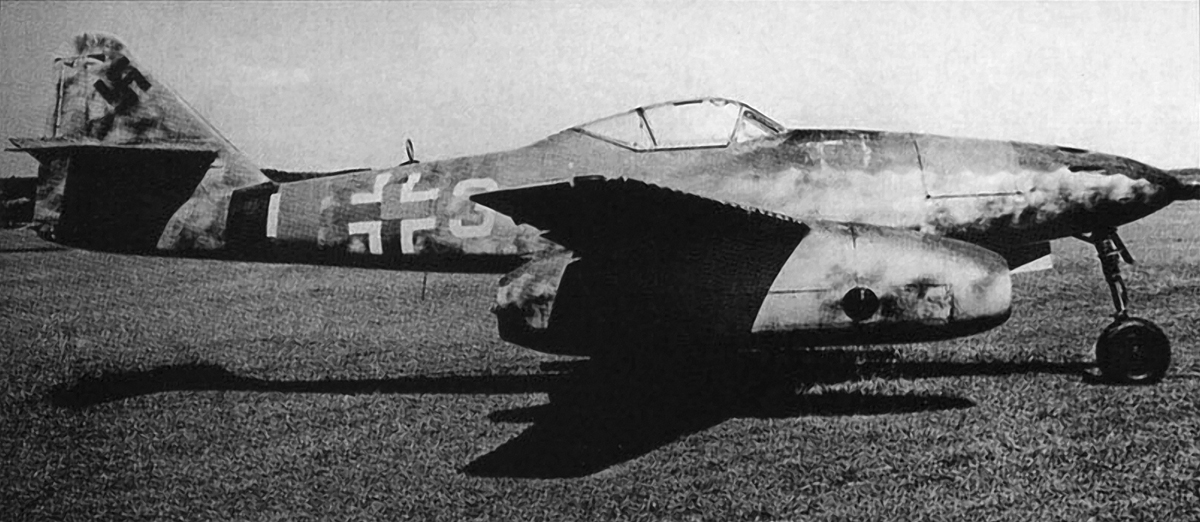
View of Me 262 A-1a 500071 from the starboard side. The radio hatch cover and the characteristic offset of the cross on it are visible. Photo: Assizbiz.
Another interesting detail can be observed on the fuselage of aircraft 500071—the radio hatch cover on the starboard side, positioned at the height of the fuselage cross, is a replacement taken from another aircraft. The alignment of the cross on the cover does not match that on the fuselage. The panel most likely originates from an aircraft built at the Messerschmitt Augsburg works, where different marking templates were used. As a result, the fuselage crosses are slightly smaller and positioned further aft compared to those applied at Obertraubling. The colour of the panel also differs—it is lighter than the surrounding fuselage, suggesting it was painted in RLM 82 rather than RLM 81.
The Last Flight of Messerschmitt 500071
Born in 1921 in Neisse, Fähnrich Hans Guido Mutke provided differing accounts of his flight from Munich to Zurich over the years. The most plausible version suggests that, for reasons unknown, aircraft 500071 was not evacuated with other aircraft to eastern Bavaria. Possibly due to a technical issue, it was left behind, and the evacuation order was only carried out on 25 April 1945, as American forces approached Munich.
Mutke recalled that he took off with only a partial fuel load, and that the departure took place in chaotic conditions, with warnings of Allied aircraft in the area.
Once airborne, instead of heading east toward Bad Aibling, he turned southwest, crossed into Switzerland, and—according to his account—became disoriented, only to be intercepted by Swiss Morane fighters bearing white crosses. Some versions suggest he mistook Lake Constance (Bodensee) for Chiemsee, leading to a navigational error. Others claim the airfield at Riem was under attack at the time of take-off, contributing to the mistake, although this is difficult to verify.
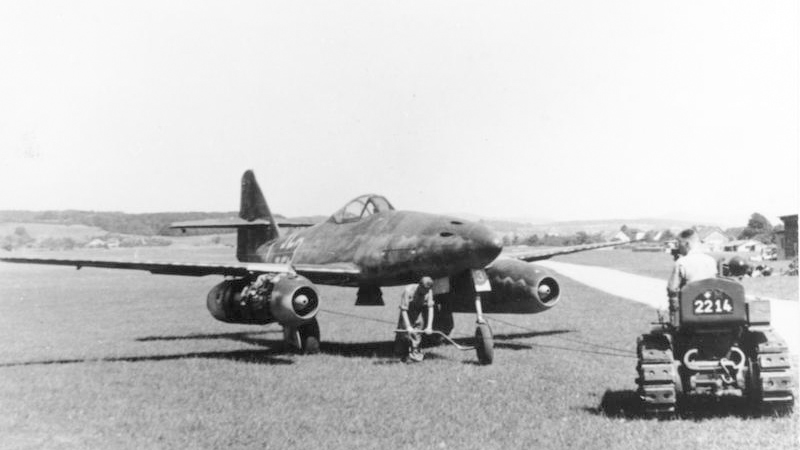
Mutke’s aircraft after landing in Zurich, photo: Bundesarchiv/Wikimedia Commons.
Before landing in Zurich, the aircraft made a low pass over Dübendorf airfield; the approach, with landing gear extended, was filmed by the Swiss. Mutke reportedly landed with minimal fuel remaining and had difficulty stopping the aircraft on the relatively short runway. After landing, the pilot was interned, and the aircraft underwent a detailed technical inspection.
In addition to the uncertain account of the Zurich flight, Mutke is also associated with another well-known story. He claimed that during operational training with EJG 2 on 9 April 1945, he put a Me 262 (a different aircraft, not “White 3”) into a dive during which he approached—or possibly exceeded—the speed of sound. The aircraft began to vibrate, the airspeed indicator went off-scale, and he temporarily lost control. Recovery was reportedly achieved by adjusting the incidence of the horizontal stabiliser. After landing, technicians allegedly found multiple deformations in the wing skin, including popped rivets.
Order the model in our store
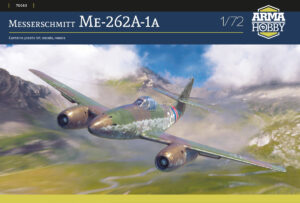
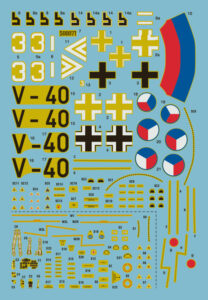
- Buy now link in the Arma Hobby model store.
Messerschmitt 500071 Today
From the day it landed in Switzerland, this Messerschmitt never flew again. Plans for further flight testing were reportedly abandoned due to concerns about limited runway length and possibly also because of the poor quality of assembly and workmanship. Ultimately, aircraft 500071 was returned to Munich and, after undergoing restoration twice, was placed on display at the Deutsches Museum.
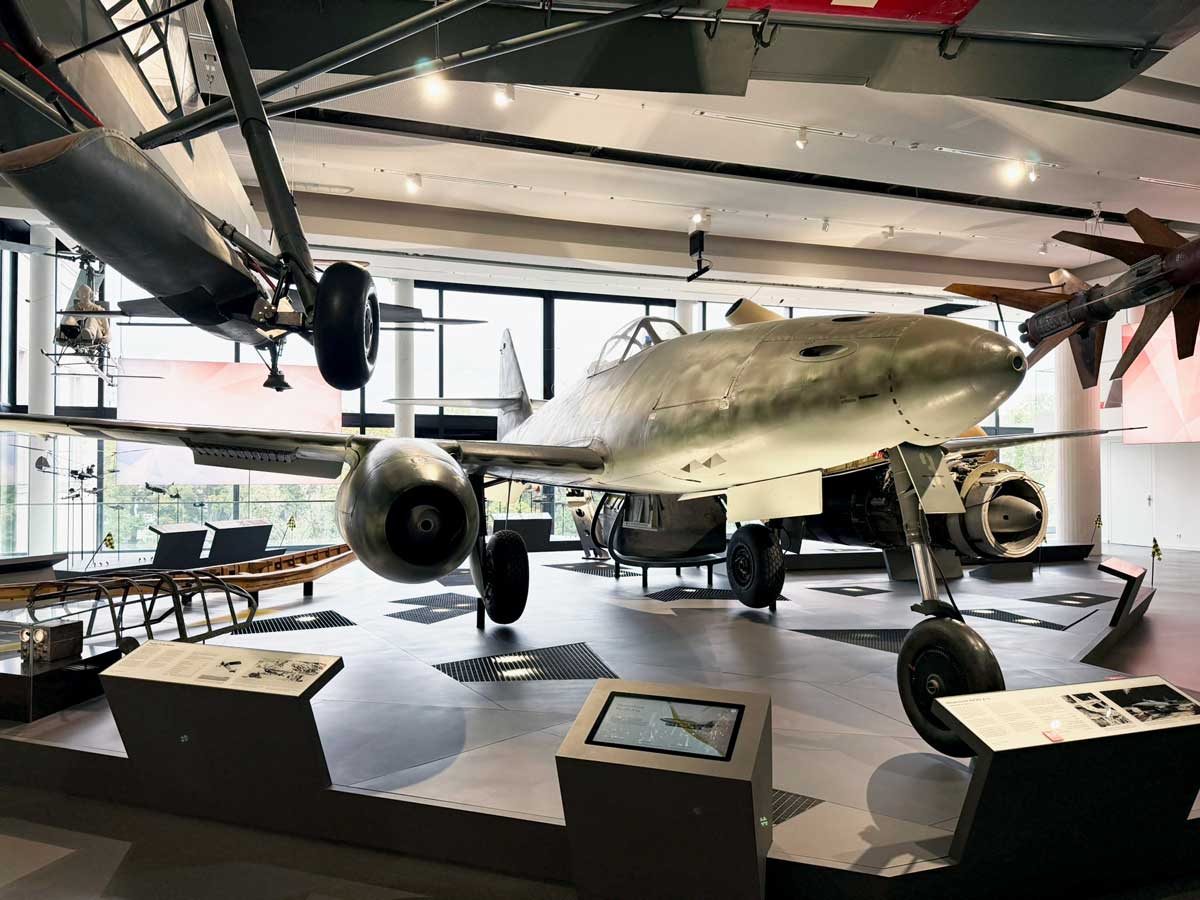
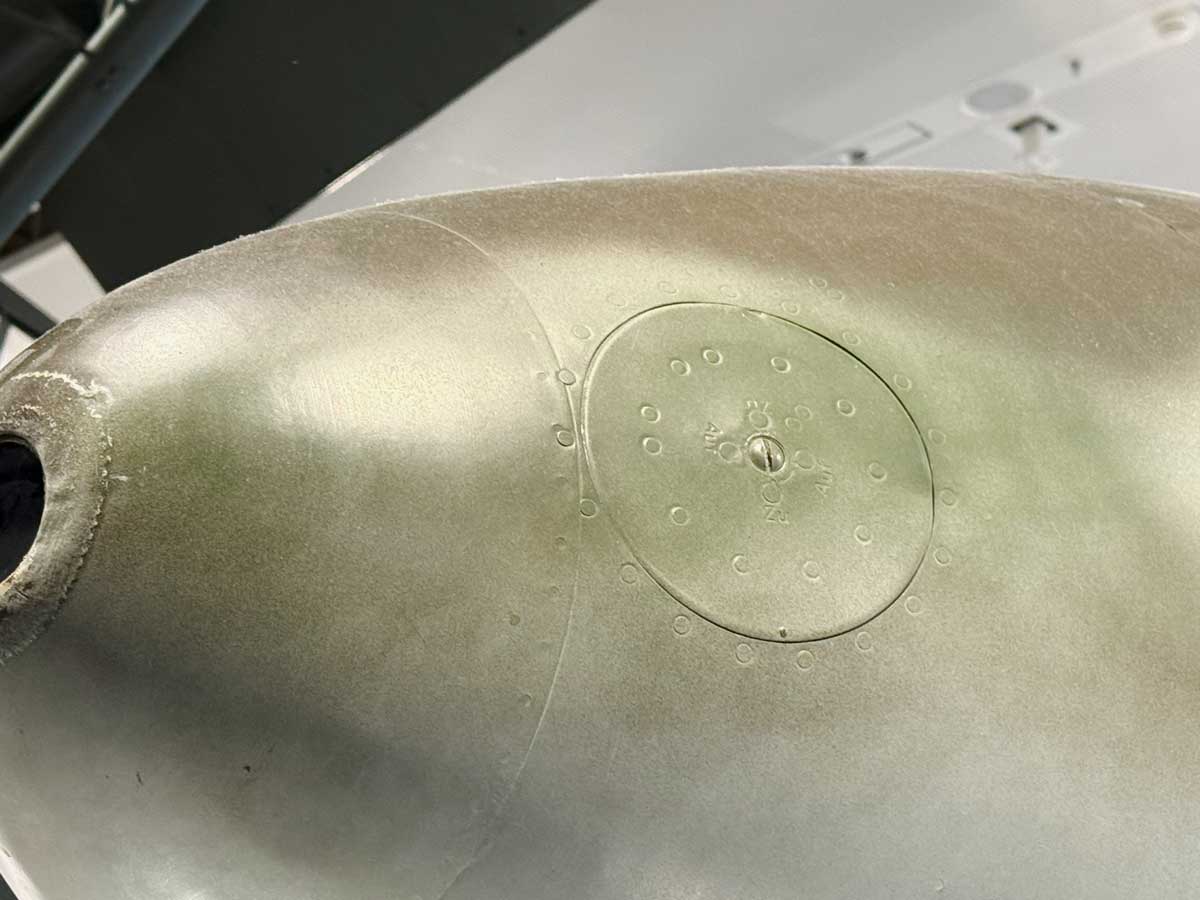
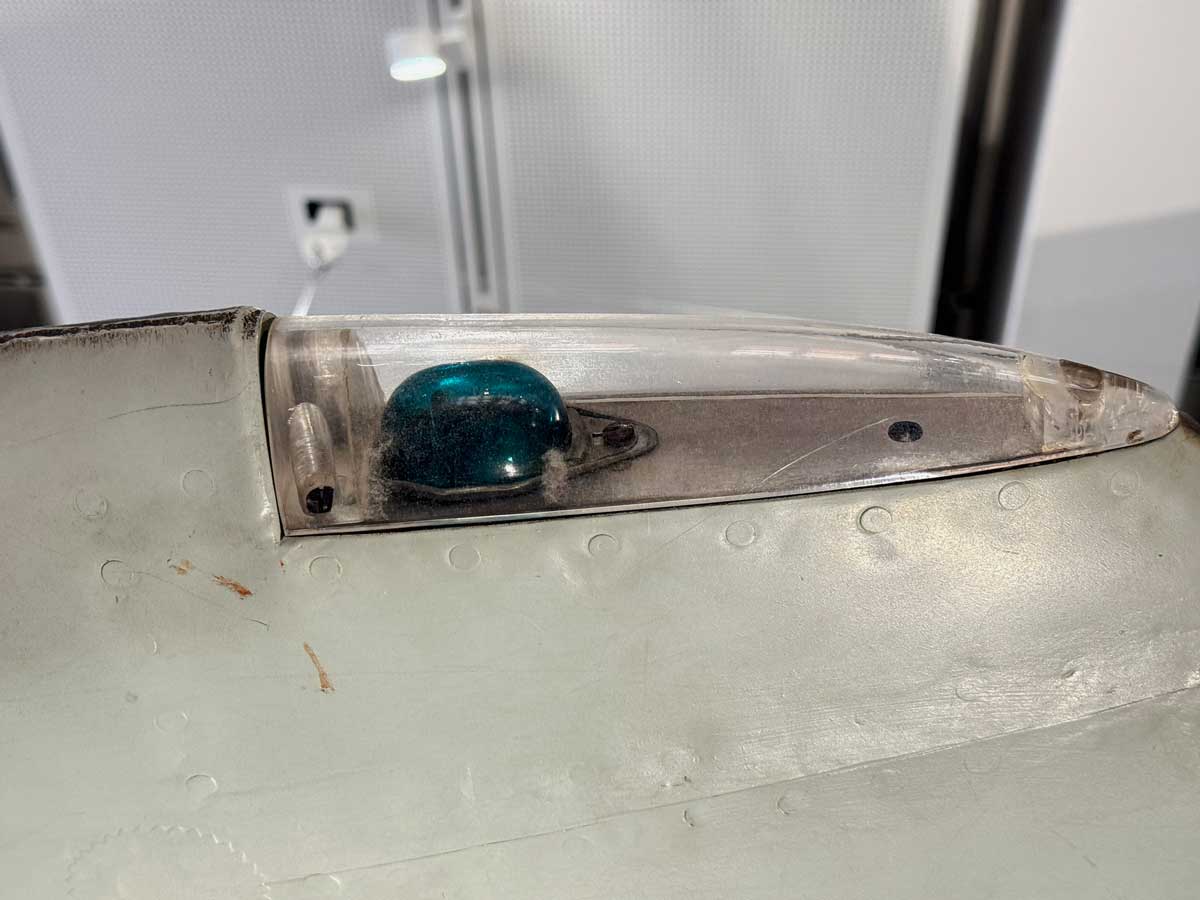
For several years, during renovation of the main museum building, the aircraft was stored at the Deutsches Museum branch at the former Oberschleissheim airfield. It was there, during multiple visits by the author, that most of the photographs presented below were taken. Today, the aircraft has returned to the main Deutsches Museum in Munich, where it is displayed under excellent conditions and accessible to visitors.
The aircraft stands as an important monument to aviation history—a symbol of both technological progress and the darker realities behind it, including the exploitation of forced labourers and concentration camp prisoners within the wartime German economy.
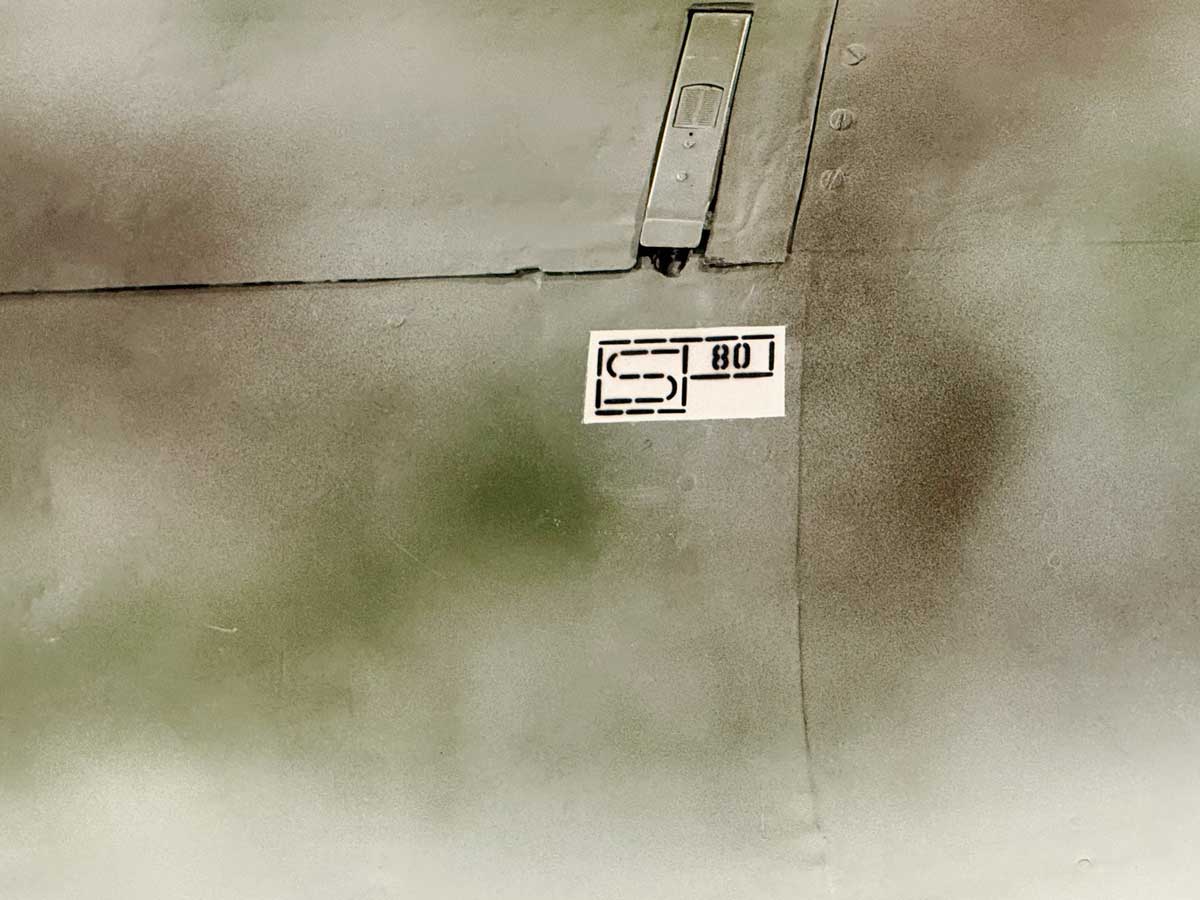
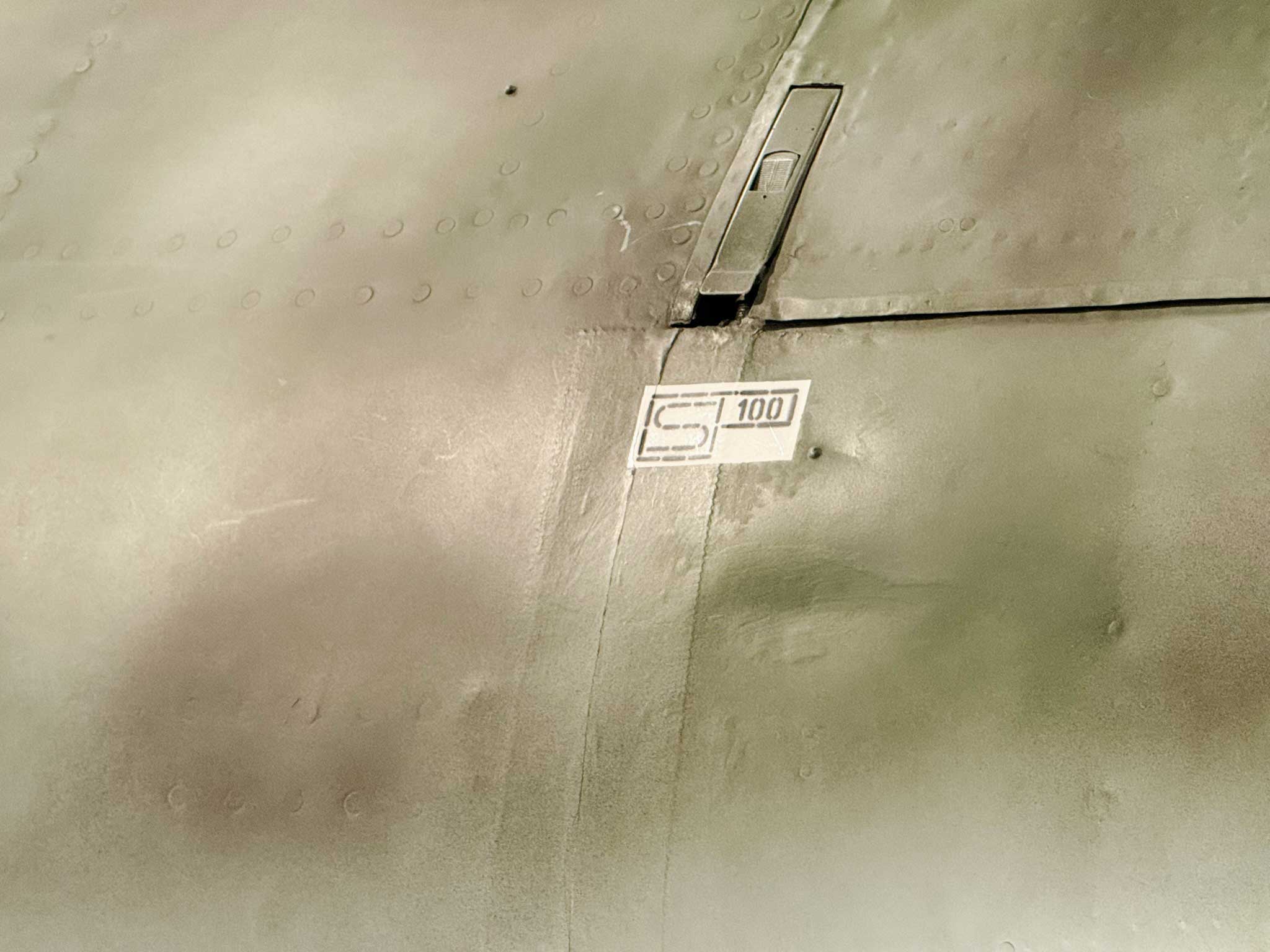
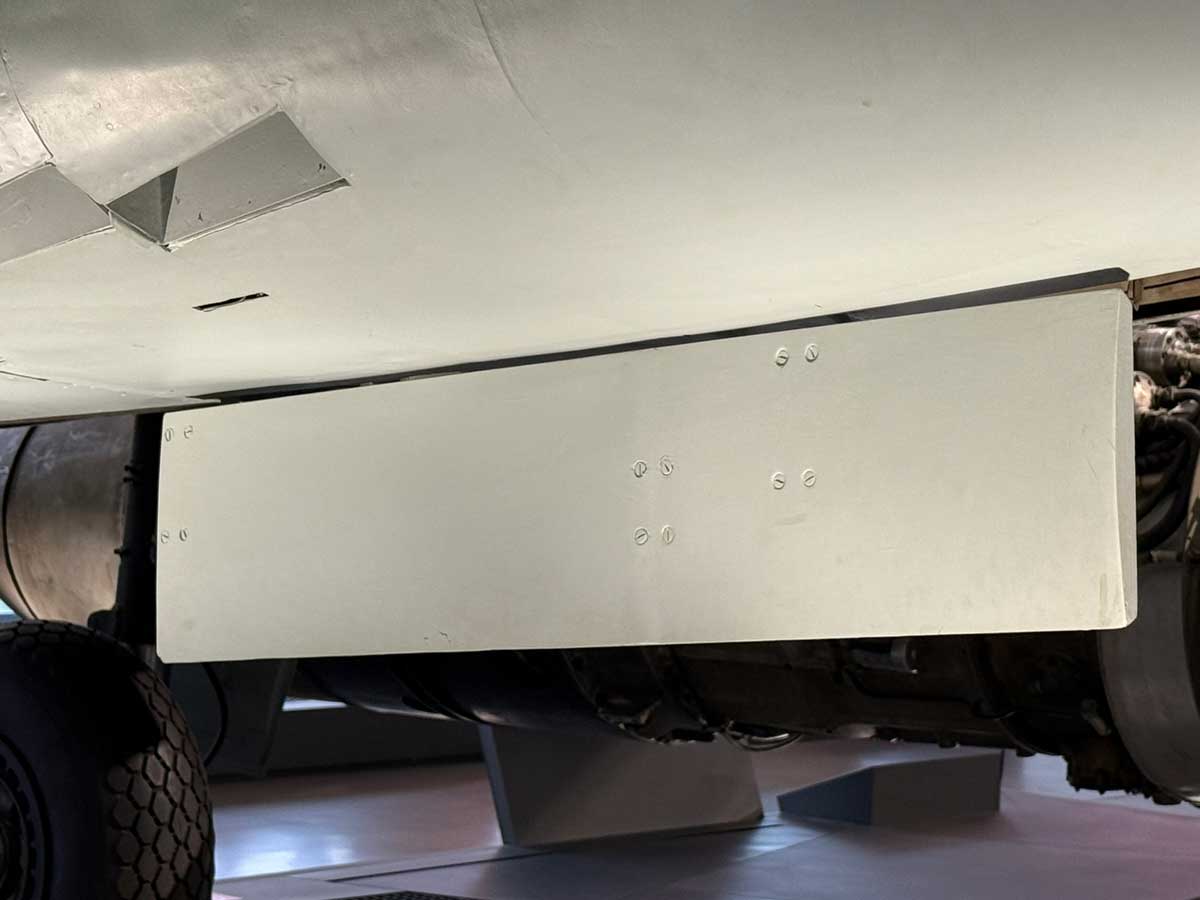
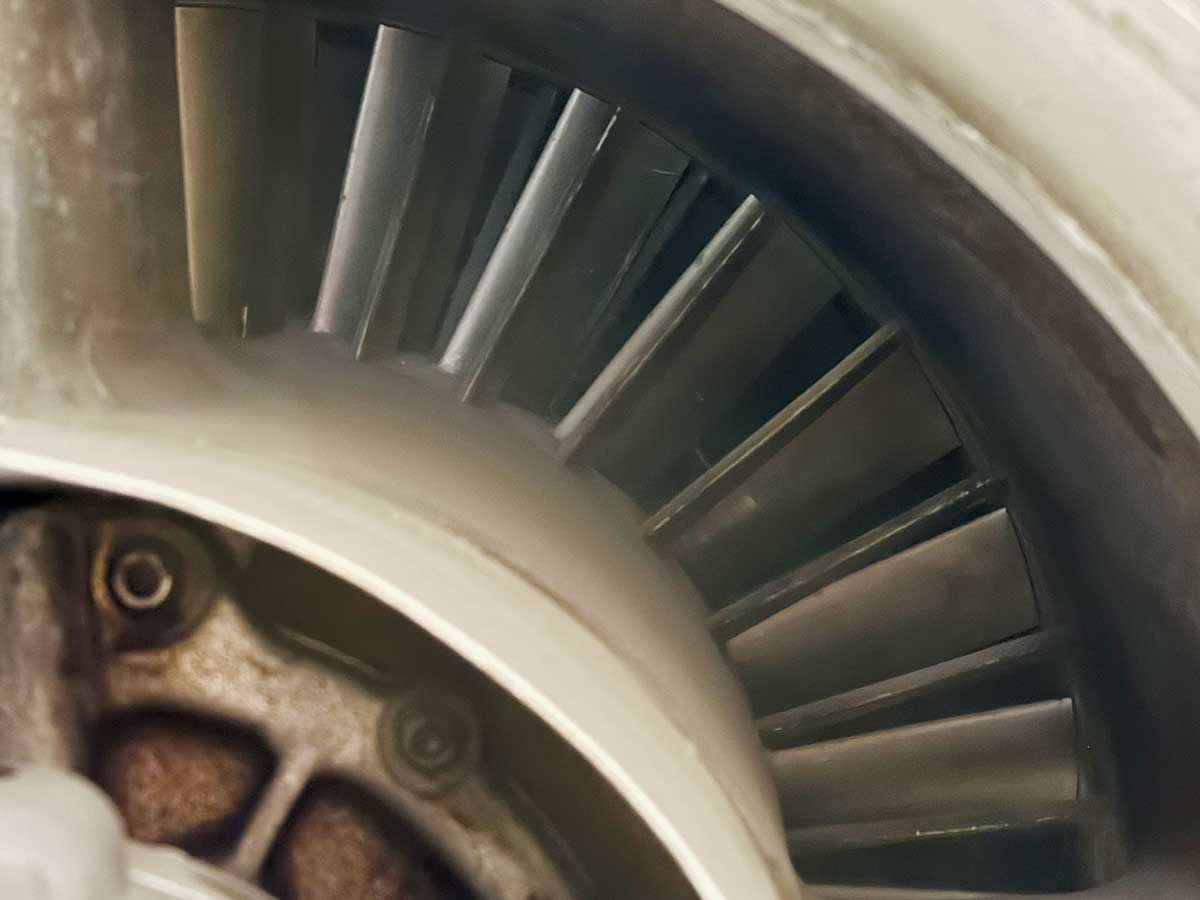
Me 262 A-1a WNr 500071 Walkaround

This post is also available in:
 polski