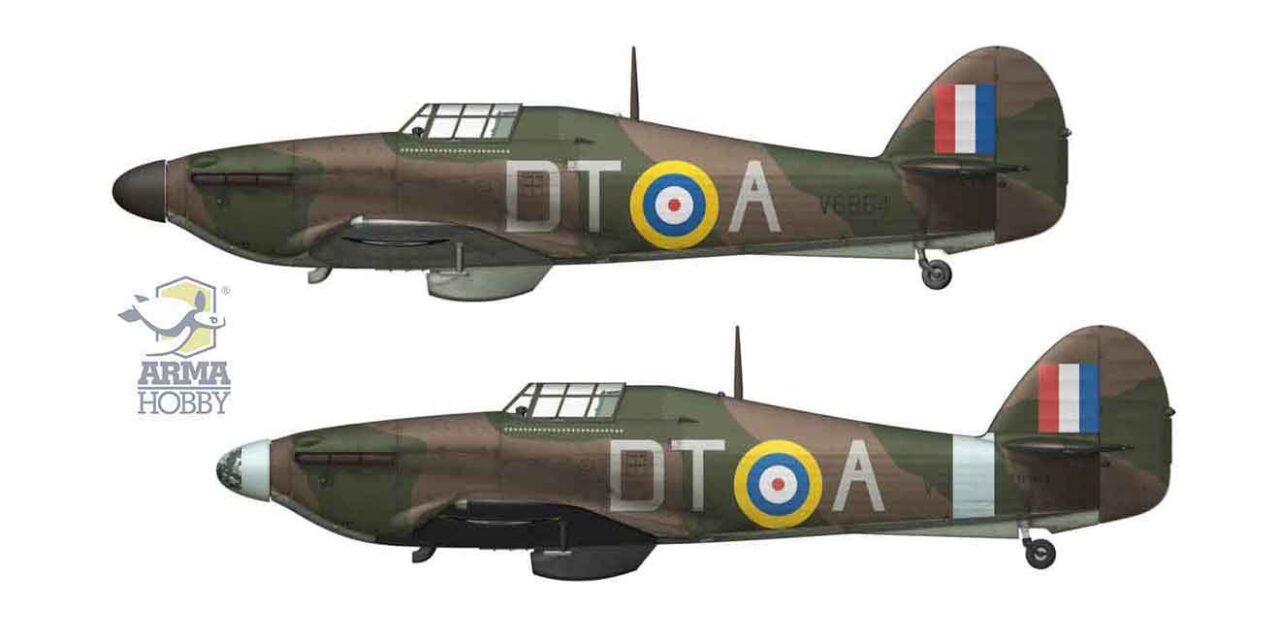
Hurricane V6864 is one of the most interesting aircraft of No. 257 Squadron RAF — not because its story ends with a spectacular combat episode, but because it represents two distinct RAF camouflage periods and was one of several Hurricanes flown by Robert Stanford Tuck. Tuck scored two aerial victories on V6864 before he was transferred to a new aircraft, Hurricane Mk IIc FM-A, in April 1941.
Service Timeline of Hurricane V6864
The aircraft was manufactured in September or early October 1940 by Gloster Aircraft Company under contract no. 85730/40/C.23a. Its service history was as follows:
- 5.10.1940 – delivered to No. 15 Maintenance Unit
- 13.10.1940 – transferred to No. 257 Squadron RAF – receives the squadron code “DT-A”
- October–November 1940 – operational flights at the closing stage of the Battle of Britain
- 10.07.1941 – transferred to 43 Group Delivery Association
- 08.09.1941 – transferred to No. 56 Operational Training Unit (OTU)
- 24.11.1941 – mid-air collision with Manchester R5792, Sgt G.A. Johnstone killed
- 01.12.1941 – struck off charge (SOC) from RAF inventory
257 Squadron and the Role of V6864
Hurricane V6864 joined No. 257 Squadron on 13 October 1940. At that time, the squadron had just emerged from the heaviest fighting of the Battle of Britain, yet it remained fully engaged in intercepting night raids conducted by the Luftwaffe. The unit was then commanded by Robert Stanford Tuck. V6864 was one of the Hurricanes he flew operationally and on which he scored two confirmed victories.
You can read more about Tuck in the article by Grzegorz Cieliszak published on our blog — see the link below.
Two Looks of “DT-A”
Hurricane V6864 “DT-A” appeared in No. 257 Squadron in two distinct paint schemes and markings.

1. Battle of Britain Scheme (October 1940)
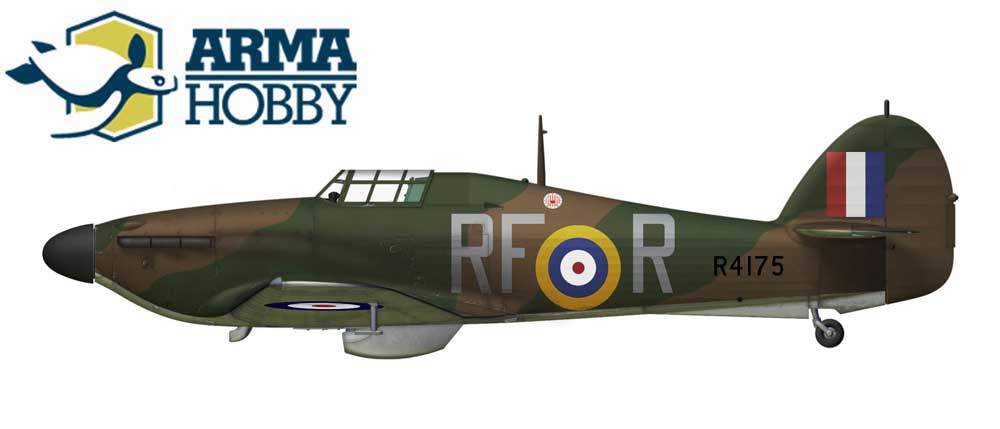
The aircraft was delivered to the squadron brand-new as part of Gloster’s third production batch. It carried a Rotol propeller with a spinner type also used on the Spitfire. The factory paint scheme followed RAF regulations from the final phase of the Battle of Britain:
- Temperate Land Scheme camouflage: Dark Earth + Dark Green on upper and side surfaces,
- undersides painted Sky Type S,
- factory-applied Type A underwing roundels (introduced in August 1940),
- spinner painted black,
- squadron codes DT-A in Sea Grey Medium.
On the port side under the cockpit were victory markings in the form of white swastikas. On the starboard side of the fuselage there was a donor inscription and the flag “Burma”.

2. Later Scheme (December 1940 – early 1941)
At the end of November 1940, quick-recognition elements were added to the aircraft:
- the port wing was repainted black and carried a Type A1 roundel with a thin yellow ring,
- a fuselage recognition band in sky blue / duck egg blue was applied, covering the original serial number, which was then reapplied in smaller letters under the tailplane.
- a two-tone spinner: the rear section most likely in sky blue / duck egg blue, the front darker and worn back to black. It was widely interpreted as a red-front/white-rear spinner, but photographs clearly show the rear section darker than white, and the front blurred due to rotation — most likely the front segment had simply lost its Sky paint layer. Modellers may choose their preferred interpretation.
By the time the December 1940 photographs were taken, two additional white swastikas had been added to the victory markings. On the starboard fuselage side, the “Burma” donor inscription was also present.
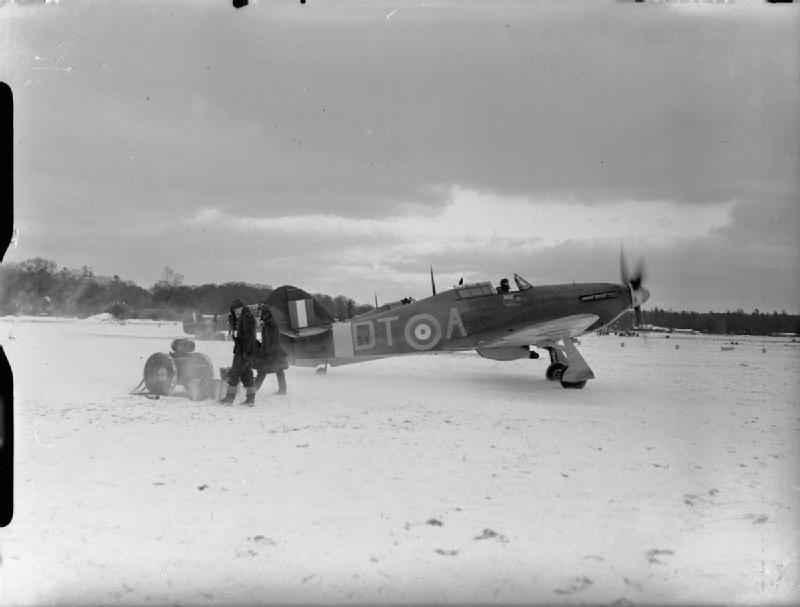
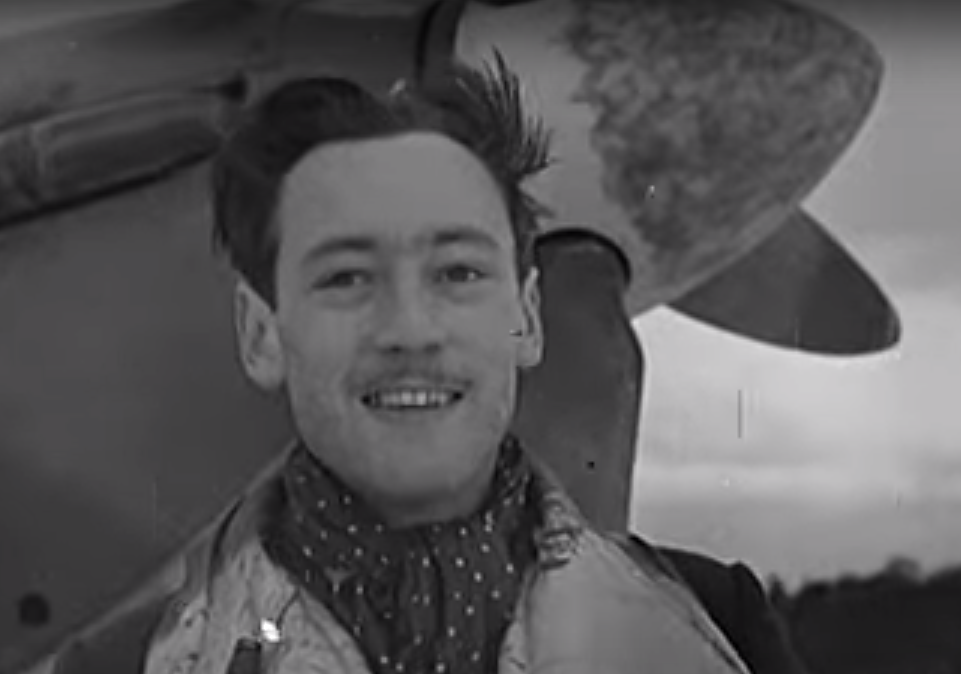
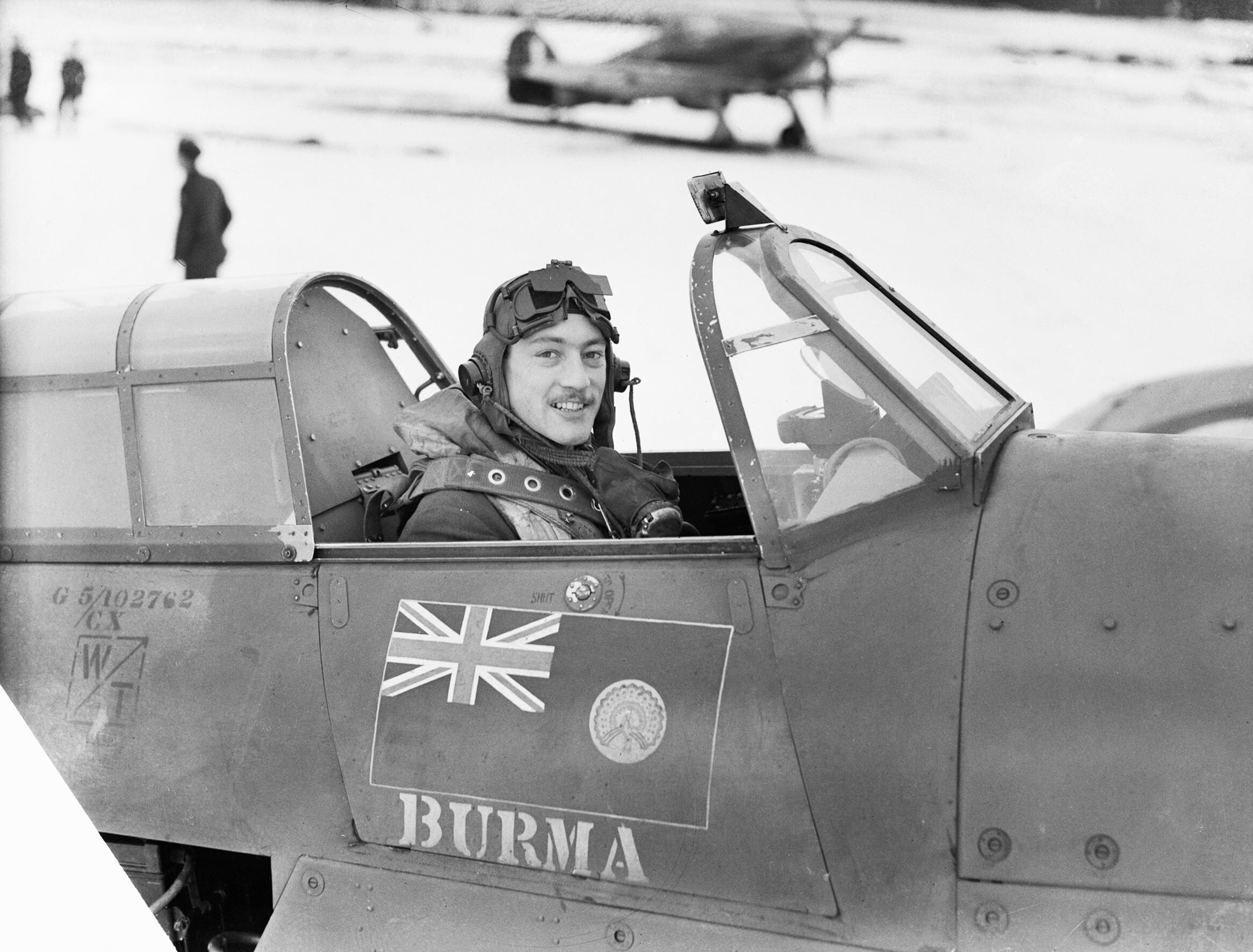
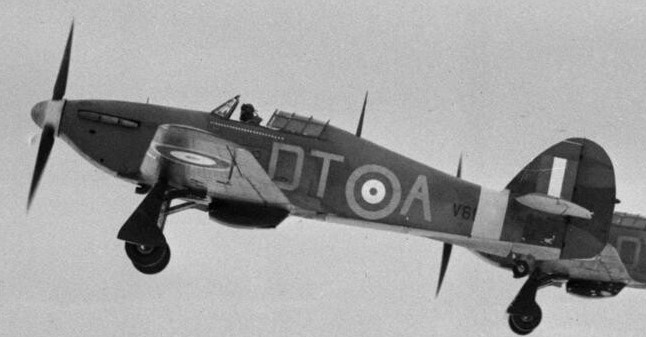
What stands out in the photographs is the irregular boundary between the colours on the spinner and the uneven surface of its front section. This does not look like a carefully painted personal marking, but rather paint flaking caused by a poorly adhering layer of Sky applied shortly before the photographs were taken. The issue did not affect only Tuck’s aircraft — in the background of the third and fourth photos another machine with a dark spinner front can be observed.
Final Service Period
After July 1941, V6864 was transferred to the 43 Group Deposit Account (a pool of aircraft temporarily removed from squadron strength when in transit or awaiting repair). In September 1941 it was passed to No. 56 OTU.
On 24 November 1941 the Hurricane collided in mid-air with Manchester R5792 and crashed near Sutton Bridge. The pilot, Sgt G.A. Johnstone, was killed.
See also:
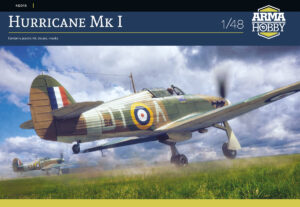
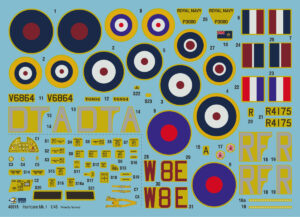
👉 View the Hurricane Mk I model in our store: link
Trzy Hurricane’y z premierowego pudełka 1/48… a malowania są cztery!

Modeller happy enough to work in his hobby. Seems to be a quiet Aspie but you were warned. Enjoys talking about modelling, conspiracy theories, Grand Duchy of Lithuania and internet marketing. Co-founder of Arma Hobby. Builds and paints figurines, aeroplane and armour kits, mostly Polish subject and naval aviation.
This post is also available in:
 polski