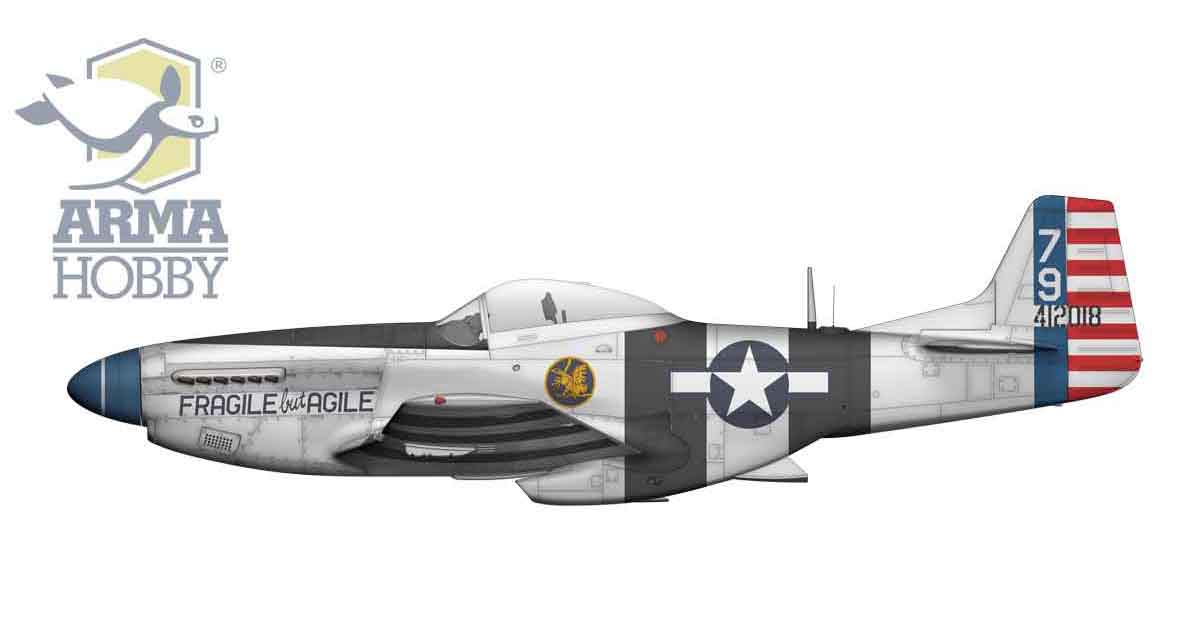
The title livery of Arma Hobby set 70071 depicts the P-51K Mustang “Fragile but Agile” from the 342nd Fighter Squadron, 348th FEAF Group, stationed in the Philippines in 1945. This striking aircraft, with its distinctive blue squadron markings, symbolizes a turning point—when the initially unwelcome Mustangs proved their worth in the harsh Pacific conditions, becoming a key element of the Allied offensive against Japan.
In the South-West Pacific Area (SWPA), Thunderbolts and Lightnings had previously dominated—aircraft considered more durable and better suited for long flights over ocean and jungle. When Mustangs finally reached FEAF, they were received with skepticism. However, only a few months later, they were escorting B-29s over Japan, and their pilots demonstrated that the “fragile but agile” Mustang could be lethally effective.
Mustangs – FEAF’s Unwanted Fighters
Mustangs appeared in the South-West Pacific at the end of 1944. Until then, the main fighters operating in the area were the P-47 Thunderbolt and P-38 Lightning, considered by the FEAF commander as optimal for this theater. The introduction of Mustangs met resistance, but despite this, the first examples arrived in New Guinea in November 1944.
Concerns about the Mustangs stemmed from fears of mechanical failures and losses during long flights over jungle and ocean. The aircraft’s liquid-cooled inline engine was considered more vulnerable than the radial engine of the P-47 or the twin-engine layout of the P-38.
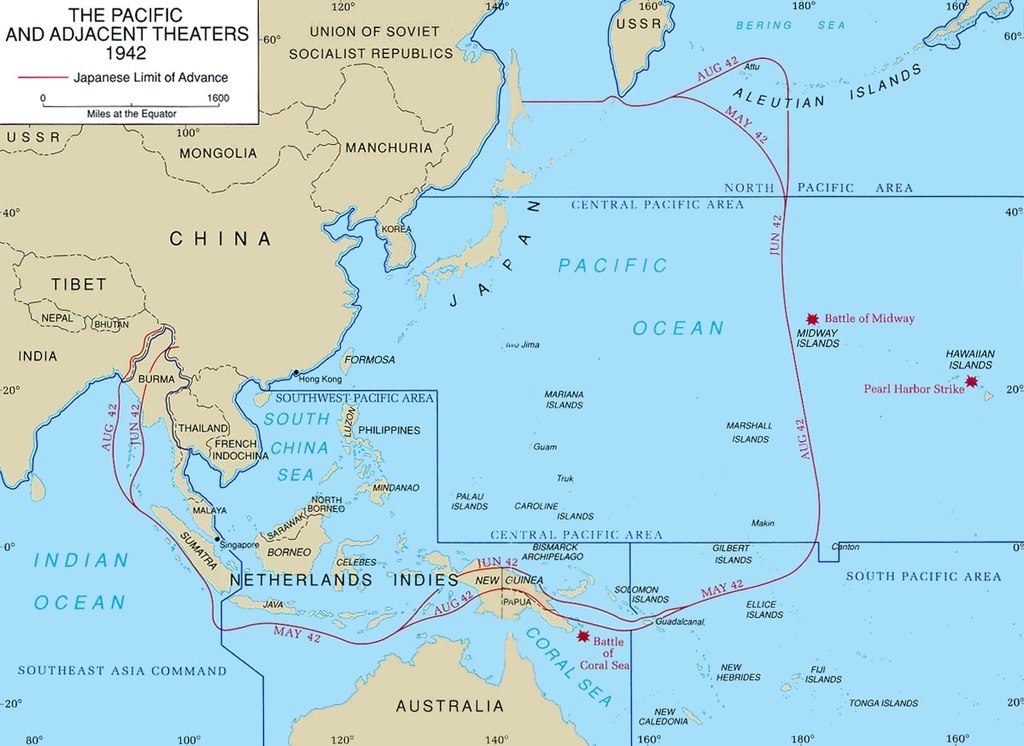
Operational theaters in the Pacific, with the maximum range of Japanese expansion marked in red (wikimedia commons – public domain).
Mustangs in the 342nd Fighter Squadron
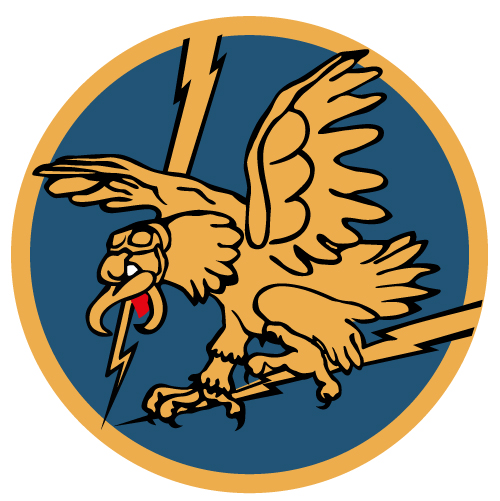
The 342nd Fighter Squadron “Scroungers” belonged, together with the 340th “Sky Devils”, 341st “Black Jacks”, and 460th “Black Rams”, to the 348th Fighter Group, originally equipped with P-47 Thunderbolts.
On the left, the squadron emblem painted on the aircraft, artwork by Zbigniew Malicki.
The first Mustangs arrived at the 342nd Squadron on 27 February 1945. Sixteen pilots ferried the aircraft from Finschhafen, New Guinea, to San Marcelino on Luzon. Seven remained with the squadron, while the rest were distributed among other squadrons of the 348th Group.
Until the end of April, the group operated with a mix of P-47s and P-51s. They flew overwater missions, escort operations in the Hainan and Formosa (Taiwan) areas, and numerous ground-attack missions across the Philippines.
On 15 May 1945 the group moved to Floridablanca, and in July relocated to Ie Shima near Okinawa, from where they escorted B-29 bombers over Japan.
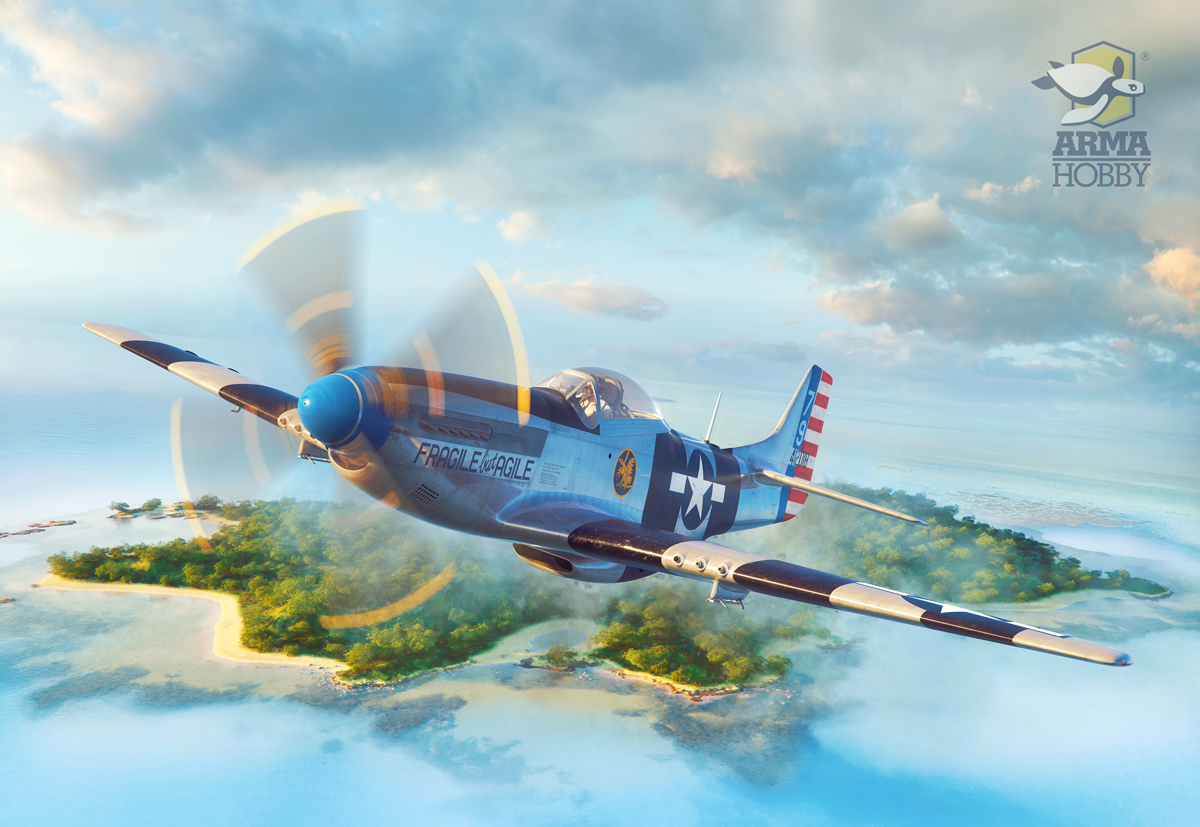
P-51K Mustang “Fragile but Agile” over the Philippines, spring–summer 1945. Artwork by Piotr Forkasiewicz.
Mustang “Fragile but Agile”
P-51K-10-NT Mustang, 44-12018, number 79 “Fragile but Agile”,
342nd Fighter Squadron, 348th Fighter Group, Luzon, Philippines, 1945.
The aircraft arrived at the unit on 17 February 1945 and was assigned to Lt. Bertram Lee, who named it “Fragile but Agile.” It is unknown whether this was a reference to differences between the Mustang and the P-47, but from today’s perspective the name seems highly suggestive.
Lt. Bert Lee scored two aerial victories during his service: one A6M Zero shot down while flying a P-47 over Manila on 22 December 1944, and a lone G4M Betty intercepted en route to China on 11 March 1945 while flying P-51K “Fragile but Agile.”
FEAF Quick Identification Markings
FEAF aircraft operating in the Philippines carried quick-identification markings—broad black stripes on the fuselage and wings. In photos of Lee’s Mustang, tape marks are visible on the wings, while the fuselage stripes appear to have been painted cleanly. White-and-red rudder stripes, reminiscent of early-war markings, were also common.
Colour Markings in the 348th Fighter Group
Each squadron of the 348th Group had distinctive colours on the vertical stabilizer and spinner:
- 340th Squadron: numbers 1–33, red stripe and spinner
- 341st Squadron: numbers 35–60, yellow stripe and spinner
- 342nd Squadron: numbers 65–99, blue stripe and spinner
- 460th Squadron: numbers 100–130, black stripe and spinner
Markings of “Fragile but Agile”
Lee’s aircraft carried a blue vertical-tail stripe and a blue spinner.
The “Fragile but Agile” inscription was most likely painted in dark blue—similar to the style seen on other Mustangs in the squadron.
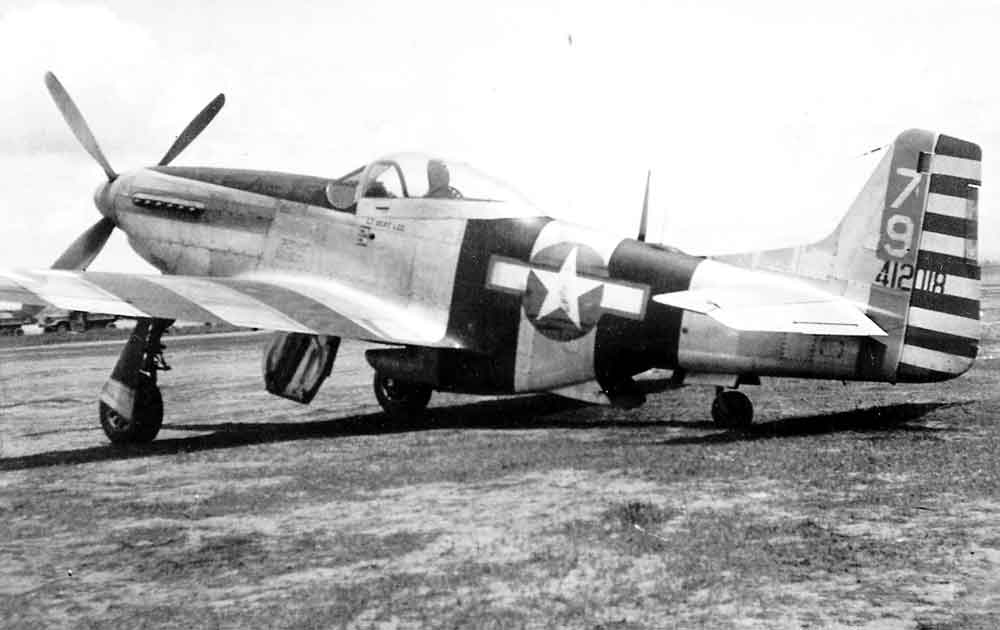
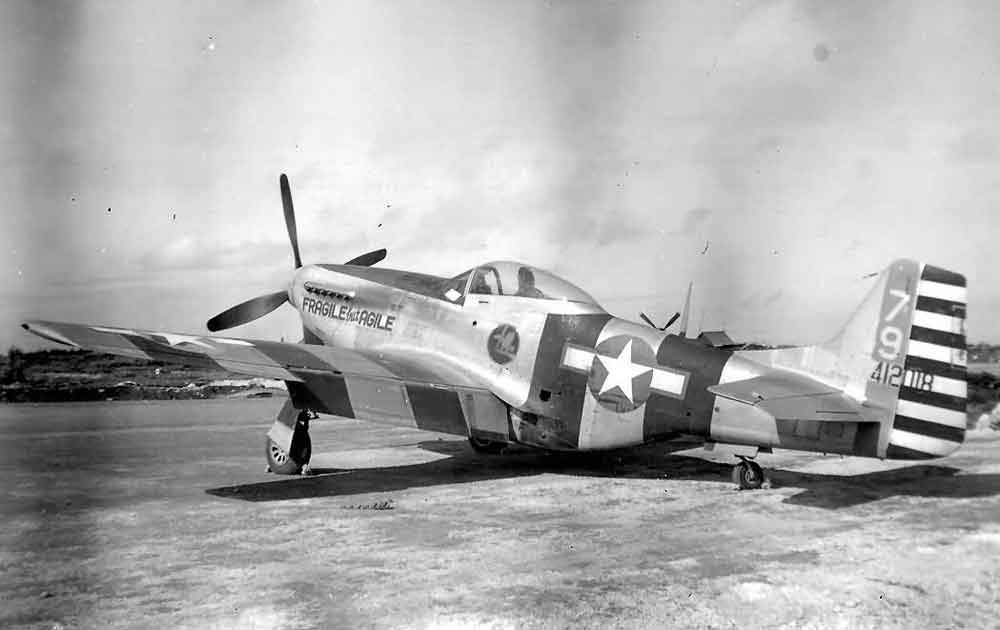
Two photos of Mustang 44-12018.
The upper photo shows the pilot’s name and two victory markings but no squadron badge or “Fragile but Agile” inscription.
The lower photo shows the inscription and badge but no victory markings. This second view is sometimes associated with Ie Shima. The model includes decals based on this more visually attractive version.
Literature
- Michael Claringbould, *Pacific Profiles Volume 12: Allied Fighters: P-51 & F-6 Mustang Series – New Guinea and the Philippines 1944–1945*, Avonmore Books 2024, ISBN 978-0645700442
- History of the 348th Fighter Group | WWII Forums
- Hands on with Bremont’s P-51 watch – the #watchnerd
- 348th Fighter Group – USAAF
See also:
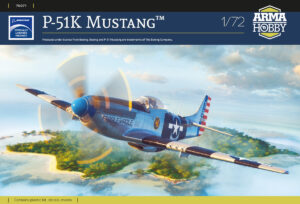
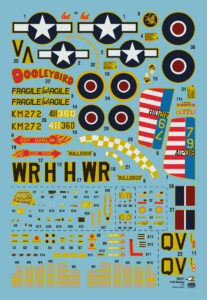
- P-51K Mustang model in the Arma Hobby store: link

Modeller happy enough to work in his hobby. Seems to be a quiet Aspie but you were warned. Enjoys talking about modelling, conspiracy theories, Grand Duchy of Lithuania and internet marketing. Co-founder of Arma Hobby. Builds and paints figurines, aeroplane and armour kits, mostly Polish subject and naval aviation.
This post is also available in:
 polski